+8618335758886
 laura@xinhaimining.com



What Is Cyanide Leaching? A Complete Beginner's Guide
 Laura
Laura
 Aug 30, 2026
 332
332
If you want to know more details about equipment, solutions, etc, please click the button below for free consultation, or leave your requirements!
 Message
 Chat Now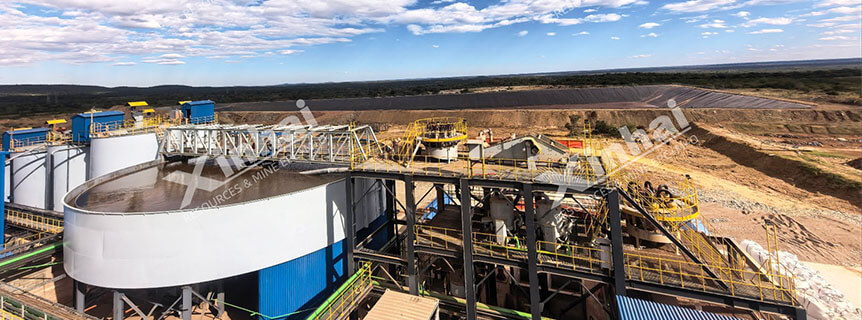
gold cyanide leaching plant
Cyanide leaching is one of the most widely used gold extraction methods in the mining industry. By dissolving gold into a cyanide solution, this process enables mining companies to recover precious metals from ores with high efficiency and relatively low operating costs. It is commonly applied in both small-scale and large-scale gold processing plants, especially when treating low-grade ores that would otherwise be uneconomical to process.
This guide explains the cyanide leaching process, its working principles, equipment, operating stages, advantages, limitations, and key factors affecting gold recovery, helping beginners understand how modern gold beneficiation plants achieve efficient precious metal extraction.
01 Understanding the Cyanide Leaching Process
Back1. What Is Cyanide Leaching?
Cyanide leaching is a hydrometallurgical process that extracts gold by dissolving it into an aqueous solution containing sodium cyanide or potassium cyanide under alkaline conditions. Oxygen is introduced to facilitate the chemical reaction, allowing gold to form a soluble cyanide complex. The dissolved gold is later recovered using activated carbon adsorption or zinc precipitation. Because of its high recovery efficiency, cyanide leaching remains the industry's preferred method for processing many types of gold ores.
2. How the Process Works
The cyanide leaching process begins after the ore has been crushed and ground into fine particles, exposing gold for chemical dissolution. The prepared slurry is mixed with cyanide solution and maintained at an appropriate pH using lime to prevent the release of toxic hydrogen cyanide gas. Continuous agitation ensures sufficient contact between the ore, cyanide, and oxygen, allowing gold to dissolve before being recovered through downstream separation processes.
02 Main Stages of a Cyanide Leaching Plant
Back1. Ore Preparation
Efficient cyanide leaching starts with proper ore preparation. Crushing and grinding reduce the particle size, increasing the surface area available for cyanide contact. Classification equipment ensures uniform particle distribution while removing oversized material. Well-prepared ore improves leaching efficiency, reduces cyanide consumption, and helps achieve higher overall gold recovery during the subsequent processing stages.
2. Leaching and Gold Recovery
Once the slurry enters the leaching tanks, cyanide solution and oxygen dissolve the exposed gold particles. Depending on plant design, the dissolved gold is recovered using Carbon-in-Leach (CIL), Carbon-in-Pulp (CIP), or the Merrill-Crowe process. Activated carbon adsorbs dissolved gold, which is later stripped and refined into bullion. Proper residence time and solution chemistry are essential for maximizing recovery rates.
3. Tailings Treatment
After gold extraction, the remaining slurry is discharged as tailings. Before disposal, residual cyanide must be detoxified to meet environmental regulations. Various detoxification methods convert free cyanide into less harmful compounds, reducing environmental risks. Proper tailings management also includes water recycling, monitoring, and secure storage to improve sustainability and minimize operating costs.
03 Equipment Used in Cyanide Leaching
Back1. Crushing and Grinding Equipment
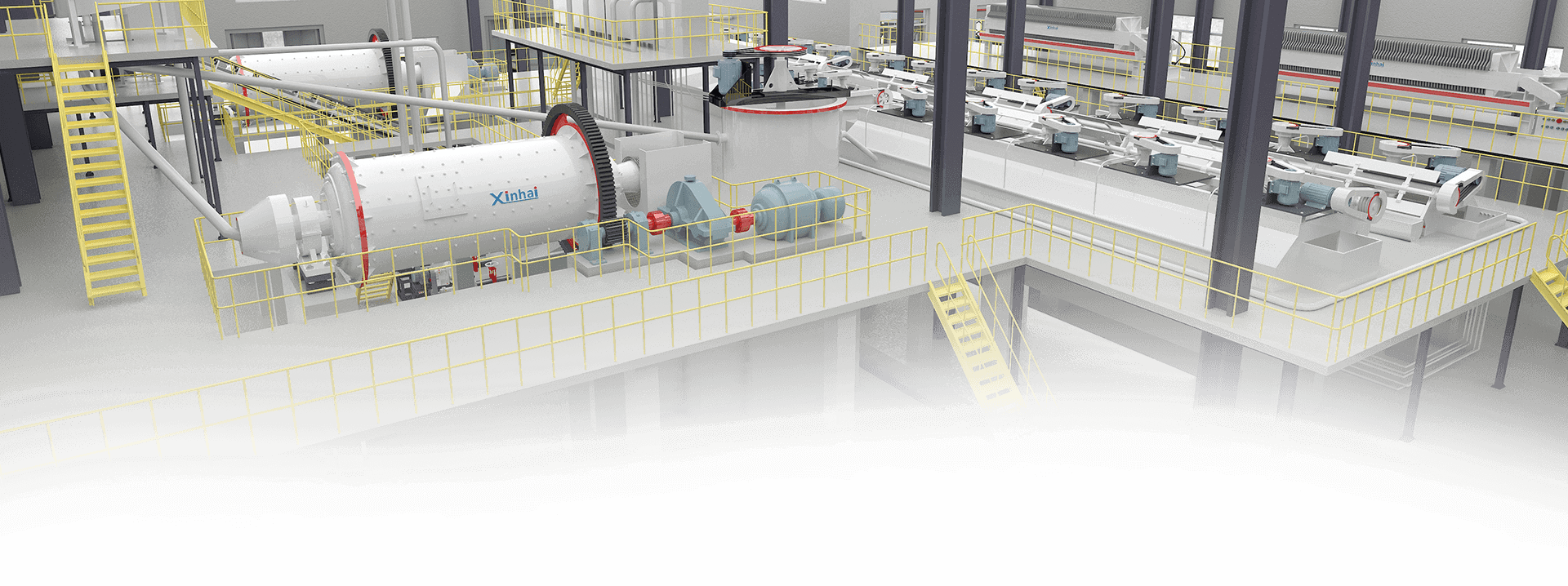
The efficiency of cyanide leaching depends greatly on adequate mineral liberation. Primary crushers, secondary crushers, ball mills, and classification equipment prepare the ore by producing the required particle size. Uniform grinding allows cyanide to reach more gold particles while avoiding excessive energy consumption associated with unnecessary overgrinding.
2. Leaching Tanks and Agitation Systems
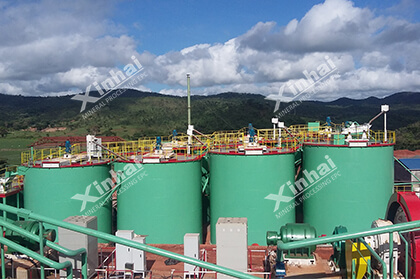
Leaching tanks are designed to maintain continuous mixing between ore slurry, cyanide solution, and oxygen. Mechanical agitators prevent solids from settling while ensuring uniform chemical distribution throughout the tank. Proper tank sizing, mixing intensity, and retention time all contribute to improved dissolution efficiency and consistent plant performance.
3. Gold Recovery and Auxiliary Equipment
Gold recovery systems include activated carbon adsorption columns, carbon regeneration furnaces, electrowinning cells, stripping systems, filters, pumps, reagent dosing units, and process control instruments. These components work together to recover dissolved gold efficiently while maintaining stable operating conditions. Modern automation further improves process consistency, reduces labor requirements, and enhances overall plant productivity.
04 Benefits, Challenges, and Best Practices
Back1. Advantages of Cyanide Leaching
Cyanide leaching offers high gold recovery, excellent processing efficiency, and cost-effective treatment of low-grade ores. The process is well established, commercially proven, and adaptable to different production capacities. When combined with modern CIL or CIP technology, cyanide leaching consistently delivers high recovery rates while supporting continuous industrial-scale gold production around the world.
2. Common Challenges
Despite its advantages, cyanide leaching performance can be affected by ore mineralogy, cyanide-consuming minerals, insufficient oxygen, improper pH control, and inadequate grinding. Refractory ores may require pretreatment before cyanidation. Careful testing and process optimization are therefore essential to identify the most suitable operating conditions for each specific deposit.
3. Best Practices for Safe and Efficient Operation
Successful cyanide leaching requires strict safety procedures, continuous monitoring, and proper environmental management. Operators should maintain optimal cyanide concentration, alkaline pH, dissolved oxygen levels, and slurry density throughout the process. Routine equipment maintenance, reagent control, laboratory testing, and employee training help improve gold recovery while ensuring compliance with environmental and workplace safety standards.
05 Summary
BackCyanide leaching remains the most widely adopted technology for extracting gold from many ore types due to its high recovery efficiency and proven industrial performance. From ore preparation and leaching to gold recovery and tailings treatment, every stage plays a vital role in maximizing production. Understanding the process, selecting suitable equipment, and following best operating practices enable mining operations to improve efficiency, reduce costs, and achieve sustainable gold beneficiation.
Request a customized quotation today to find the ideal cyanide leaching solution for your gold processing project.


RELATED PRODUCTS
-
Air Lifter
-
Round Vibrating Screen
-
Peripheral Transmission Thickener