+8618335758886
 laura@xinhaimining.com



10 Chrome Ore Beneficiation Methods Explained
 Laura
Laura
 Sep 30, 2026
 22
22
If you want to know more details about equipment, solutions, etc, please click the button below for free consultation, or leave your requirements!
 Message
 Chat Now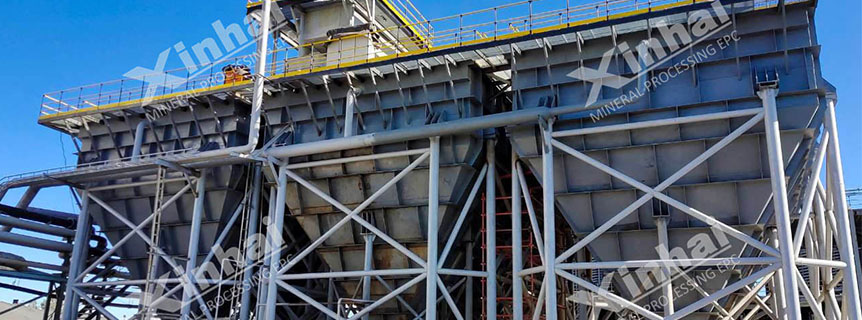
thickeners in the chrome ore processing plant
Chrome ore beneficiation is the process of upgrading raw chromite ore by removing unwanted gangue minerals and increasing the concentration of valuable chromium-bearing minerals. Because chrome ores differ in grade, liberation size, mineral association, and particle characteristics, no single beneficiation method is suitable for every deposit. Modern chrome processing plants often combine several separation techniques to achieve the required concentrate grade and recovery. Understanding the available methods helps operators design a suitable processing flowsheet based on ore properties and production requirements.
This article explains 10 common chrome ore beneficiation methods, including crushing, screening, gravity separation, magnetic separation, dense media separation, and combined processing techniques.
01 Ore Preparation Methods
Back1. Crushing
Crushing is usually the first mechanical stage in chrome ore beneficiation. Run-of-mine material can contain large rocks that must be reduced to a suitable size for screening and subsequent separation. Jaw crushers, cone crushers, and other crushing equipment may be selected according to feed size and processing capacity. Proper crushing helps expose chromite-bearing particles and prepares the material for further beneficiation. However, excessive crushing should be avoided because unnecessary fines can complicate downstream separation.
3. Screening
Screening separates crushed chrome ore into different size fractions. Vibrating screens are commonly used because they can process substantial quantities of material continuously. Screening helps remove oversized particles and allows different size fractions to be directed toward appropriate beneficiation equipment. Since gravity and other separation methods perform differently depending on particle size, effective screening can improve process stability. Proper screen selection also helps maintain consistent feed conditions and reduces the amount of unsuitable material entering downstream equipment.
02 Gravity-Based Chrome Ore Beneficiation Methods
Back1. Jigging
Jigging is a gravity separation method that exploits the density difference between chromite and lighter gangue minerals. A pulsating water flow causes particles to stratify according to their density, allowing heavier chromite particles to concentrate preferentially. Jigs are particularly suitable for relatively coarse and liberated chromite particles. They can provide high processing capacity and are often used in plants where the ore contains a significant coarse fraction. Operating conditions should be adjusted according to feed size and mineral characteristics.
2. Spiral Separation
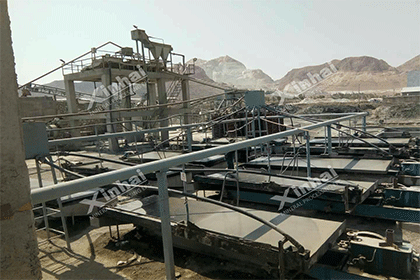
Spiral concentrators are widely used for chrome ore beneficiation because they can handle fine and medium-sized particles with relatively simple operation. Slurry flows downward along a spiral surface, while gravity, centrifugal effects, and fluid movement cause particles to stratify. Dense chromite particles tend to move toward the inner part of the spiral, while lighter gangue migrates outward. Splitters then separate concentrate, middlings, and tailings. Spirals can be arranged in rougher, cleaner, or scavenger circuits.
3. Shaking Tables
Shaking tables provide another gravity-based method for upgrading chromite concentrates. The equipment uses a slightly inclined deck, water flow, and reciprocating motion to separate particles according to density and size. Heavier chromite particles generally move toward selected concentrate zones, while lighter gangue is washed toward the tailings side. Shaking tables are often used for cleaning or recovering fine valuable minerals. Their effectiveness depends on feed size, slurry conditions, table settings, and the degree of mineral liberation.
4. Dense Media Separation
Dense media separation uses a medium with controlled density to separate minerals according to their specific gravity. When suitable chrome ore particles enter the dense medium, heavier chromite-bearing material tends to sink while lighter gangue floats. This method can be useful for coarse material when there is a clear density contrast between valuable and waste minerals. Dense media circuits require careful control of medium density, particle size, and material handling to maintain consistent separation performance.
03 Additional Chrome Ore Separation Methods
Back1. Magnetic Separation
Magnetic separation can be used when magnetic susceptibility differences exist between chromite and associated minerals. Although chromite itself has variable magnetic properties depending on its composition, magnetic separation may be useful for removing certain iron-bearing or magnetic gangue minerals and for cleaning selected streams. Wet or dry magnetic separators can be considered according to feed characteristics. Magnetic separation is generally selected after mineralogical testing confirms that sufficient differences exist to achieve meaningful upgrading.
2. Desliming
Desliming removes very fine particles from chrome ore before gravity concentration or other separation stages. Excessive slimes can interfere with particle stratification and reduce the efficiency of gravity equipment. Hydrocyclones, classifiers, or other suitable equipment can be used to separate fine material from coarser fractions. Desliming is especially important when the ore contains substantial clay or naturally generated fines. The removed fraction may be treated separately when it contains recoverable chromite.
3. Classification
Classification separates particles according to their settling behavior and is often used to control the feed size distribution of beneficiation equipment. Hydrocyclones are commonly applied in wet chrome processing circuits, while mechanical classifiers may be suitable for certain applications. Proper classification allows different particle fractions to receive appropriate treatment. It can also help reduce overloading of gravity separators and improve the consistency of rougher and cleaner separation stages.
04 Combined Chrome Ore Beneficiation Methods and Process Optimization
Back1. Gravity and Magnetic Separation
Combining gravity and magnetic separation can improve chrome ore beneficiation when the feed contains multiple types of gangue minerals. Gravity separation can first recover dense chromite, while magnetic separation can subsequently remove selected magnetic impurities or upgrade specific product streams. The order of the processes depends on mineralogical characteristics and test results. A combined circuit should be designed according to the liberation characteristics and separation response of the ore rather than using a fixed configuration for every deposit.
2. Multi-Stage Gravity Beneficiation
Multi-stage gravity beneficiation can include roughing, cleaning, and scavenging stages. The rougher stage aims to recover as much chromite as practical from the feed, while cleaner stages improve concentrate quality. Scavenger stages can recover valuable chromite remaining in rougher or cleaner tailings. This arrangement provides greater flexibility than a single-stage separator. The exact number and type of stages should be determined through laboratory and pilot testing to balance chromite recovery, concentrate grade, water consumption, and processing capacity.
05 Summary of 10 Chrome Ore Beneficiation Methods
BackThe 10 chrome ore beneficiation methods discussed include crushing, screening, jigging, spiral separation, shaking tables, dense media separation, magnetic separation, desliming, classification, and combined multi-stage processing. Each method has a different role and operating range, so the most suitable approach depends on ore grade, mineral liberation, particle size, density differences, gangue composition, and production requirements. In many operations, combining complementary methods can provide better control over concentrate grade and chromite recovery than relying on a single separation technique.
Contact a professional mineral processing equipment supplier to obtain a customized chrome ore beneficiation equipment quotation for your project!


RELATED PRODUCTS
-
JJF Flotation Cell
-
Drum Filter
-
Zinc Powder Displacement Device