+8618335758886
 laura@xinhaimining.com



5 Common Feldspar Processing Methods You Should Know
 Laura
 Oct 30, 2026
 17
If you want to know more details about equipment, solutions, etc, please click the button below for free consultation, or leave your requirements!
 Message
 Chat Now
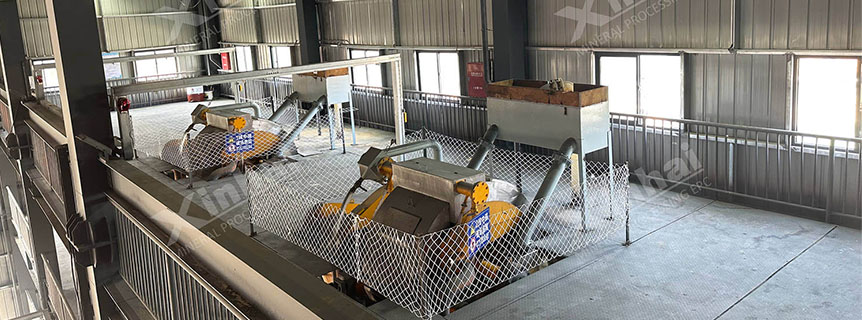
5 Common Feldspar Processing Methods - magnetic separator
Feldspar is an important industrial mineral widely used in glass manufacturing, ceramics, tiles, and sanitary ware. However, natural feldspar ore often contains impurities such as quartz, mica, iron oxides, and clay minerals that affect its commercial value. Feldspar processing methods are designed to remove these impurities, improve mineral purity, and produce materials that meet specific industrial requirements. Selecting the right processing technology depends on ore composition, mineral liberation characteristics, required product quality, and production capacity.
This article introduces five common feldspar processing methods: crushing and grinding, magnetic separation, flotation, washing and desliming, and gravity separation. It explains their working principles, applications, and advantages to help you select a suitable feldspar beneficiation process.
01 Crushing and Grinding: The Foundation of Feldspar Processing
BackCrushing and grinding are essential preparation stages in most feldspar processing plants. Their primary purpose is to reduce raw ore to an appropriate particle size and liberate feldspar minerals from associated impurities. The required crushing and grinding intensity depends on the ore's hardness, mineral structure, and degree of intergrowth. Proper size reduction improves the effectiveness of subsequent separation processes while helping control energy consumption and the production of excessive fine particles.
1. Primary and Secondary Crushing
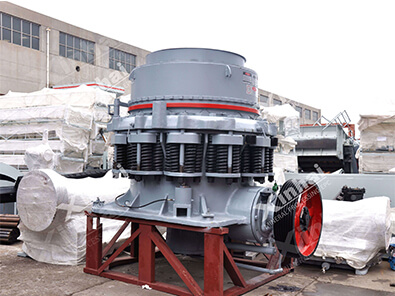
Primary crushing reduces large feldspar-bearing rocks into manageable pieces for further treatment. Jaw crushers are commonly used at this stage because they can handle large feed sizes and provide reliable size reduction. Secondary crushing may use cone crushers or other suitable machines to produce smaller particles. Vibrating screens can classify the crushed material and return oversized particles for additional crushing, helping maintain a consistent feed size for downstream equipment.
2. Grinding for Mineral Liberation
Grinding further reduces the particle size of crushed feldspar ore to expose valuable minerals and separate them from unwanted materials. Ball mills are frequently used when finer grinding is required, while other grinding equipment may be selected according to ore characteristics and production targets. The objective is to achieve sufficient mineral liberation without unnecessary overgrinding, which can increase energy costs and make subsequent separation more difficult.
3. When Should This Method Be Used?
Crushing and grinding are necessary for most hard-rock feldspar deposits, particularly when the valuable minerals are tightly intergrown with quartz, mica, or iron-bearing minerals. However, they do not independently guarantee high-purity feldspar. Their effectiveness depends on the liberation size required by the following beneficiation stages. Mineralogical analysis and grinding tests help operators determine suitable equipment configurations and avoid excessive processing costs.
02 Magnetic Separation: Removing Iron-Bearing Impurities
BackMagnetic separation is widely used in feldspar beneficiation to remove iron-bearing minerals and other impurities with suitable magnetic properties. Iron contamination can affect the color and quality of glass and ceramic products, making impurity removal an important processing objective. Depending on the magnetic susceptibility of the unwanted minerals, operators may select different separator types and field strengths. Magnetic separation is often integrated with crushing, grinding, and other beneficiation methods to achieve the required feldspar quality.
1. How Does Magnetic Separation Work?
Magnetic separators create a magnetic field that attracts or separates magnetic particles from nonmagnetic materials. Low-intensity magnetic separation is suitable for strongly magnetic minerals, while high-intensity magnetic separation can target certain weakly magnetic impurities. Wet or dry operation may be selected according to particle size, feed characteristics, and plant design. Effective separation requires appropriate feed preparation, consistent material distribution, and operating conditions suited to the minerals being removed.
2. Common Equipment for Feldspar Magnetic Separation
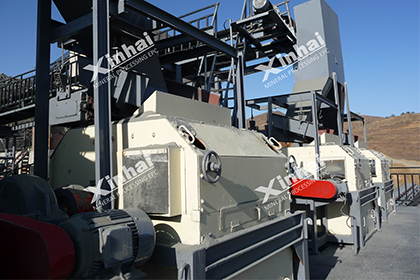
Feldspar processing plants may use magnetic drums, high-intensity magnetic separators, or wet high-intensity magnetic separation systems. The choice depends on the type and concentration of iron-bearing impurities, the required throughput, and the characteristics of the feed material. Wet systems can be useful for fine particles and certain weakly magnetic minerals, while dry systems may suit appropriately prepared coarse or intermediate-sized materials.
3. Advantages and Limitations
Magnetic separation can reduce iron-related impurities without necessarily requiring chemical reagents, making it attractive for many feldspar processing applications. However, it cannot effectively remove every type of impurity. Quartz and other nonmagnetic minerals may remain in the product, while some iron-bearing minerals may have insufficient magnetic susceptibility for efficient separation. Laboratory testing is therefore essential to determine expected performance and whether flotation or another process should follow.
03 Flotation: Improving Feldspar Purity Through Mineral Separation
BackFlotation is an important feldspar beneficiation method used when unwanted minerals cannot be sufficiently removed through physical separation alone. It separates minerals according to differences in their surface properties after suitable conditioning with reagents. Depending on the ore mineralogy and processing objectives, flotation can help separate feldspar from quartz, mica, and other associated minerals. The process is particularly useful for deposits requiring stricter chemical specifications, although reagent selection and operating conditions must be established through testing.
1. The Working Principle of Feldspar Flotation
During flotation, finely ground ore is mixed with water to form a slurry. Selected reagents modify the surface properties of specific minerals, allowing them to attach to air bubbles and rise into a froth or remain in the slurry, depending on the flotation strategy. Operators collect the appropriate mineral stream while rejecting unwanted components. The sequence and reagent system depend on the ore composition, the minerals present, and the desired final product.
2. Reagents and Flotation Equipment
Flotation circuits generally include conditioning tanks, flotation cells, slurry pumps, and reagent dosing systems. Reagents may include collectors, frothers, and pH regulators selected for the specific separation task. Because feldspar and quartz can have similar surface characteristics, effective separation may require carefully controlled chemical conditions and, in some cases, multiple flotation stages. Reagent selection should be based on laboratory trials, safety requirements, environmental considerations, and the availability of suitable process water.
3. Benefits and Applications of Flotation
Flotation can improve feldspar purity when quartz, mica, or other impurities remain after preliminary processing. It is especially valuable when the final product must satisfy demanding requirements for glassmaking or ceramic manufacturing. However, flotation may increase reagent consumption, water-management needs, and process complexity. A well-designed circuit should balance impurity removal, feldspar recovery, and operating costs rather than focusing on product grade alone.
04 Washing, Desliming, and Gravity Separation: Complementary Methods
BackWashing, desliming, and gravity separation are additional techniques that can improve feldspar ore quality under suitable conditions. They target different characteristics: washing removes adhering dirt and clay, desliming separates excessive fine particles, and gravity separation exploits density differences between minerals. These methods are not equally effective for every deposit, so they should be selected according to the ore's weathering characteristics, particle-size distribution, and mineral composition.
1. Washing and Desliming for Clay Removal
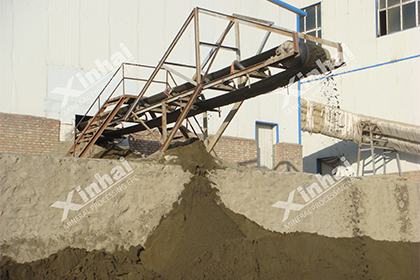
Feldspar ore may contain clay, fine dust, and weathered materials that interfere with subsequent beneficiation. Washing equipment, such as scrubbers and washing screens, helps disaggregate clay-bearing material and remove surface contamination. Desliming equipment, including hydrocyclones or suitable classifiers, separates fine particles from the main mineral fraction. These operations can improve downstream magnetic separation and flotation by reducing unwanted slimes and stabilizing feed conditions.
2. Gravity Separation for Density-Based Separation
Gravity separation uses differences in mineral density to separate selected components. Depending on the ore characteristics, suitable equipment may include shaking tables, spirals, or other gravity concentrators. The method is most effective when the target minerals have sufficient density contrast and suitable particle sizes. Because feldspar and quartz have relatively similar densities, gravity separation alone is often limited for separating these two minerals, although it may help remove certain heavier associated minerals.
3. How to Choose the Right Combination of Methods
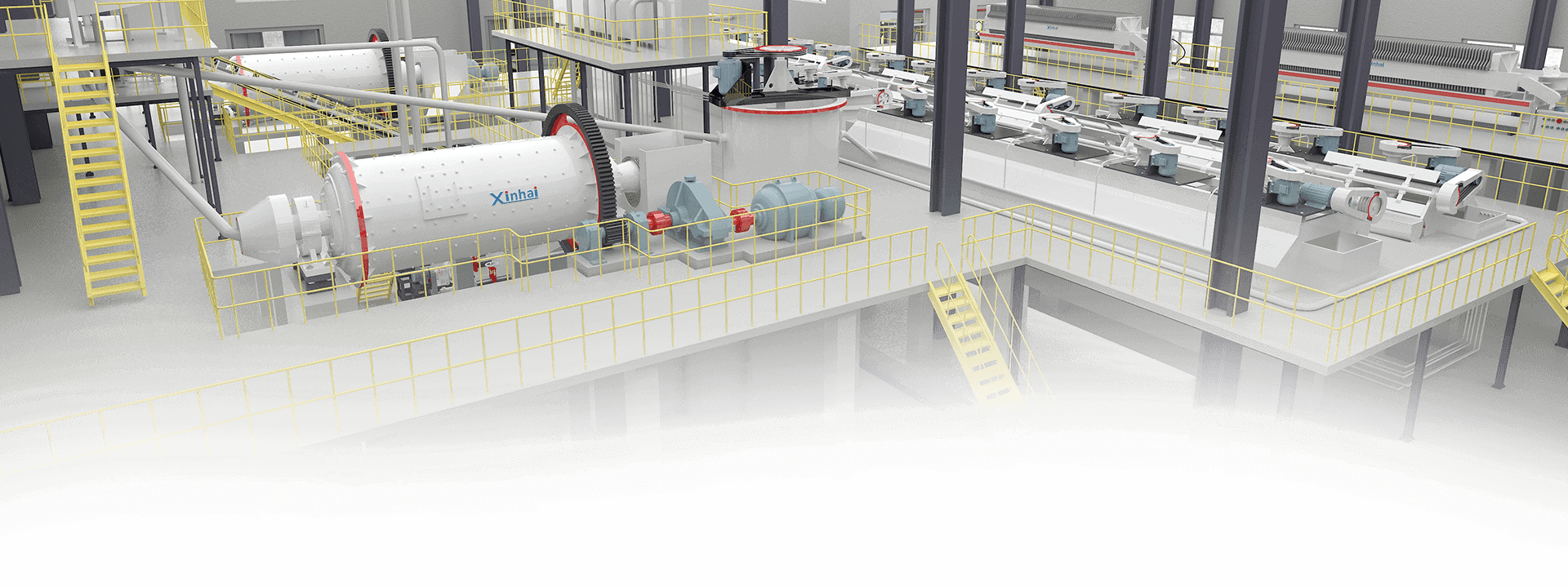
A practical feldspar processing flowsheet often combines several methods instead of relying on a single technique. For example, crushing and grinding may be followed by washing, magnetic separation, and flotation, depending on the impurities present. Some deposits require only simple preparation and screening, while others need more complex beneficiation. Mineralogical analysis, laboratory separation tests, target product specifications, and economic evaluation should guide the final process design.
05 Summary of Feldspar Processing Methods
BackThe 5 common feldspar processing methods serve different purposes. Crushing and grinding prepare the ore and liberate minerals, magnetic separation removes suitable iron-bearing impurities, flotation improves separation from quartz and mica, washing and desliming remove clay and excessive fines, and gravity separation targets minerals with sufficient density differences. The best processing route depends on ore characteristics and final product requirements. Combining appropriate technologies can improve feldspar purity and recovery while controlling energy, reagent, and operating costs.
Contact our mineral processing team today to obtain a customized feldspar beneficiation solution and equipment quotation for your project.


RELATED PRODUCTS
-
Rotary Disc Vacuum Filter
-
Spring Cone Crusher
-
Excavating Equipment