+8618234403483
 yanzhang19990421@gmail.com



Alluvial Gold Mining: Methods, Process and Equipment
 Sheena
 Sep 17, 2026
 6
6
If you want to know more details about equipment, solutions, etc, please click the button below for free consultation, or leave your requirements!
 Message
 Chat Now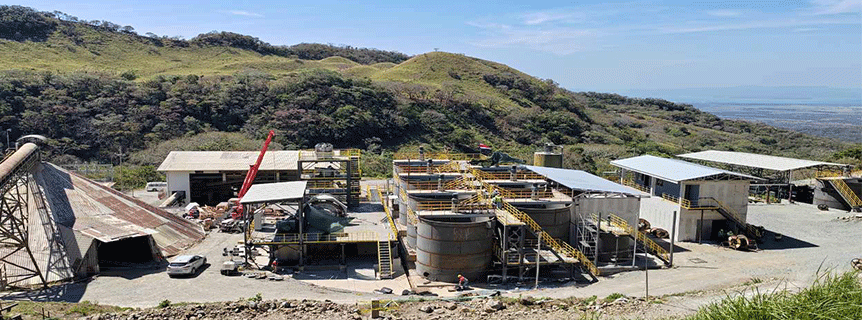
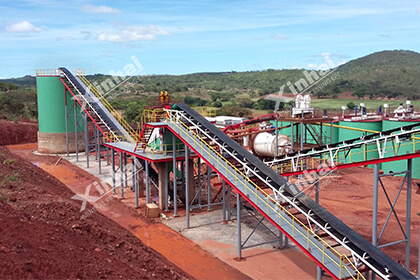
500tpd-gold-processing-plant-in-Peru
Alluvial gold mining is the recovery of gold from unconsolidated deposits such as river gravel, sand, silt, and weathered sediments. The deposit may contain clay, large gravel, fine sand, and gold particles with very different sizes. These characteristics directly affect the mining method, washing efficiency, equipment selection, gold recovery, and overall project cost.
A well-designed alluvial gold operation therefore needs to consider the entire route from excavation to final concentrate cleaning. This article explains the main alluvial gold mining methods, processing steps, equipment options, and factors to consider when designing an alluvial gold recovery plant.
01Alluvial Gold Mining Methods
BackThe mining method should be selected according to deposit depth, thickness, water conditions, terrain, and the amount of overburden that must be removed. There is no single method that is suitable for every alluvial deposit.
For relatively shallow deposits, conventional surface excavation is often practical. Excavators or loaders can remove overburden and feed gold-bearing gravel directly to a washing plant. Where the deposit is deeper or occurs in an ancient river channel, a more extensive excavation and material-handling system may be required.
1.1 Open Excavation
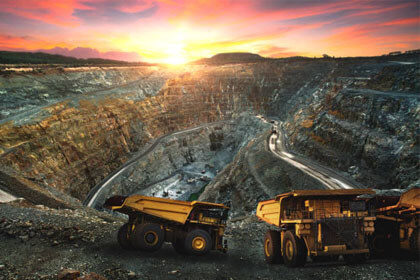
Open excavation is suitable for shallow alluvial deposits that can be reached from the surface. Excavators, bulldozers, and loaders can remove overburden, expose the pay gravel, and transport the material to the processing plant.
This method is relatively straightforward, but the economics depend heavily on the ratio between waste removed and gold-bearing material recovered. Excessive stripping can increase mining costs without increasing gold production.
1.2 Dredging
Dredging may be considered where gold-bearing sediments occur beneath water or within water-filled channels. A dredging system excavates sediment and feeds it to onboard or nearby processing equipment.
Its feasibility depends on water depth, deposit geometry, environmental requirements, and local regulations. It should therefore be evaluated as a mining method rather than assumed to be suitable for every river deposit.
1.3 Hydraulic or Specialized Excavation
Some alluvial deposits contain loose or semi-consolidated material that can be excavated using water-assisted methods or specialized mining systems. These approaches can improve material handling under suitable conditions, but their use depends strongly on local water availability, site conditions, and environmental controls.
Regardless of the mining method, the objective is the same: deliver consistent gold-bearing material to the processing plant while minimizing unnecessary waste movement and gold losses.
02Alluvial Gold Processing Process
BackOnce the gold-bearing material is mined, the main processing objective is to release gold particles from clay and gravel and then concentrate them according to their density.
A typical flowsheet can be arranged as:
Excavation → Feeding → Washing & Scrubbing → Screening → Gravity Separation → Concentrate Cleaning → Gold Recovery
Not every plant needs every stage. A clean deposit with coarse gold may require only basic washing, screening, and gravity concentration, while clay-rich material containing fine gold may require much more intensive scrubbing and secondary concentration.
The process should therefore be designed around the actual feed characteristics rather than using a standard equipment package.
2.1 Excavation and Feeding
The first processing-related challenge is maintaining a stable feed to the plant. Variations in feed rate, moisture, clay content, and gravel size can affect the performance of downstream equipment.
Excavators, loaders, hoppers, conveyors, or other feed systems may be used depending on the plant scale and mining layout.
A controlled feed system allows the washing and gravity circuits to operate at a more stable throughput. It also helps prevent surges that can reduce screening efficiency or overload downstream equipment.
2.2 Washing and Scrubbing
Washing is often one of the most important stages in alluvial gold processing, particularly when the ore contains clay.
Clay can coat gold particles or bind them to larger gravel lumps, preventing the gold from being exposed and recovered by gravity equipment. Effective scrubbing breaks these clay bonds and disperses the material before concentration.
A trommel scrubber is widely used for this purpose because it can combine scrubbing, washing, and screening in one unit. Water and mechanical agitation break down clay-bound material while the rotating drum moves the feed through the washing zone.
For relatively clean and loose alluvial deposits, however, such intensive scrubbing may not be necessary. In these cases, a simpler screening and washing arrangement can reduce capital and operating costs.
2.3 Screening and Size Separation
After washing, the material must be separated according to size. This prevents large rocks from entering equipment designed for finer particles and allows the gravity circuit to operate within a more suitable size range.
Trommel screens are commonly used in alluvial gold plants because the rotating drum can wash and screen the material simultaneously. Vibrating screens may also be used where the feed conditions are suitable.
The screening process generally produces two important streams:
Oversize material: large gravel or waste rock that contains little recoverable gold after proper liberation and screening.
Undersize material: finer material containing the majority of the recoverable gold that proceeds to gravity concentration.
Screen size should be selected carefully. A screen that is too coarse may send unwanted material downstream, while excessive screening can increase gold losses if gold is attached to oversize particles that are not properly washed.
2.4 Gravity Separation for Alluvial Gold
Gravity separation is usually the core beneficiation method for alluvial gold because gold has a much higher density than most of the surrounding sediment.
The key is not simply to use a gravity separator, but to match the equipment to the gold particle size, feed size, and required recovery rate.
Common equipment includes sluice boxes, jigs, centrifugal concentrators, and shaking tables.
2.5 Concentrate Cleaning and Final Gold Recovery
Primary gravity equipment normally produces a concentrate that still contains other heavy minerals. Additional cleaning may therefore be required before the final gold recovery stage.
The appropriate cleaning method depends on the composition of the concentrate and the desired final product.
A typical cleaning circuit may use a shaking table or another gravity concentration stage to reduce unwanted heavy minerals and improve concentrate grade.
In some projects, the final concentrate may then undergo additional metallurgical treatment. The choice depends on the actual gold occurrence and concentrate composition rather than on a universal flowsheet.
The important distinction is that alluvial gold recovery often relies on physical concentration first, while further treatment is selected only when the characteristics of the recovered concentrate require it.
03Alluvial Gold Mining Equipment
BackA typical plant may contain several of the following equipment units, although the final configuration should always be based on deposit-specific testing and engineering design.
| Equipment | Main Function |
|---|---|
| Excavator | Excavation of gold-bearing sediments |
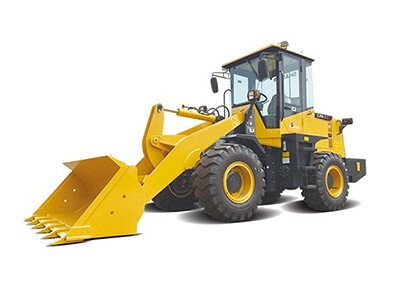
| Loader | Material handling and feeding |
| Feed Hopper | Controlled plant feed |
| Trommel Scrubber | Washing, scrubbing, and screening |
| Trommel Screen | Size separation |
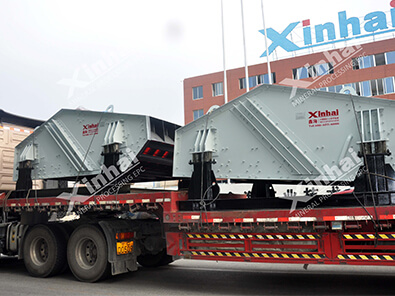
| Vibrating Screen | Screening and classification |
| Sluice Box | Primary gravity recovery |
| Jig | Recovery of coarse and medium-sized gold |
| Centrifugal Concentrator | Fine gold recovery |
| Shaking Table | Concentrate cleaning |
| Pumps | Water and slurry transport |
The equipment combination should be determined by the deposit rather than by the number of machines that can be included in the plant. Adding equipment does not automatically increase recovery and may simply increase capital, maintenance, and operating costs.
04How to Choose the Right Alluvial Gold Mining Equipment?
BackThe most important equipment selection factors are the gold particle size, clay content, feed size, deposit capacity, and distribution of gold within the ore.
4.1 Gold Particle Size
Coarse gold can generally be recovered effectively with conventional gravity equipment, while fine gold requires more carefully controlled concentration.
For a deposit containing both coarse and fine gold, a combination of primary and secondary gravity equipment may be more appropriate than relying on a single machine.
4.2 Clay Content
High clay content increases the importance of washing and scrubbing. If gold particles remain trapped inside clay lumps, even highly efficient gravity equipment will struggle to recover them.
This is why the washing stage should be considered part of the gold recovery system rather than simply a material-preparation step.
4.3 Feed Size and Gravel Characteristics
Large cobbles and boulders require appropriate feed preparation and oversize handling. Smaller, well-liberated material can often be processed with a simpler plant.
4.4 Processing Capacity
Plant capacity affects the size and number of major equipment units as well as the supporting water, power, pumping, and material-handling systems.
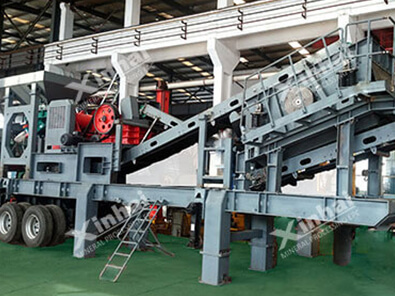
A small operation may use a compact mobile plant, while a larger commercial project may require multiple washing and gravity circuits operating in parallel.
05Alluvial Gold Processing for Different Deposit Types
BackDifferent deposits require different combinations of mining and processing equipment.
5.1 Clean, Coarse Alluvial Gold
When the feed contains relatively little clay and the gold is predominantly coarse and free, the process can remain relatively simple:
Excavation → Screening/Washing → Sluice or Jig → Concentrate Cleaning
The main advantage of this approach is its lower process complexity.
5.2 Clay-Rich Alluvial Gold
For sticky or highly weathered deposits, washing becomes much more important:
Excavation → Trommel Scrubbing → Screening → Gravity Separation → Concentrate Cleaning
The objective is to completely disaggregate the feed before gravity recovery.
5.3 Fine Gold Alluvial Deposits
When a significant proportion of gold is fine, the plant may require a more controlled concentration circuit:
Washing → Screening → Primary Gravity Recovery → Centrifugal Concentration → Table Cleaning
The actual flowsheet should be confirmed through testing because recovery performance varies significantly with particle size and mineral composition.
06Conclusion
BackAlluvial gold mining is based on recovering gold from unconsolidated sediments where natural weathering and water movement have already liberated and concentrated much of the gold. This makes excavation, washing, screening, and gravity separation the key elements of many alluvial gold projects.
The most suitable process depends on the deposit's gold particle size, clay content, gravel characteristics, gold distribution, and required capacity. Clean deposits with coarse gold may be processed with a relatively simple flowsheet, while clay-rich or fine-gold deposits may require intensive scrubbing and multiple gravity concentration stages.
The best results come from designing the process around the deposit rather than starting with a fixed equipment list. Sampling, mineralogical investigation, particle-size analysis, and metallurgical testing should be completed before finalizing the mining method, recovery circuit, and equipment selection.


RELATED PRODUCTS
-
Surface Loading Equipment
-
High Frequency Dewatering Screen
-
Mobile Crushing and Screening Equipment