+8618234403483
 yanzhang19990421@gmail.com



Beginner’s Guide to Iron Ore Concentrator Construction
 zeki
zeki
 Jun 30, 2026
 204
204
If you want to know more details about equipment, solutions, etc, please click the button below for free consultation, or leave your requirements!
 Message
 Chat Now
An iron ore concentrator is a complete industrial facility for ore purification. Its core function is to separate impurities from low-grade run-of-mine ore and produce iron ore concentrate that meets smelting standards for steel mills, serving extensively the steel, infrastructure, machinery manufacturing and other industries. Unlike graphite processing, iron ore separation relies heavily on differences in ore magnetism and density, with distinct process routes tailored for magnetite, hematite and limonite. It also imposes higher investment thresholds and stricter environmental control requirements. This guide breaks down the full plant construction cycle in practical, easy-to-follow operational logic.
01Pre-Construction Preparation Phase
Back1.Market Research and Product Positioning
First, assess demand from local and surrounding steel plants. Steel mills generally require iron concentrate with total iron grade ≥65% and qualified levels of harmful impurities such as silica, sulfur and phosphorus. Conduct research on regional iron ore raw material supply, production capacity of competing concentrators, market prices of iron concentrate, and transportation costs. Based on these findings, determine the designed plant capacity: small-scale (100,000–300,000 tons per annum), medium-scale (500,000–1.5 million tons per annum), and large-scale (over 2 million tons per annum). Clarify the core product: high-grade magnetite concentrate or mixed concentrate from weakly magnetic ores.
2.Iron Ore Resource Assessment
Engage professional geologists and mineral processing engineers to complete ore body exploration and ore washability tests:
Verify ore reserves and average run-of-mine grade, and classify ore types: magnetite (strong magnetic property, simplest process with the lowest operating cost), hematite/limonite (weak magnetic property, requiring flotation, high-intensity magnetic separation or magnetic roasting), and mixed ore.
Collect ore samples for bench-scale mineral processing tests to obtain theoretical concentrate recovery, tailings grade and grinding fineness—parameters that directly dictate subsequent process selection.
Inspect excessive harmful elements including sulfur, phosphorus, lead and zinc. Elevated contents will drastically reduce product selling prices and may even render the concentrate unsaleable.
3. Compliance Documentation and Approval Procedures
Iron ore concentration is categorized as a high-pollution and high-risk industry; construction and operation without complete permits are strictly prohibited. Core approval documents are as follows:
Natural Resources Bureau: Mining License, pre-construction land use review, mineral resource reserve filing record
Development and Reform Authorities: Project filing or approval document
Ecology and Environment Bureau: EIA approval, pollutant discharge permit, special EIA for tailings pond
Emergency Management Bureau: Pre-safety evaluation, safety facility design review; a work safety license is mandatory for formal commissioning
Water Conservancy and Forestry Departments: Water intake permit, soil and water conservation plan, forest land occupation approval
4. Practical Site Selection Criteria
Plant location directly determines long-term operating costs. Prioritize sites satisfying the five key conditions below:
Proximity to iron ore mining areas to cut long-distance transportation costs for run-of-mine ore
Abundant water supply, as mineral processing consumes massive volumes of water, alongside matched wastewater recycling systems
Stable power supply, given the high power demand of crushing mills and ball mills
Convenient transportation with access to highways or railways for outward delivery of iron concentrate
Eligible terrain for constructing a compliant tailings pond, located far from residential areas, rivers and ecological protection zones
02Process Design and Engineering Planning Phase
Back1. Technological Flow Design
Select a dedicated process route based on ore test results. Two mainstream flows are widely adopted domestically:
(1) Standard Magnetite Processing Flow
Run-of-mine ore → three-stage crushing → screening → closed-circuit grinding and classification → low-intensity magnetic roughing + cleaning + scavenging → thickening and dewatering → finished iron concentrate
Separation of impurities leverages the inherent magnetism of magnetite, featuring low reagent consumption and reduced operating costs.
(2) Combined Processing Flow for Hematite / Limonite
Crushing and grinding → high-intensity magnetic pre-concentration → reverse flotation for silica removal → thickening and filter pressing
Non-magnetic iron minerals can only be separated via reagent-based flotation, resulting in a longer process chain and higher reagent costs.
(3) Detailed Breakdown of Unit Operations
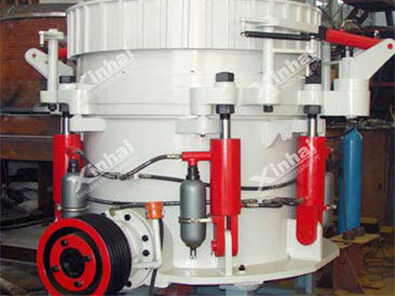
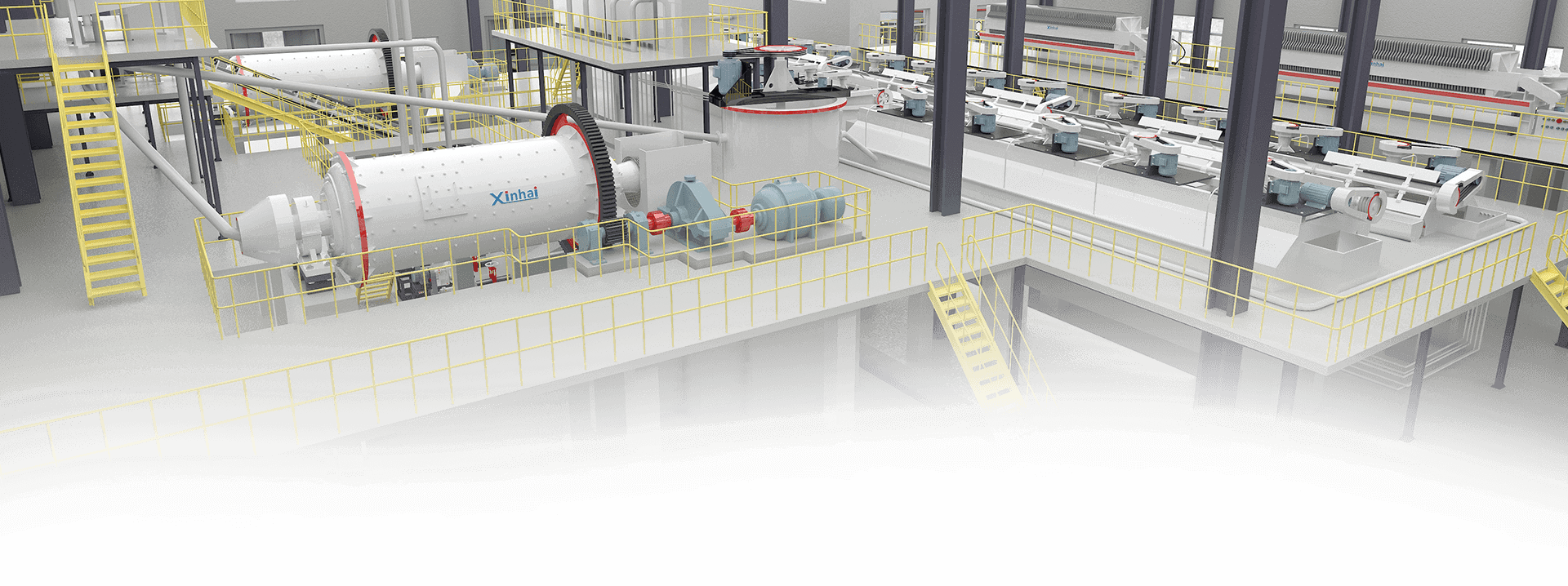
Crushing: Lump run-of-mine ore undergoes primary crushing by jaw crushers and secondary & tertiary crushing by cone crushers, reducing ore blocks from hundreds of millimeters to below 10 mm.
Grinding: Ball mills grind crushed ore into fine ore slurry to fully dissociate iron-bearing minerals from gangue impurities.
Classification: Hydrocyclones classify particles by size; coarse particles are returned to the ball mill for regrinding.
Separation: Magnetic separation or flotation separates iron-rich concentrate from waste tailings.
Dewatering: Thickener combined with filter press removes water from ore slurry to produce dry iron concentrate with a moisture content of approximately 10%.
2. Matching Equipment Selection
Select equipment based on production capacity, ore hardness and process route, prioritizing energy-efficient and maintainable models:
Crushing System: Jaw crusher, cone crusher, vibrating screen, belt conveyor
Grinding and Classification System: Ball mill, hydrocyclone, slurry pump
Separation System: Permanent magnetic separator, flotation cell, high-intensity magnetic separator
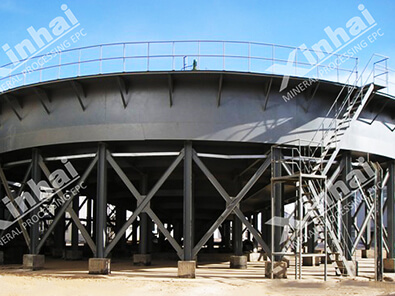
Dewatering System: Thickener, filter press
03Conclusion
BackIron ore concentrator construction is a long-cycle, multi-disciplinary collaborative mineral processing project. Every stage—from pre-construction resource evaluation and permit approval, to design, construction, trial commissioning, formal production and daily operation and maintenance—must balance technical feasibility, investment cost, work safety and environmental compliance. Compared with graphite processing, iron ore concentration is more constrained by ore type: magnetite processing boasts a simple flow and lower capital investment, while weakly magnetic iron ores require complex processes and face tighter environmental supervision.


RELATED PRODUCTS
-
Surface Auxiliary Equipment
-
Efficient Improved Thickener
-
Hydraulic Cone Crusher