+8618234403483
 yanzhang19990421@gmail.com



Chrome Wash Plant: How It Works
 Sheena
 Sep 20, 2026
 9
9
If you want to know more details about equipment, solutions, etc, please click the button below for free consultation, or leave your requirements!
 Message
 Chat Now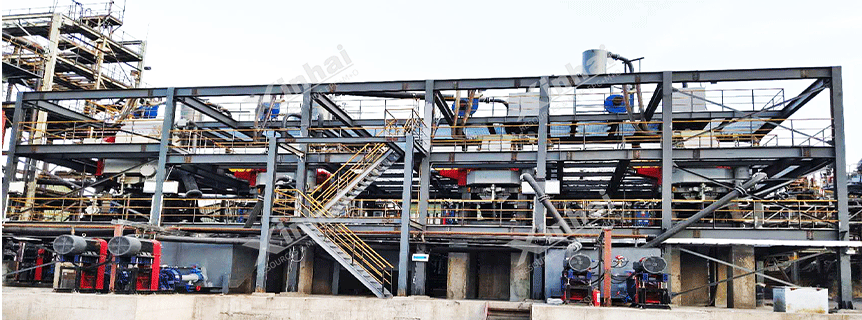
1500tpd-Chrome-Wash-Plant
A chrome wash plant flowsheet depends on the characteristics of the chrome ore. Some deposits are relatively coarse and easy to wash, while others contain large amounts of clay or finely disseminated chromite that require more intensive scrubbing, desliming, and concentration. Gravity separation is widely used in chromite beneficiation because chromite is significantly denser than many of its associated gangue minerals.
01How Does a Chrome Wash Plant Work?
BackThe working principle of a chrome wash plant can be understood through several connected stages:
Crushing → Screening → Scrubbing → Desliming → Gravity Concentration → Dewatering
Each stage solves a different problem.
Crushing reduces oversized ore to a manageable size. Washing and scrubbing release chromite particles from clay and weathered material. Screening and desliming remove unsuitable size fractions and excess slimes. Gravity concentration then exploits the density difference between chromite and lighter gangue minerals to produce a concentrate. This sequence is important because efficient gravity separation depends on proper feed preparation. Feeding excessive clay, slimes, or poorly liberated particles directly into the gravity circuit can reduce separation efficiency. In other words, the washing circuit prepares the ore so that the concentration circuit can work effectively.
02Chrome Wash Plant Process Flow
BackA general chrome wash plant flow chart is:
Run-of-Mine Chrome Ore→ Primary Crushing→ Screening→ Scrubbing / Washing→ Desliming & Classification→ Gravity Separation→ Chrome Concentrate→ Thickening / Dewatering→ Final Chrome Concentrate
Depending on the ore, additional crushing, grinding, magnetic separation, or multiple gravity-cleaning stages may be incorporated. Therefore, a wash plant should be viewed as a complete process, not simply a collection of washing machines.
1. Crushing: Preparing the Chrome Ore
Run-of-mine chrome ore can contain large rocks and consolidated material that cannot be processed efficiently by washing or gravity equipment. Crushing reduces this material to an appropriate size and can help liberate chromite-bearing particles from the surrounding rock.
A typical crushing section may include:
Jaw crusher for primary crushing
Cone crusher for secondary crushing
Vibrating screen for size control
The exact configuration depends on the maximum feed size, ore hardness, plant capacity, and required product size. However, more crushing is not always better. Excessive size reduction can create unnecessary fines and increase energy consumption. The target should be to achieve enough size reduction for effective downstream washing and separation rather than automatically grinding the ore as fine as possible.
2. Screening: Controlling Particle Size
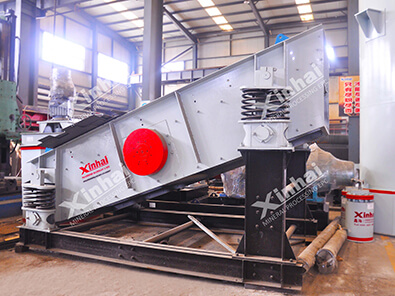
Screening separates the crushed ore into different size fractions and helps control the material entering the washing circuit. A vibrating screen may be used when the material is relatively free-flowing, while a trommel screen is often attractive for wet or clay-containing feed because it can combine screening with washing.
The screen size should be selected according to the size distribution of the valuable chromite and the characteristics of the gangue. An important consideration is that some coarse particles may still contain valuable chromite. Therefore, oversize material should not automatically be treated as waste without confirming its chromite content.
3. Scrubbing and Washing: Releasing Chromite from Clay
Washing is particularly important when chrome ore contains clay, weathered material, or other sticky components. Clay can coat valuable particles and cause them to behave as larger, composite lumps. If this material enters the gravity circuit without adequate disaggregation, chromite may report to the wrong product and recovery can suffer. A trommel scrubber combines mechanical agitation and water to break down clay-bound material. The rotating drum moves the feed through the washing zone while water helps disperse fine material.
The objective is not simply to make the ore clean. Effective scrubbing should liberate chromite-bearing particles without unnecessarily breaking the material into excessive slimes. This balance is important because excessive slimes can create a new separation problem downstream.
4. Desliming and Classification: Removing Fine Interference
After washing, the slurry may contain a large amount of fine clay and slime. These fine particles can interfere with gravity separation and reduce separation selectivity. Desliming removes a portion of this fine fraction before the main concentration stage.
Hydrocyclones, wet screens, and other classifiers can be used depending on the required cut size and plant configuration. This stage is particularly important for fine-grained or clay-rich chrome ores. Research on low-grade chromite has shown that desliming before gravity separation can improve separation results by reducing the influence of slimes.
The process can therefore be simplified as: Washing → Desliming → Cleaner Gravity Feed. The goal is to present the gravity circuit with a feed whose particle size and pulp conditions are more suitable for separation.
5. Gravity Separation: The Core Concentration Stage
Once the ore has been washed and properly classified, gravity separation can be used to concentrate chromite. Chromite has a substantially higher density than many associated silicate gangue minerals, making this density difference useful for concentration. Gravity separation is consequently one of the most established methods for chromite beneficiation. Depending on particle size and the desired separation performance, a plant may use:
Jig: use pulsating water to stratify particles according to density. They are generally better suited to relatively coarse particles.
Spiral concentrators: use flowing slurry and gravity to separate particles according to density. They are widely used for fine and medium-sized chromite fractions and can operate continuously with relatively simple mechanical arrangements.
Shaking Table: provide a more controlled gravity separation and are particularly useful for fine particles and concentrate cleaning.
They can separate heavy chromite from lighter gangue through the combined effects of deck motion, flowing water, particle density, and particle size. The choice between a jig, spiral, and shaking table should therefore be based on the actual particle-size distribution and required product quality rather than treating one gravity separator as universally applicable.
6. Chrome Concentrate Cleaning
A primary gravity circuit may produce a rougher concentrate containing chromite together with some unwanted heavy minerals. A cleaning stage can then improve the final concentrate quality.
The objective should be to achieve an appropriate balance between Cr₂O₃ grade and recovery. Pushing the concentrate grade too high can sometimes increase chromite losses to tailings or middlings. Conversely, maximizing recovery without considering concentrate quality may produce a product that is unsuitable for its intended market. Therefore, the optimum flowsheet is usually the point at which concentrate specifications and overall metal recovery are both economically acceptable.
7. Concentrate Dewatering
The final chrome concentrate produced by wet gravity separation contains water and therefore requires dewatering before transportation or further processing.
A typical dewatering circuit may include: Chrome Concentrate → Thickener → Filter → Final Concentrate
Effective water recovery is particularly important in wash plants because large quantities of water may be circulated through the scrubbing, screening, and gravity circuits.
03Chrome Wash Plant Flow Chart for Different Ore Types
BackDifferent chrome ores can require noticeably different flowsheets.
1. Coarse Chrome Ore with Low Clay Content
A relatively simple process may be sufficient: Crushing → Screening → Washing → Jig / Gravity Separation → Dewatering
This approach avoids unnecessary grinding and can keep the plant relatively simple.
2. Clay-Rich Chrome Ore
When clay is a major problem, washing becomes more important: Crushing → Trommel Scrubbing → Screening → Desliming → Gravity Separation → Dewatering
The additional scrubbing and desliming stages help prepare a cleaner feed for gravity concentration.
3. Fine-Grained Chrome Ore
Fine chromite may require more careful classification and gravity concentration: Crushing → Grinding if Required → Classification → Spiral Concentration → Shaking Table / Cleaning → Dewatering
The use of grinding should be confirmed by liberation testing. Research on specific low-grade chromite ores has shown that excessive grinding may not necessarily improve the final separation and can increase energy requirements.
4. Chrome Ore with High Iron Impurities
Some chromite ores contain significant iron-bearing components, and magnetic separation can sometimes be used to improve concentrate quality or the Cr/Fe ratio when the mineralogy is suitable. However, magnetic separation is not a universal replacement for gravity concentration.
04How to Choose the Right Chrome Wash Plant Process?
Back1. Chrome Grade and Cr₂O₃ Content: The head grade determines how much upgrading is required to produce a saleable concentrate.
2. Chromite Liberation: The size at which chromite becomes sufficiently liberated from gangue determines whether simple washing is enough or whether crushing and grinding are required.
3. Particle Size Distribution: Coarse chromite may respond well to jigging, while finer fractions may be better treated using spirals or shaking tables. The suitability of each method depends on the actual size distribution.
4. Clay and Slime Content: High clay content increases the importance of scrubbing and desliming. Poorly prepared feed can reduce the efficiency of downstream gravity separation.
5. Gangue Mineralogy: The type of associated gangue determines whether gravity separation alone is sufficient or whether magnetic separation or another cleaning method should be considered.
6. Required Concentrate Quality: The target Cr₂O₃ grade and Cr/Fe ratio can influence the number of roughing, scavenging, and cleaning stages required.
05Conclusion
BackA chrome wash plant is more than a washing system. It is an integrated beneficiation circuit that prepares chrome ore, removes clay and slimes, separates particles by size, and concentrates chromite into a higher-grade product.
Gravity separation plays an important role because the density difference between chromite and many associated gangue minerals allows chromite to be concentrated effectively. Jigs, spirals, and shaking tables can each have a role depending on particle size and separation requirements.
However, there is no universal chrome wash plant flowsheet. A plant should be designed according to chromite grade, mineralogy, liberation size, clay content, particle-size distribution, and concentrate requirements. Mineralogical analysis and beneficiation testing are therefore the foundation for selecting the right washing, classification, gravity separation, and dewatering equipment.


RELATED PRODUCTS
-
Round Vibrating Screen
-
Autogenous Mill
-
Rock Drilling Equipment