+8618234403483
 yanzhang19990421@gmail.com



Gold Flotation vs CIL/CIP Leaching: How to Choose the Right Gold Processing Method?
 Sheena
 Jul 18, 2026
 341
341
If you want to know more details about equipment, solutions, etc, please click the button below for free consultation, or leave your requirements!
 Message
 Chat Now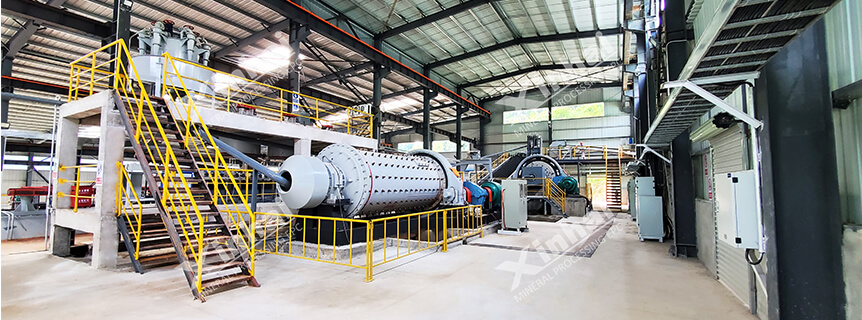
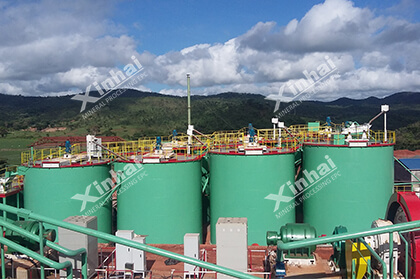
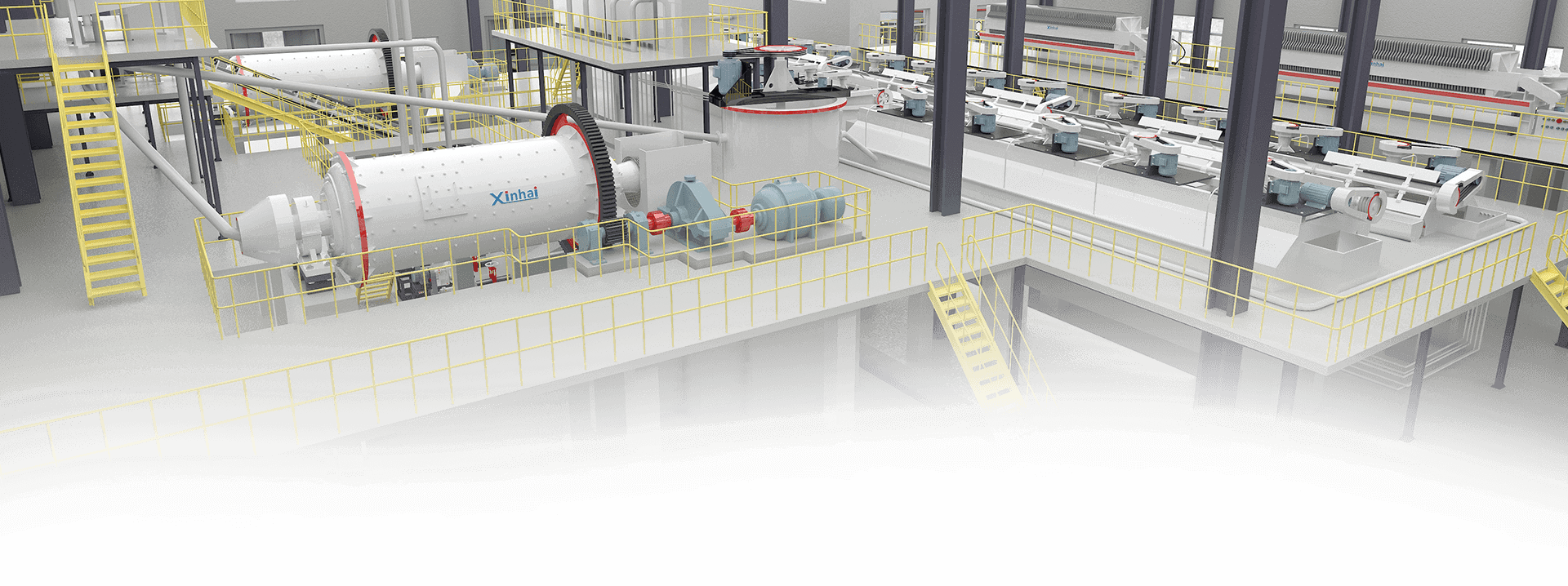
500tpd gold flotation plant in Tanzania
Gold processing methods directly influence recovery, operating efficiency, and the economic performance of a mining project. Among the various extraction technologies available today, gold flotation and CIL/CIP leaching are the two most widely used processes for recovering gold from different types of ores.
Although both methods aim to recover valuable gold, they operate on different principles and are suitable for different ore characteristics. Selecting the right process requires a clear understanding of ore mineralogy, liberation characteristics, and production objectives.
This guide compares gold flotation and CIL/CIP leaching from the perspectives of process principles, flowsheets, suitable ore types, advantages, and limitations to help determine the most appropriate gold processing solution.
01What Is Gold Flotation?
BackGold flotation is a physical beneficiation process that separates gold-bearing minerals from gangue minerals based on differences in surface properties. During flotation, reagents such as collectors, frothers, and modifiers are added to the mineral slurry. Air bubbles generated in flotation cells selectively attach to hydrophobic gold-bearing sulfide minerals, allowing them to rise to the surface as froth, while waste minerals remain in the pulp. Gold flotation is widely used for recovering gold associated with sulfide minerals such as pyrite, arsenopyrite, and chalcopyrite.
1.1 Typical Gold Flotation Process
A typical flotation flowsheet includes:
Crushing and screening: The mined gold ore is first crushed into smaller particles and screened to achieve a suitable feed size for grinding. This stage improves material handling efficiency and ensures that oversized rocks are returned for further crushing.
Grinding and classification: The crushed ore is ground to liberate gold-bearing minerals from the surrounding gangue. Classification equipment, such as hydrocyclones or spiral classifiers, separates particles by size, allowing only adequately ground material to proceed to flotation while coarse particles are returned for further grinding.
Conditioning with flotation reagents: Before flotation, the slurry is mixed with collectors, frothers, and modifiers in conditioning tanks. These reagents selectively alter the surface properties of gold-bearing minerals, making them hydrophobic and more likely to attach to air bubbles during flotation.
Rougher flotation: The primary objective is to maximize gold recovery by producing a rough concentrate, even if it still contains some impurities.
Cleaner flotation: Depending on the ore characteristics and product specifications, multiple cleaning stages may be used to produce a high-quality gold concentrate.
Concentrate dewatering: Thickening, filtration, and drying reduce the moisture content, making the concentrate easier to handle and lowering transportation costs.
Smelting or further treatment: The final flotation concentrate is either sent directly to a smelter for metal recovery or subjected to additional treatment, such as roasting, pressure oxidation, or cyanide leaching, depending on the mineral composition and the occurrence of gold.
The resulting gold concentrate is usually transported to a smelter or subjected to additional processing such as roasting, pressure oxidation, or cyanidation if the ore is refractory.
02What Is CIL/CIP Leaching?
BackCIL (Carbon-in-Leach) and CIP (Carbon-in-Pulp) are hydrometallurgical processes that recover dissolved gold using activated carbon after cyanide leaching. In both processes, cyanide solution dissolves gold from finely ground ore, forming a gold-cyanide complex. Activated carbon then adsorbs the dissolved gold, which is later recovered through desorption, electrowinning, and smelting.
The primary difference between the two processes lies in the adsorption stage.
CIL: Leaching and carbon adsorption occur simultaneously in the same tanks.
CIP: Cyanide leaching is completed first, followed by gold adsorption in separate carbon tanks.
Both processes are widely applied in modern gold processing plants because they offer high recovery rates for suitable ores.
2.1 Typical CIL/CIP Process
A standard CIL/CIP flowsheet generally includes: Crushing and screening; Grinding and classification; Thickening; Cyanide leaching; Carbon adsorption; Carbon desorption; Electrowinning; Smelting; Tailings detoxification. Compared with flotation, the CIL/CIP process contains more stages but produces gold bullion directly on site.
03Gold Flotation vs CIL/CIP: Process Comparison
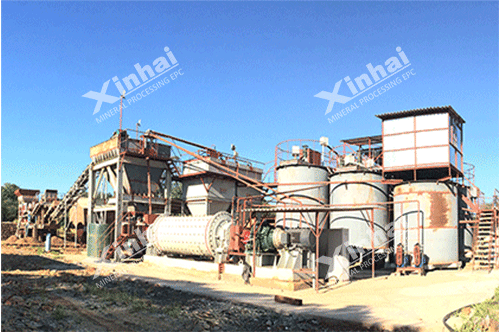
BackAlthough both methods are designed to recover gold, their process routes differ significantly. Gold flotation separates gold-bearing minerals before extraction, producing a concentrate for further treatment. It is a mineral concentration process rather than a direct gold extraction method.
CIL/CIP, on the other hand, dissolves gold into solution through cyanidation and recovers it using activated carbon. It is a complete gold extraction process capable of producing doré bars within the processing plant. Because of these differences, flotation circuits are generally simpler, while CIL/CIP plants require additional leaching, adsorption, desorption, and refining systems.
04Suitable Ore Types
BackOre characteristics are one of the most important factors when selecting a gold processing method.
4.1 Gold Flotation
Gold flotation is generally suitable for: Sulfide gold ores; Polymetallic gold ores. Such as: Copper-gold ores; Gold associated with pyrite or arsenopyrite; Ores intended for concentrate sales. Flotation is particularly effective when gold occurs together with sulfide minerals and can be recovered as a high-grade concentrate.
4.2 CIL/CIP Leaching
CIL/CIP is commonly used for: Free-milling gold ores; Oxide gold ores; Low-sulfide gold deposits; Finely disseminated gold; Ores with good cyanide leaching characteristics. For ores containing highly refractory gold, pretreatment may be required before cyanidation.
05Advantages and Limitations
BackEach process has its own strengths and operational considerations.
5.1 Advantages of Gold Flotation
Gold flotation offers several benefits: Simple process flowsheet; Lower reagent consumption in many sulfide ore applications; Effective recovery of sulfide-associated gold; Lower water requirements in some operations; Suitable for polymetallic ore beneficiation. However, flotation typically produces a concentrate rather than final gold bullion, requiring additional downstream processing.
5.2 Advantages of CIL/CIP Leaching
CIL/CIP is widely recognized for its ability to achieve high gold recovery from suitable ores.
Its main advantages include: High recovery for free-milling gold ores; Direct production of gold bullion; Continuous operation; Mature and widely adopted technology; Stable product quality. Its limitations include higher process complexity, greater cyanide consumption, and stricter environmental management requirements.
06How to Choose the Right Gold Processing Method
BackThere is no universal gold processing method suitable for every deposit. The most appropriate process depends on several factors, including: Ore mineralogy; Gold occurrence; Sulfide content; Cyanide leaching characteristics; Desired recovery; Environmental requirements; Project economics. Metallurgical testing is essential for determining whether flotation, CIL/CIP, or a combined process will deliver the best technical and economic results.
07Conclusion
BackGold flotation and CIL/CIP leaching are both proven technologies, but they serve different purposes within gold processing. Flotation concentrates gold-bearing minerals before extraction, while CIL/CIP dissolves and recovers gold directly from the ore. Selecting the right method depends primarily on ore characteristics and processing objectives. A well-designed process based on comprehensive metallurgical testing can maximize recovery, improve operational efficiency, and enhance the long-term profitability of a gold mining project


RELATED PRODUCTS
-
BF Flotation Cell
-
JJF Flotation Cell
-
SF Flotation Cell