+8618234403483
 yanzhang19990421@gmail.com



Gold Leaching Process: How Does Gold Leaching Work?
 Sheena
 Sep 18, 2026
 18
18
If you want to know more details about equipment, solutions, etc, please click the button below for free consultation, or leave your requirements!
 Message
 Chat Now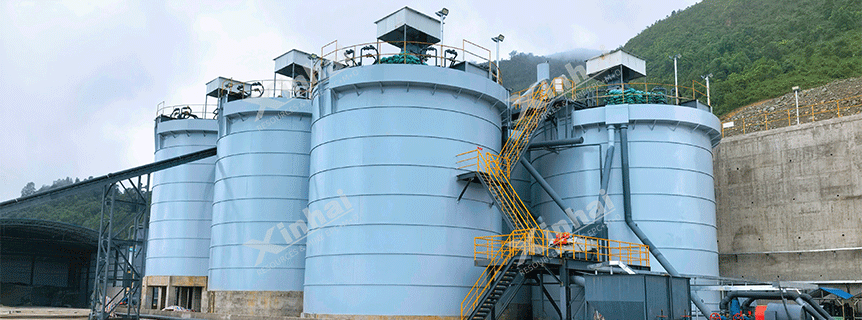
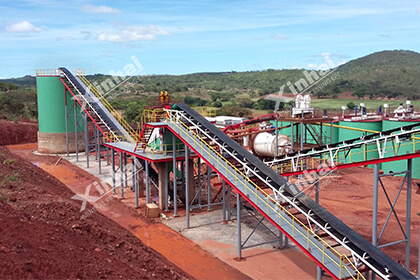
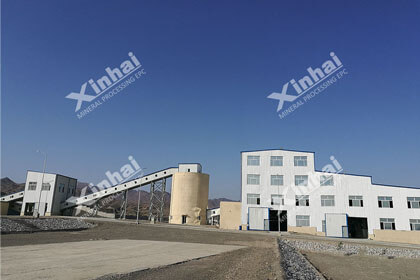
1000tpd-gold-leaching-processing-plant
Gold leaching is one of the most important hydrometallurgical methods used to recover gold from ore. Unlike flotation, which concentrates gold-bearing minerals into a separate product, leaching aims to dissolve gold into a solution so that it can be recovered in a later stage.
For many gold ores, the basic idea sounds simple: the ore is prepared to a suitable particle size, contacted with a leaching solution, and the dissolved gold is then recovered from the resulting solution. In practice, however, the performance of a gold leaching process depends on mineralogy, gold liberation, particle size, reagent conditions, oxygen availability, and the presence of minerals or organic matter that interfere with gold dissolution or recovery.
This article explains the gold leaching process from beginning to end, including how leaching works, the main process methods, common equipment, factors affecting recovery, and how to select a suitable leaching process for different types of gold ore.
01How Does Gold Leaching Work?
BackAlthough the chemistry can become complex, the overall mechanism of gold leaching can be understood in several stages.
1. The Ore Is Prepared for Leaching
Gold-bearing ore is first crushed and, when necessary, ground to expose gold particles and increase the surface area available for reaction.
The required particle size depends on how the gold occurs in the ore. Coarse, liberated gold may not require extremely fine grinding, while finely disseminated gold may need substantial size reduction before leaching can achieve good recovery.
2. The Leaching Solution Contacts the Gold-Bearing Particles
The prepared ore is brought into contact with the selected leaching solution. In conventional cyanide-based gold leaching, the chemistry requires suitable alkaline conditions and sufficient oxidizing conditions for gold to dissolve and form a soluble gold-cyanide complex. In other leaching systems, the chemistry is different, but the fundamental concept remains the same: the chemical environment must promote dissolution of gold from the mineral surface.
3. Gold Dissolves into the Solution
As the reaction proceeds, accessible gold passes from the solid phase into the liquid phase.
The rate and extent of dissolution depend on several variables, including:
Gold liberation
Particle size
Mineral surface characteristics
Leaching time
Reagent conditions
Oxygen availability
Temperature and other operating conditions
This is why two gold ores with the same head grade can produce very different leaching results.
4. A Pregnant Leach Solution Is Produced
Once gold has dissolved, the liquid phase contains dissolved gold together with other dissolved species. This gold-bearing solution is called the pregnant leach solution. The next challenge is to recover the dissolved gold efficiently while controlling the amount of unwanted material carried into the recovery stage.
5. Gold Is Recovered from the Solution
Gold recovery depends on the selected leaching flowsheet. In many conventional cyanide circuits, dissolved gold is adsorbed onto activated carbon. The loaded carbon is then treated in a separate recovery circuit to remove the gold from the carbon and produce a gold-bearing product.
The important point is that leaching and gold recovery are separate but connected operations:
Leaching dissolves the gold. Recovery removes the dissolved gold from the solution. Understanding this distinction makes it much easier to understand CIL, CIP, heap leaching, and other gold extraction flowsheets.
02Gold Leaching Process Flow
BackA conventional gold leaching plant may follow a process such as:
Crushing → Grinding → Classification → Leaching → Solid-Liquid Separation or Carbon Adsorption → Gold Recovery → Tailings Treatment
However, the actual flowsheet varies according to the ore.
A heap leaching plant, for example, may bypass fine grinding and instead crush the ore to a suitable size before stacking it on a prepared heap. A CIL plant may combine leaching and carbon adsorption in the same series of tanks rather than separating the two operations into completely independent sections.
A typical tank-based process can be understood as follows.
Crushing: Large run-of-mine rocks are reduced to a manageable particle size.
Grinding and Classification: The ore is ground when additional liberation is required. Classification controls the size distribution and may return coarse particles for further grinding.
Leaching: The prepared ore is contacted with the leaching solution for sufficient time to dissolve recoverable gold.
Gold Recovery: The dissolved gold is recovered from the pregnant solution or directly adsorbed onto activated carbon, depending on the process configuration.
Tailings Treatment: The remaining solid material is separated and managed as tailings, with water often recycled back into the process where appropriate.
03Main Gold Leaching Methods
BackGold leaching is not one single process. Several methods are used depending on ore grade, mineralogy, particle size, permeability, and project conditions.
1. Tank Leaching
Tank leaching treats finely prepared ore or slurry in a series of tanks where the material is continuously or sequentially contacted with the leaching solution.
Agitation helps maintain contact between the solid particles and solution and promotes more consistent leaching conditions. Tank leaching is often associated with ores that can be economically ground and slurried before treatment. It provides relatively good control over residence time and process conditions, making it suitable for plants that require a controlled leaching environment.
A simplified circuit may be:
Grinding → Classification → Conditioning → Leaching Tanks → Gold Recovery
The number and size of tanks depend on processing capacity, slurry density, required residence time, and metallurgical performance.
2. Carbon-in-Pulp (CIP)
In a carbon-in-pulp process, leaching and gold adsorption are conducted as separate stages. The ore is first leached in tanks, and the resulting slurry then passes through adsorption tanks containing activated carbon. Dissolved gold moves from the solution onto the carbon, which is subsequently removed for downstream gold recovery.
The basic concept is:
Leaching → Pulp Transfer → Carbon Adsorption → Loaded Carbon → Gold Recovery
CIP is well suited to certain free-milling ores where cyanide leaching can effectively dissolve the gold and carbon adsorption can efficiently recover it from the slurry.
3. Carbon-in-Leach (CIL)
In a carbon-in-leach process, activated carbon is present in the leaching tanks so that gold adsorption occurs while leaching is still taking place. The two operations therefore overlap:
Leaching + Carbon Adsorption
This configuration can reduce the need for a separate post-leach adsorption section and can be particularly useful for ores where dissolved gold may be exposed to losses through adsorption onto naturally occurring carbonaceous material or other preg-robbing effects. The choice between CIL and CIP should be based on ore behavior, metallurgical test results, plant configuration, and operating considerations rather than assuming that one is universally better than the other.
4. Heap Leaching
Heap leaching is commonly considered for suitable low-grade, relatively permeable gold ores where treating the ore as a whole slurry through fine grinding would not be economically attractive. The ore is crushed to an appropriate size and stacked on a prepared leach pad. The leaching solution is distributed over the heap and percolates downward through the ore, collecting dissolved gold as it moves through the material.
A simplified heap leaching flowsheet is:
Crushing → Agglomeration if Required → Heap Stacking → Solution Application → Pregnant Solution Collection → Gold Recovery
Heap leaching can have a lower grinding requirement than conventional tank-based treatment, but its performance depends strongly on ore permeability, gold occurrence, solution distribution, and climate and site conditions.
5. Other Gold Leaching Systems
Cyanide-based systems are widely used in the gold industry, but other lixiviant systems have also been investigated and applied under specific conditions.
These systems may be considered where conventional cyanide leaching presents technical, environmental, or metallurgical challenges. However, alternative systems also have their own chemistry, reagent requirements, recovery methods, and process-control challenges.
Therefore, an alternative lixiviant should be evaluated through metallurgical testing rather than selected simply because it is described as a substitute for cyanide.
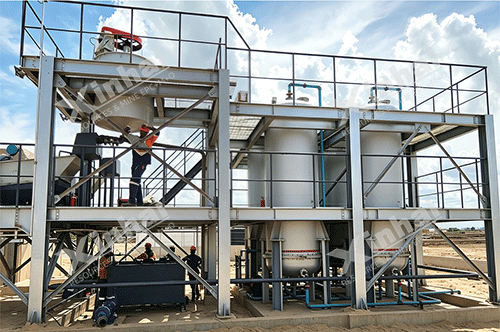
04CIL vs. CIP vs. Heap Leaching
BackThese three processes are often confused because all can be used to recover gold through leaching-related technologies, but they operate differently.
| Process | Main Principle | Typical Application |
|---|---|---|
| CIL | Leaching and carbon adsorption occur together | Suitable ores where tank leaching and direct carbon adsorption are appropriate |
| CIP | Leaching is followed by carbon adsorption | Suitable free-milling ores with effective cyanide leaching |
| Heap Leaching | Solution percolates through a stacked ore heap | Suitable low-grade, permeable ores where fine grinding is not economically attractive |
The most important difference is where and how the gold is dissolved and recovered. CIL and CIP generally require a finely prepared slurry and controlled tank residence time. Heap leaching treats a coarser crushed material and relies on solution percolation through the heap. This means process selection is closely tied to the physical and metallurgical characteristics of the ore.
05What Factors Affect Gold Leaching Recovery?
BackGold leaching recovery can vary substantially between deposits. Even two ores with similar gold grades may behave very differently because their mineralogical characteristics are not the same.
1. Gold Mineralogy
The first question is not simply how much gold is present, but how that gold occurs.
Gold may be: Free and readily accessible; Associated with quartz; Associated with sulfide minerals; Encapsulated within sulfide particles; Associated with carbonaceous material
These different forms can require very different processing strategies.
2. Gold Liberation
If gold is physically locked within other minerals, the leaching solution cannot contact it effectively. This is why grinding and liberation testing are important for many ores.
3. Particle Size
Finer particles generally provide greater surface area for reaction, but finer grinding does not automatically mean better recovery. Excessive grinding can increase energy consumption and create slimes that complicate downstream processing. The objective is to find the optimum particle size for gold liberation and leaching performance.
4. Leaching Time
Gold dissolution takes time. An insufficient residence time may result in incomplete recovery, while excessive residence time can increase tank volume and operating costs without providing a proportional benefit.
5. Reagent Conditions
The concentration and balance of the selected reagents strongly affect the dissolution reaction. For conventional cyanide systems, appropriate chemical conditions must be maintained throughout the circuit. Excessive reagent consumption can increase operating costs, while insufficient reagent availability can limit gold dissolution.
6. Oxygen Availability
Oxidizing conditions can be important in gold leaching chemistry. Poor oxygen availability can reduce the effectiveness of the dissolution reaction for some ores.
7. Preg-Robbing Materials
Some ores contain carbonaceous components or other materials that can adsorb dissolved gold and reduce the amount recovered in the final product. This phenomenon is known as preg-robbing and is an important consideration when selecting and designing a gold leaching process.
8. Refractory Minerals
Some gold ores are described as refractory because the gold is not readily accessible to conventional leaching. In such cases, direct leaching may produce poor recovery, and a pretreatment or concentration stage may be required.
06How to Choose the Right Gold Leaching Process?
BackThe appropriate leaching process should be selected through a combination of mineralogical investigation and metallurgical testing.
1. Free-Milling Gold Ore
If gold is relatively liberated and responds well to conventional leaching, a direct gravity and/or leaching flowsheet may be appropriate.
A possible route is: Crushing → Grinding → Gravity Recovery → Leaching → Gold Recovery
2. Fine Disseminated Gold
When gold is finely disseminated, additional grinding may be needed before leaching. The process may therefore emphasize: Grinding → Classification → Leaching → Gold Recovery
3. Low-Grade Permeable Ore
For suitable low-grade ore with favorable permeability, heap leaching may provide an alternative to intensive grinding and tank treatment.
4. Preg-Robbing Ore
If carbonaceous material interferes with dissolved gold recovery, the process may require careful control of adsorption conditions and potentially a CIL-based or other suitable treatment strategy.
5. Refractory Gold Ore
When gold is locked within sulfide minerals or other refractory hosts, direct leaching may not be sufficient. A more complex route may be necessary, for example: Grinding → Flotation → Concentrate Treatment / Pretreatment → Leaching → Gold Recovery. The exact pretreatment method depends on the refractory mineralogy and should be established through testing.
07Conclusion
BackThe gold leaching process can be understood as a sequence of four basic ideas: prepare the ore, dissolve the accessible gold, recover the dissolved gold, and manage the remaining solids and solutions.
The key to selecting the right process is therefore not simply the gold grade. Gold mineralogy, liberation, particle size, ore permeability, reagent response, and metallurgical test results should determine whether the project uses direct leaching, CIL, CIP, heap leaching, or a combined flowsheet. The gold leaching approach helps balance gold recovery, concentrate or product quality, capital investment, and operating costs while ensuring that the leaching process matches the actual characteristics of the ore.


RELATED PRODUCTS
-
Efficient Deep Cone Thickener
-
Autogenous Mill
-
Underground Auxiliary Equipment