+8618335758886
 laura@xinhaimining.com



How Copper Ore Is Processed? Four Major Steps of Copper Ore Dressing
 zeki
 Oct 31, 2026
 8
If you want to know more details about equipment, solutions, etc, please click the button below for free consultation, or leave your requirements!
 Message
 Chat Now
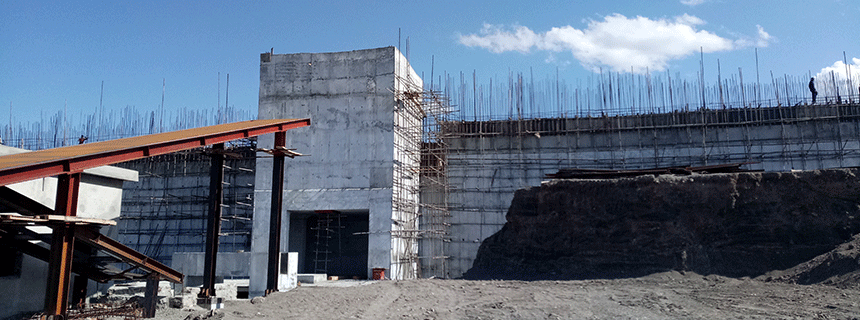
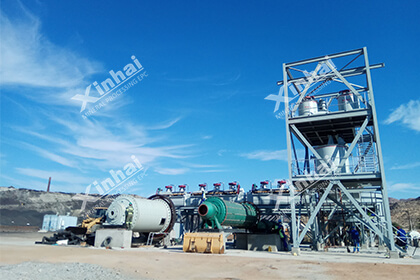
1500 tpd Copper Mine in Pakistan
Copper ore boasts high comprehensive utilization value. Ores with different origins and oxidation levels vary greatly in separation processes and supporting equipment. A complete copper ore dressing production line consists of four major stages: crushing and screening, grinding and classification, separation operations, and tailings disposal. This article introduces the full processing flow of copper ore beneficiation in practical production.
01Step 1: Crushing and Screening
BackFor copper ore crushing, primary crushing generally adopts jaw crushers or gyratory crushers; secondary crushing uses standard cone crushers; fine crushing applies short-head cone crushers. High-hardness ore may be processed with roller presses in some cases. Most small and medium-sized copper concentrators adopt a two-stage closed-circuit crushing flow, while large-scale concentrators commonly use a three-stage closed-circuit crushing process.
The "more crushing, less grinding" principle is followed on site to reduce the particle size of feed ore as much as possible, so as to lower the load of grinding equipment and improve the capacity and equipment utilization rate of the whole system.
Main equipment for copper ore crushing and screening: Jaw crusher, cone crusher, circular vibrating screen.
02Step 2: Grinding and Classification
BackFor primary copper ore grinding, small and medium-sized concentrators often adopt single-stage grinding. Larger concentrators mostly apply a two-stage grinding circuit composed of grate ball mills and overflow ball mills. The secondary grinding forms a closed circuit with spiral classifiers or hydrocyclones to strictly control the grinding fineness.
If copper minerals are closely intergrown with sulfide minerals such as pyrite, only the liberation of sulfide minerals is required. If copper minerals are largely embedded in gangue minerals like quartz, the ore must be ground until copper minerals are fully liberated.
Grinding fineness is critical. Insufficient grinding leads to poor mineral liberation, while over-grinding generates slimes that interfere with subsequent separation performance.
Main equipment for copper ore grinding and classification: Wet grate ball mill, wet overflow ball mill, hydrocyclone cluster.
03Step 3: Separation Operations
BackCopper ore is mainly divided into sulfide copper ore and oxidized copper ore. Separation methods differ significantly according to ore types. Sulfide copper ore is the dominant copper resource in China and is suitable for flotation. Oxidized copper ore is difficult to float, so leaching is widely used for low-grade oxidized ore. Gravity separation is occasionally used as an auxiliary process for ores containing associated heavy minerals.
Process 1: Copper Ore Flotation
Flotation is the mainstream beneficiation method for sulfide copper ore. Collectors, frothers and pH regulators are added to modify the hydrophobicity of mineral surfaces, enabling copper sulfides to attach to air bubbles and rise, thereby separating copper minerals from gangue.
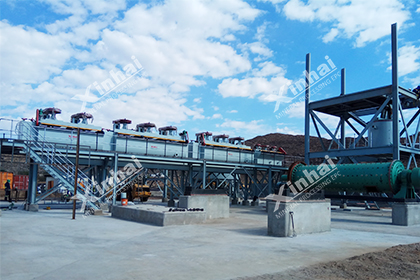
The flotation circuit includes roughing, scavenging and cleaning stages. Copper concentrate with a grade of 20%–28% can be obtained from run-of-mine ore with copper content mostly ranging from 0.3% to 1.2%. For polymetallic ores such as copper‑sulfur and copper‑molybdenum intergrown ores, selective flotation or bulk flotation followed by separation flotation can be adopted to recover associated valuable metals simultaneously.
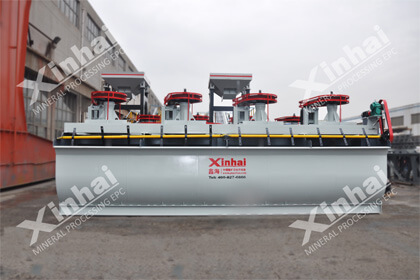
Main equipment for copper ore flotation: XCF forced-air flotation cell, KYF forced-air flotation cell, SF mechanical-agitation flotation cell.
Process 2: Copper Ore Leaching
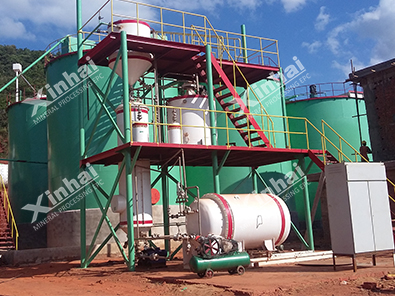
Leaching is applied to oxidized copper ore, mixed copper ore and low-grade copper resources, and falls into two modes: agitation leaching and heap leaching. Agitation leaching suits fine-grained highly oxidized ore, where pulp reacts sufficiently with acid in leaching tanks. Heap leaching is used for low-grade lump run-of-mine ore. The ore is stacked into heaps and irrigated with lixiviant; copper dissolves into the pregnant solution, which is further treated via solvent extraction and electrowinning to produce cathode copper. Leaching can also be used on flotation tailings to recover residual copper.
Main equipment for copper ore leaching: Leaching agitation tank, extraction tank, electrowinning system.
Process 3: Auxiliary Gravity Separation for Copper Ore
Gravity separation is rarely adopted as the main separation circuit for copper ore. It is mostly used to recover coarse native copper in advance. Taking advantage of the specific gravity difference between copper minerals and gangue, gravity equipment can discard part of tailings ahead of flotation and reduce the subsequent flotation throughput. Common equipment includes jigs, shaking tables and spiral chutes, which are mainly used for placer copper ore or coarse native copper grains liberated after crushing.
Main equipment for copper ore gravity separation: Jig, shaking table, spiral chute.
04Step 4: Tailings Disposal
BackA large volume of tailings is generated after copper ore dressing. Three mainstream disposal technologies are widely applied in the industry: tailings reprocessing, dry stacking of tailings, and backfilling of mined-out areas.
Method 1: Tailings Reprocessing
Copper tailings still contain residual copper, together with associated sulfur, iron, gold and silver. Reprocessing technologies such as regrinding-flotation and magnetic separation can recover valuable components secondarily, improve the comprehensive resource recovery rate, reduce final tailings discharge and ease the pressure on tailings ponds.
Method 2: Dry Stacking of Tailings
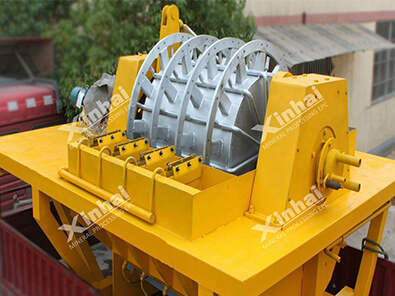
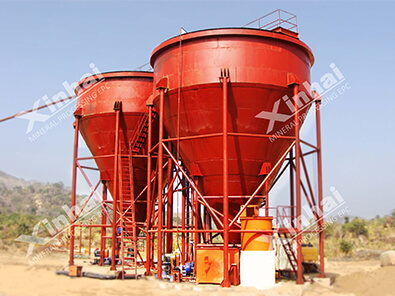
Tailings slurry discharged from separation has high moisture content. Direct discharge into tailings ponds carries the risk of dam failure. Modern copper concentrators generally adopt thickening, filtration and pressure filtration to turn tailings into low-moisture filter cakes for dry stacking. This cuts water consumption and improves mine safety.
Method 3: Tailings Backfilling into Mined-out Areas
Treated whole tailings are prepared as filling materials and backfilled into underground mined-out voids. This solves the land occupation problem of tailings stockpiling, stabilizes surrounding rock underground and reduces the required scale of tailings ponds. Common technologies include cemented whole-tailings backfilling and high-water consolidation whole-tailings backfilling.
Main equipment for copper ore tailings disposal: Thickener, ceramic filter, plate-and-frame filter press.
05Conclusion
BackThe above covers the four complete stages of copper ore beneficiation. If you need a customized copper ore dressing process flow or an equipment budget consultation for a copper concentrator, you may leave a message for our technical team, and we will provide feedback and proposals as soon as possible.


RELATED PRODUCTS
-
Desorption Electrolysis System
-
Rotary Disc Vacuum Filter
-
Efficient Deep Cone Thickener