+8618335758886
 laura@xinhaimining.com



How to Process Feldspar Ore: A Step-by-Step Guide
 Laura
 Oct 31, 2026
 8
If you want to know more details about equipment, solutions, etc, please click the button below for free consultation, or leave your requirements!
 Message
 Chat Now
How to Process Feldspar Ore - magnetic separator
Feldspar is an essential industrial mineral widely used in glass manufacturing, ceramic production, tiles, sanitary ware, and other applications. As a major source of alumina and alkali elements, feldspar plays an important role in improving the properties of industrial products. However, natural feldspar ore often contains impurities such as quartz, mica, iron oxides, and clay minerals. Processing feldspar ore involves a series of crushing, grinding, classification, and beneficiation operations to improve mineral purity and meet different industrial requirements.
This guide explains how to process feldspar ore step by step, covering raw ore preparation, crushing and grinding, impurity removal, and final product processing. It also introduces essential equipment and practical ways to improve beneficiation efficiency and mineral recovery.
01 Feldspar Ore Preparation and Initial Processing
BackOre preparation is the first stage of feldspar processing and directly influences the efficiency of subsequent beneficiation operations. Before selecting processing equipment, operators should understand the mineral composition, ore hardness, particle size, and impurity distribution. Different feldspar deposits have different mineralogical characteristics, meaning their processing requirements can vary considerably. Proper preparation helps establish a suitable processing flowsheet, reduce unnecessary operating costs, and improve the consistency of the final feldspar concentrate.
1. Raw Feldspar Ore Inspection and Analysis
The first step is to collect representative feldspar ore samples for mineralogical and chemical analysis. Testing helps identify the proportions of potassium feldspar, sodium feldspar, quartz, mica, and iron-bearing minerals. It also determines the distribution of impurities and the degree of mineral intergrowth. These results provide important information for selecting appropriate crushing sizes, grinding conditions, and beneficiation methods before investing in a complete processing plant.
2. Ore Sorting and Pre-Treatment
After inspection, raw ore may undergo manual sorting or mechanical separation to remove visible waste rock and unsuitable materials. This preliminary operation reduces the amount of unnecessary material entering the processing circuit. Depending on deposit conditions, washing or scrubbing may also be necessary to remove surface clay, soil, and weathered materials. Effective pre-treatment improves feed quality and helps prevent excessive wear or blockages in downstream processing equipment.
3. Selecting a Suitable Processing Flowsheet
The processing flowsheet should be designed according to the ore's mineral composition and the final product specifications. Some feldspar deposits require only crushing, grinding, and screening, while others need magnetic separation or flotation to remove impurities. Laboratory beneficiation tests help compare different processing options and estimate their recovery performance. A well-designed flowsheet balances product purity, mineral recovery, equipment investment, and long-term operating expenses.
02 Crushing, Grinding, and Classification of Feldspar Ore
BackCrushing and grinding reduce the particle size of feldspar ore and help liberate valuable minerals from associated impurities. These operations are essential because effective mineral separation requires suitable particle sizes and sufficient liberation. The crushing and grinding circuit should be carefully designed to avoid unnecessary energy consumption and excessive fine particles. Appropriate equipment selection and particle-size control can improve the efficiency of magnetic separation, flotation, and other downstream beneficiation processes.
Step 1: Primary Crushing
Primary crushing reduces large feldspar rocks into smaller pieces that can be handled by secondary crushing and grinding equipment. Jaw crushers are commonly used because they can process relatively large feed materials and provide reliable crushing performance. The crusher's discharge size should be controlled according to the requirements of the next processing stage. Proper feeding and regular inspection also help maintain stable production and reduce equipment downtime.
Step 2: Secondary Crushing
Secondary crushing further reduces the size of feldspar ore to prepare it for grinding. Cone crushers or other suitable crushing machines may be selected depending on ore hardness, feed size, and required production capacity. Vibrating screens are often installed to classify crushed materials and separate oversized particles for further crushing. This closed-circuit arrangement improves particle-size consistency and prevents unnecessarily large materials from entering the grinding system.
Step 3: Grinding and Mineral Liberation
After crushing, feldspar ore enters the grinding stage to achieve the particle size required for mineral liberation. Ball mills are commonly used in feldspar processing plants because they can produce relatively fine and controlled grinding products. The grinding fineness should be determined through mineral liberation tests. Excessive grinding may generate slimes, increase energy consumption, and reduce separation efficiency, so operators should optimize mill loading and grinding conditions.
Step 4: Classification and Desliming
After grinding, classification separates particles according to size, using equipment such as hydrocyclones or vibrating screens. Desliming may be necessary to remove excessive fine particles that interfere with subsequent beneficiation. This stage helps maintain a suitable particle-size distribution and improves the operating conditions of magnetic separators and flotation cells. Proper water management and slurry concentration control are also important for stable classification performance.
03 Feldspar Beneficiation: Removing Impurities and Improving Purity
BackBeneficiation is the most important stage when feldspar ore contains significant amounts of unwanted minerals. Its main purpose is to remove impurities such as iron-bearing minerals, quartz, mica, and other associated materials while maximizing valuable feldspar recovery. Depending on the ore characteristics, operators may use magnetic separation, flotation, washing, or gravity separation. Combining suitable technologies can improve concentrate quality and help feldspar products meet the requirements of glass and ceramic manufacturers.
1. Magnetic Separation for Iron Removal
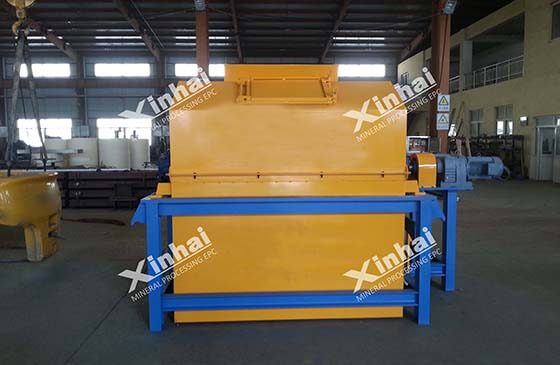
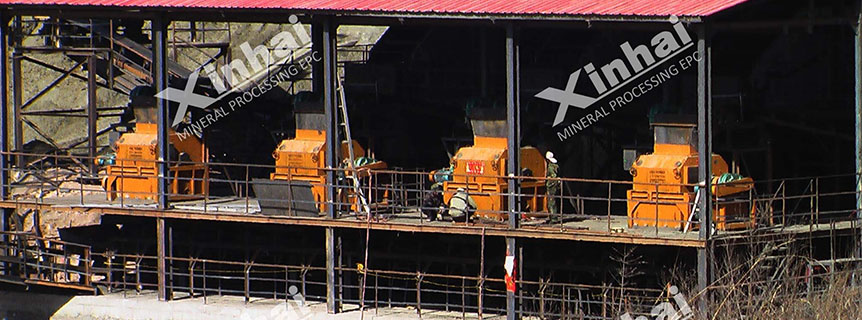
Magnetic separation is widely applied to remove magnetic and weakly magnetic iron-bearing minerals from feldspar ore. Low-intensity magnetic separators are suitable for strongly magnetic impurities, while high-intensity separators can target certain weakly magnetic minerals. Wet high-intensity magnetic separation is frequently considered when fine particles require treatment. Proper magnetic field strength, feed conditions, and separator configuration are essential for reducing iron contamination and improving the appearance of the final feldspar product.
2. Flotation for Quartz and Mica Separation
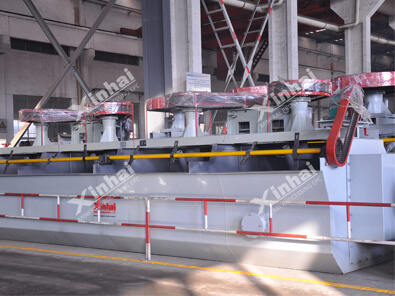
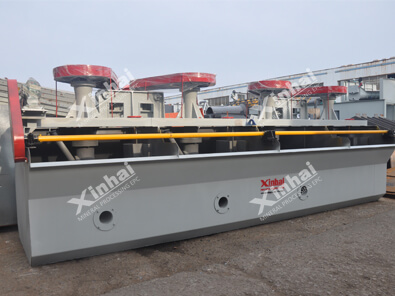
Flotation is used to separate feldspar from quartz, mica, and other associated minerals based on differences in their surface properties. The process generally involves slurry preparation, reagent conditioning, aeration, and froth collection. Depending on the ore composition, different flotation sequences and reagent systems may be required. Laboratory flotation tests are important for determining suitable collectors, frothers, pH conditions, and operating parameters to achieve effective impurity removal without excessive feldspar losses.
3. Washing and Gravity Separation
Washing and scrubbing help remove clay, soil, and surface contamination from raw feldspar ore. Desliming equipment can then remove fine particles that may affect subsequent separation performance. Gravity separation may also be applied when associated minerals have sufficiently different densities from feldspar. Equipment such as shaking tables or spiral concentrators can be considered for suitable ore types. However, gravity separation is less effective when the target minerals have similar densities and particle characteristics.
4. Selecting the Best Beneficiation Combination
Not every feldspar deposit requires all available beneficiation methods. For example, an ore containing significant iron-bearing minerals may benefit from magnetic separation, while an ore with substantial quartz or mica may require flotation. Some deposits need a combination of washing, magnetic separation, and flotation to achieve the required purity. Process selection should be based on mineralogical analysis, laboratory testing, product specifications, and an economic evaluation of the complete processing circuit.
04 Final Product Processing, Equipment Selection, and Plant Optimization
BackAfter beneficiation, feldspar concentrate undergoes final processing to achieve the required product specifications. This stage may include dewatering, drying, screening, and packaging, depending on the intended industrial application. Efficient material handling and quality control are important for maintaining consistent product performance. At the same time, processing plant operators should monitor equipment performance, energy consumption, water usage, and mineral recovery to improve production efficiency and control operating expenses.
1. Dewatering and Drying
Following wet beneficiation, feldspar concentrate generally requires dewatering to reduce moisture content. Thickening tanks and filter presses can be used to separate water from mineral solids. The dewatered material may then enter a drying system if a dry final product is required. Proper moisture control helps improve storage, transportation, and subsequent manufacturing operations. Process water can also be recycled after suitable treatment to reduce freshwater consumption.
2. Screening and Final Product Classification
After drying, feldspar materials may pass through vibrating screens to achieve the particle-size specifications required by different customers. Glass and ceramic manufacturers often have specific requirements regarding particle size, chemical composition, and impurity levels. Screening helps ensure consistent product quality and separates oversized or undersized materials when necessary. Regular sampling and laboratory testing provide additional quality control throughout final product preparation.
3. Essential Feldspar Processing Equipment
A complete feldspar processing plant may include jaw crushers, cone crushers, vibrating screens, ball mills, hydrocyclones, magnetic separators, flotation cells, pumps, thickeners, and filter presses. Drying and packaging equipment may also be required depending on the final product. Equipment selection should consider raw ore characteristics, production capacity, processing requirements, and investment budget. Matching the capacity of individual machines is essential to prevent bottlenecks and maintain stable plant operation.
4. Improving Processing Efficiency and Reducing Costs
Processing efficiency can be improved by optimizing crushing and grinding parameters, controlling slurry concentration, and adjusting separation conditions according to feed characteristics. Regular equipment maintenance helps reduce unexpected downtime and prolong machine service life. Recycling process water, minimizing unnecessary reagent consumption, and monitoring energy usage can further reduce operating expenses. Operators should evaluate both concentrate quality and recovery rates to ensure that production improvements deliver measurable economic benefits.
05 Summary of How to Process Feldspar Ore
BackProcessing feldspar ore involves four main stages: raw ore preparation, crushing and grinding, mineral beneficiation, and final product processing. Crushing and grinding achieve the required particle size and mineral liberation, while magnetic separation, flotation, washing, and gravity separation remove different types of impurities. Dewatering, drying, and screening prepare the final concentrate for industrial applications. By selecting suitable equipment and optimizing each processing stage, mining operators can improve feldspar purity, recovery, and overall production efficiency.
Contact our mineral processing experts today to obtain a customized feldspar processing solution and equipment quotation for your project.


RELATED PRODUCTS
-
JJF Flotation Cell
-
CLF Flotation Cell
-
Dry Magnetic Separator