+8618335758886
 laura@xinhaimining.com



Iron Ore Crushing Plant: How it Works and How to Choose Equipment?
 Sheena
 Oct 15, 2026
 14
14
If you want to know more details about equipment, solutions, etc, please click the button below for free consultation, or leave your requirements!
 Message
 Chat Now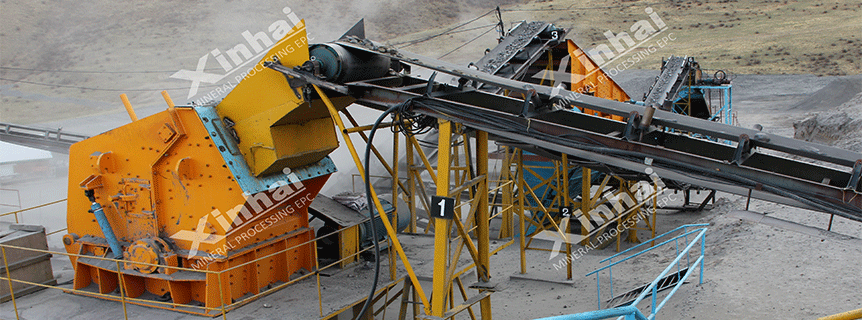
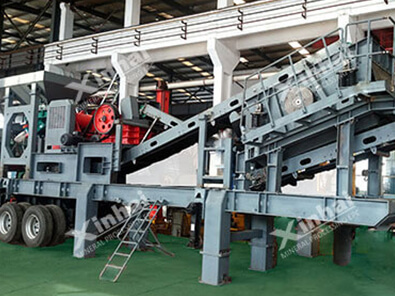
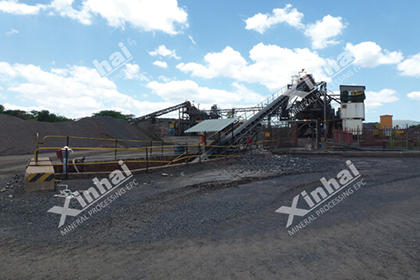
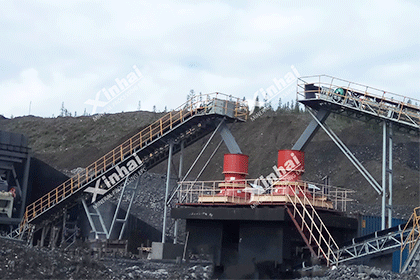
5000tpd Iron Ore Crushing Plant
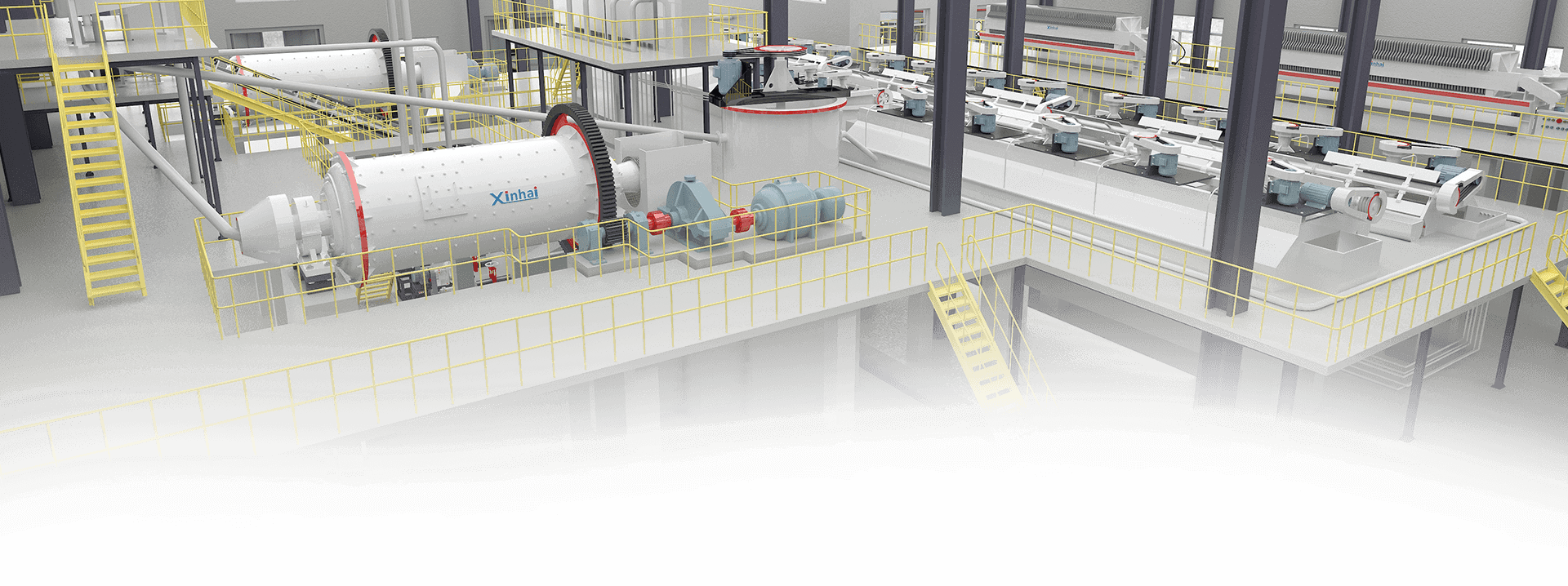
Iron ore crushing is the first major size-reduction stage in most iron ore beneficiation plants. Its main purpose is to reduce run-of-mine (ROM) ore into suitable particle sizes for subsequent grinding, screening, magnetic separation, or other beneficiation processes. A well-designed iron ore crushing plant not only prepares the ore for efficient mineral processing but also helps control energy consumption, equipment wear, and overall operating costs.
However, not all iron ore deposits require the same crushing configuration. Ore hardness, mineral composition, feed size, target product size, processing capacity, and the downstream beneficiation method all influence plant design. Understanding how an iron ore crushing plant works and how to select suitable equipment is essential for building an efficient and economically viable processing system.
01How Does an Iron Ore Crushing Plant Work?
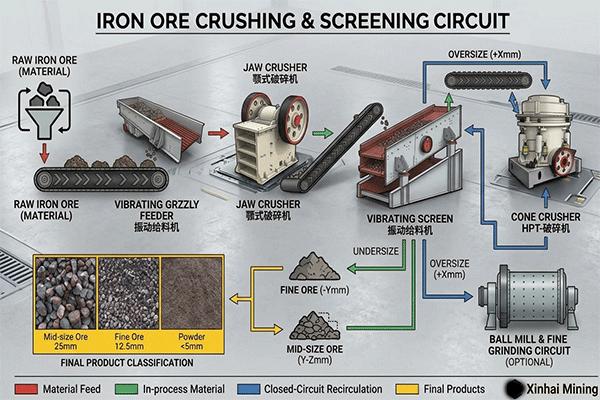
BackAn iron ore crushing plant uses a combination of crushers, vibrating screens, conveyors, and auxiliary equipment to reduce large ore blocks to the required size. Depending on the ore characteristics and production targets, the plant may use two-stage or three-stage crushing, with screening and recirculation to control the final product size.
A typical iron ore crushing process follows these stages:
1.1 Primary Crushing
Primary crushing reduces large ROM ore blocks into a size that secondary crushers or downstream equipment can handle. Jaw crushers are commonly used because they can accept large feed sizes and handle hard, abrasive iron ore. For large-scale operations, the crusher's feed opening, capacity, and ability to handle variations in feed size are important selection factors.
If the mine delivers oversized rocks or the ore contains particularly hard material, the plant may also require a grizzly feeder, a suitable feeding system, or a rock breaker to prevent blockages. Correctly matching the feeder and crusher helps maintain stable throughput and reduces unnecessary downtime.
1.2 Secondary and Tertiary Crushing
After primary crushing, the ore may pass through secondary and tertiary crushers to achieve a smaller, more uniform product. Cone crushers are widely used for hard and abrasive iron ore because they can provide high capacity and consistent size reduction. Depending on the required product size and the downstream process, one or more crushing stages may be necessary.
Not every plant needs tertiary crushing. If the primary and secondary stages already produce material suitable for the grinding circuit, adding another stage may increase capital expenditure and maintenance without delivering sufficient benefit. The decision should be based on the required product size, crusher performance, and the overall economics of the plant.
1.3 Screening and Material Circulation
Vibrating screens separate crushed ore into different size fractions. Material that meets the required size specification can proceed to the next processing stage, while oversized material returns to the crusher for further reduction. This closed-circuit arrangement helps control the final product size and prevents unnecessarily coarse particles from entering the grinding circuit.
Screen selection is equally important. Screen aperture, deck configuration, moisture content, and ore particle shape all affect screening efficiency. Poor screening can cause excessive circulating loads, unstable crusher operation, and increased wear, even when the crushers themselves are correctly selected.
02What Equipment Is Used in an Iron Ore Crushing Plant?
BackThe main equipment in an iron ore crushing plant includes feeders, crushers, vibrating screens, belt conveyors, and dust-control systems. Each component affects the performance of the others, so equipment should be selected as an integrated system rather than as a collection of independent machines.
2.1 Jaw Crusher
Jaw crushers are commonly used for primary crushing because their large feed openings can accommodate coarse ROM ore. They are suitable for many hard-rock iron ore applications and provide a reliable first stage of size reduction. When choosing a model, consider the maximum feed size, required capacity, discharge opening, and expected wear-part consumption.
2.2 Cone Crusher
Cone crushers are widely used for secondary and tertiary crushing of hard, abrasive iron ore. They can produce relatively uniform crushed material and are suitable for continuous, high-throughput operations. The choice between standard and short-head configurations, or other available chamber designs, depends on feed size, reduction ratio, and the target product specification.
2.3 Vibrating Screen
Vibrating screens classify crushed ore according to particle size and determine which material can proceed downstream. They may be installed after primary or secondary crushing, depending on the circuit design. Screen area, aperture size, moisture conditions, and the required separation efficiency should be evaluated to prevent bottlenecks and excessive recirculation.
2.4 Vibrating Feeder and Belt Conveyor
A vibrating feeder delivers ore to the crusher at a controlled rate, while belt conveyors transfer material between processing stages. Stable feeding helps crushers operate closer to their intended capacity, and properly designed conveyors reduce spillage and material-handling interruptions. Conveyor width, inclination, transfer points, and total conveying distance should match the plant's throughput and site layout.
2.5 Dust-Control and Auxiliary Systems
Crushing and screening generate dust, especially at discharge points, transfer chutes, and stockpiles. Depending on local regulations and operating conditions, the plant may require dust extraction, water sprays, enclosed transfer points, and appropriate drainage. Metal detectors, magnetic separators for tramp iron, guarding, and monitoring systems may also be needed to protect equipment and improve operational reliability.
03How to Choose the Right Iron Ore Crushing Equipment
BackSelecting equipment based only on rated capacity or purchase price can lead to poor plant performance. The correct approach is to evaluate ore properties, the required product size, operating conditions, and the demands of the downstream beneficiation process together.
3.1 Evaluate Ore Hardness and Abrasiveness
Iron ores vary considerably in hardness, abrasiveness, and internal structure. Hard, abrasive ores can cause rapid wear of crusher liners and other wear parts, while fractured or weathered ores may behave differently during crushing. Laboratory testing, geological information, and representative samples can help determine suitable crusher types and realistic maintenance requirements.
The amount of moisture and clay is also important. Sticky fines can block chutes and screen openings, reducing throughput even when the crusher has sufficient capacity. In such cases, feed preparation, screening arrangements, and material-handling design may be just as important as the crusher model itself.
3.2 Match Capacity to the Required Throughput
The plant's design capacity should be based on the required production rate, annual operating hours, expected availability, and planned maintenance. A crusher with a nominal capacity that matches the target tonnage may still be undersized in practice if actual feed conditions are more difficult than the manufacturer's reference conditions.
Engineers should also account for capacity differences between individual crushing stages. For example, a high-capacity primary crusher cannot compensate for a secondary crusher or screen that becomes the circuit bottleneck. Surge bins, stockpiles, and suitable control systems can help manage fluctuations in feed and keep downstream equipment supplied.
3.3 Determine the Required Product Size
The required crushing product size depends on what happens next in the processing plant. If the ore will enter a grinding circuit, crushing should reduce the feed size enough to support efficient grinding without introducing unnecessary crushing stages. If the plant includes a coarse-particle separation stage, the crushing circuit may instead be designed around the feed-size requirements of that equipment.
Finer crushing can reduce the burden on downstream grinding, but achieving a smaller product usually requires additional equipment, energy, wear parts, and maintenance. The objective is therefore not to produce the smallest possible particles; it is to achieve the most economical size distribution for the complete beneficiation flowsheet.
3.4 Consider the Downstream Beneficiation Method
The crushing circuit must be compatible with the iron ore's mineralogy and the selected separation process. For magnetite ore, crushing and grinding commonly prepare the material for magnetic separation, while hematite ores may require magnetic separation, gravity separation, flotation, or a combination of methods depending on their characteristics. Crushing alone does not determine concentrate grade or recovery, but it influences the liberation and separation conditions achieved in later stages.
For this reason, crushing equipment should be selected alongside grinding and beneficiation equipment. Where practical, mineralogical analysis and laboratory or pilot-scale tests should be used to establish the appropriate feed size and determine whether additional crushing stages are economically justified.
04Common Iron Ore Crushing Plant Configurations
BackDifferent crushing circuits offer different balances of capital investment, product-size control, and operating cost. The most appropriate configuration depends on ore characteristics, production targets, and downstream processing requirements.
Plant configuration | Typical arrangement | Main consideration |
|---|---|---|
Two-stage crushing | Primary jaw crusher + secondary crusher | Simpler layout and potentially lower capital cost when the product size is adequate |
Three-stage crushing | Primary jaw crusher + secondary cone crusher + tertiary cone crusher | Greater size reduction and product-size control, with additional equipment and maintenance |
Closed-circuit crushing | Crusher + screen + oversize return | Better control of product size, but circulating load and screen capacity must be managed |
Crushing with pre-screening | Feeder or screen removes suitable fines before crushing | Can reduce unnecessary crushing, provided the fines are suitable for downstream treatment |
A two-stage circuit may be sufficient when the required product size is relatively coarse and the downstream grinding system can accept it. A three-stage circuit may be more appropriate when finer crushing is needed to improve the overall process balance. Closed-circuit arrangements provide tighter product-size control, while pre-screening may reduce energy use and wear by preventing already-small particles from entering the crusher.
These configurations are not mutually exclusive. A plant may combine pre-screening, multiple crushing stages, and closed-circuit operation to meet its production and product-size targets.
05How to Improve Iron Ore Crushing Plant Efficiency
BackPlant efficiency depends not only on crusher performance but also on the coordination of feeding, screening, conveying, and maintenance. Several design and operating measures can improve throughput while controlling the cost per tonne of crushed ore.
Maintain stable crusher feeding. Uneven feeding can reduce capacity and cause unstable operation. Properly sized feeders and surge capacity help maintain a consistent material flow.
Optimize screen efficiency. Correct screen apertures and adequate screening area reduce unnecessary recirculation and prevent oversized particles from bypassing the intended crushing stages.
Monitor wear parts and operating parameters. Crusher liners, discharge settings, motor load, vibration, and bearing temperature should be monitored to identify performance deterioration before it causes extended downtime.
Reduce material-handling bottlenecks. Poorly designed transfer chutes, undersized conveyors, and inadequate stockpile capacity can restrict the entire circuit even when the crushers have sufficient capacity.
Control dust and protect equipment. Appropriate dust suppression, tramp-metal protection, and preventive maintenance help improve working conditions and reduce unexpected equipment failures.
These measures should be evaluated using actual operating data, including tonnes processed per hour, product-size distribution, energy consumption per tonne, wear-part costs, and equipment availability. Tracking these indicators helps operators identify whether the main constraint is crushing capacity, screening efficiency, material handling, or maintenance.
06How to Design an Iron Ore Crushing Plant for a Specific Project
BackA reliable crushing plant design begins with project data rather than equipment selection. Before finalizing the flowsheet, engineers should establish the ore characteristics, production requirements, target product size, site constraints, and downstream process conditions.
A practical design workflow includes the following steps:
Characterize the ore. Collect representative samples and review hardness, abrasiveness, moisture, particle-size distribution, and mineralogical information.
Define design criteria. Establish the required throughput, operating schedule, feed-size range, target product size, and expected production variability.
Develop and compare flowsheets. Evaluate two-stage and three-stage crushing, screening arrangements, and open- or closed-circuit options as appropriate.
Select and size equipment. Check crusher capacity, reduction ratio, screen performance, conveyor capacity, and the compatibility of all major components.
Evaluate economics and operating risks. Compare installed costs, energy consumption, wear-part requirements, maintenance access, and the impact of the proposed circuit on downstream processing.
For projects involving complex or variable iron ore, laboratory testing and, where justified, pilot-scale trials can help validate the proposed design. The final flowsheet should balance product-size requirements, equipment reliability, investment, and long-term operating costs.
07Conclusion
BackAn efficient iron ore crushing plant combines suitable crushers, effective screening, stable material handling, and a flowsheet designed around the ore characteristics and downstream beneficiation requirements, with equipment selection guided by both technical performance and life-cycle cost.