+8618335758886
 laura@xinhaimining.com



Kaolin Processing Explained: From Mining to Refining
 Laura
 Nov 27, 2026
 17
If you want to know more details about equipment, solutions, etc, please click the button below for free consultation, or leave your requirements!
 Message
 Chat Now
kaolin mine - Kaolin Processing Explained
Kaolin, also known as china clay, is an important industrial mineral widely used in ceramics, paper manufacturing, paints, rubber, plastics, and other industries. Its quality and application value depend largely on its chemical composition, particle size, brightness, and purity. To obtain high-quality kaolin products, raw ore must undergo a series of mining, crushing, washing, separation, and purification processes. Understanding the kaolin mining and processing flowchart helps mining operators select suitable equipment and develop an efficient beneficiation plant.
This article explains the complete kaolin mining and processing flowchart, covering ore extraction, crushing, dispersion, classification, impurity removal, dewatering, and final product preparation. It also introduces the key equipment used at each processing stage.
01 Kaolin Mining and Raw Ore Preparation
Back1. Kaolin Mining Methods
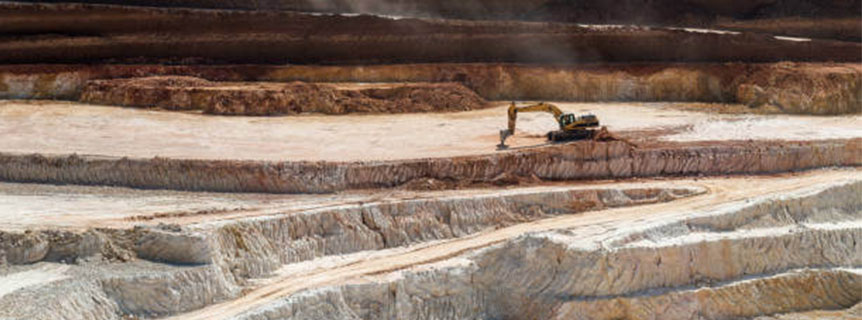
Kaolin mining generally adopts open-pit mining because many kaolin deposits occur relatively close to the earth's surface. Before extraction, geological exploration and drilling are conducted to determine ore reserves, mineral composition, and deposit distribution. Based on these results, mining engineers develop an appropriate extraction plan to minimize waste rock and improve resource utilization.
During mining, excavators, bulldozers, loaders, and dump trucks are commonly used to remove overburden and transport kaolin ore. The extracted material is delivered to the processing plant for further treatment. Proper mining management helps maintain consistent feed quality and reduces unnecessary transportation and production costs.
2. Raw Ore Crushing and Screening
After mining, kaolin ore may contain large lumps, clay aggregates, and unwanted rock fragments. Crushing and screening are used when necessary to reduce oversized materials and prepare the ore for subsequent processing. Jaw crushers and hammer crushers can be selected according to the hardness and characteristics of associated materials.
The crushing stage should avoid excessive grinding because kaolin is naturally soft and has a relatively low hardness. Appropriate feed-size control helps improve processing efficiency and prevents unnecessary equipment wear. Screening also helps remove oversized impurities and ensures that the material entering the next stage meets the required particle-size specifications.
02 Kaolin Washing, Dispersion, and Classification Process
Back1. Kaolin Washing and Slurry Preparation
Washing is an important stage in kaolin processing, particularly for soft kaolin deposits containing clay minerals and loosely attached impurities. The raw ore is mixed with water to form a slurry, allowing kaolin particles to separate from larger waste materials. Log washers, attrition scrubbers, and mixing tanks may be used depending on the ore characteristics.
During slurry preparation, dispersing agents may be added to prevent fine kaolin particles from aggregating. Proper dispersion improves particle separation and facilitates the removal of impurities during subsequent classification. The slurry concentration, mixing intensity, and treatment time should be adjusted according to the mineral properties.
2. Hydrocyclone Classification and Particle Separation
After washing and dispersion, the kaolin slurry is usually sent to hydraulic classification equipment. Hydrocyclones separate particles according to their size and settling behavior through centrifugal forces. Coarser quartz, feldspar, and other relatively heavy particles can be separated from the finer kaolin fraction.
Multiple hydrocyclones may be arranged in series to achieve more precise particle-size classification. This process helps improve kaolin fineness and reduces the content of unwanted coarse minerals. Classification parameters, including feed pressure, slurry concentration, and cyclone configuration, should be optimized to obtain the required product quality and recovery rate.
03 Kaolin Purification and Impurity Removal
Back1. Magnetic Separation for Iron Removal
Iron-bearing minerals are common impurities in kaolin ore and can negatively affect product brightness and whiteness. Magnetic separation is widely used to remove magnetic and weakly magnetic minerals, including iron-containing impurities such as hematite and other iron-bearing particles.
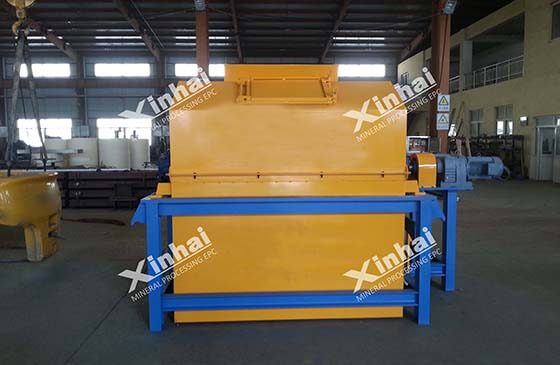
High-intensity magnetic separators are often selected for fine kaolin processing because they can capture weakly magnetic contaminants. The slurry passes through a magnetic separation zone, where iron-bearing particles are attracted and retained while purified kaolin continues through the system. The magnetic field intensity and feed conditions should be selected based on the mineralogical characteristics of the ore.
2. Flotation and Chemical Bleaching
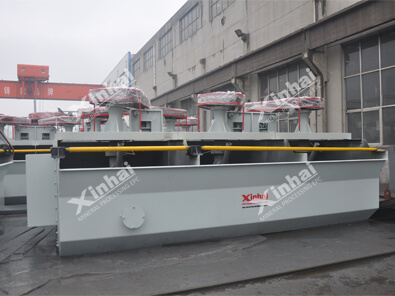
For kaolin deposits containing complex impurities, flotation and chemical bleaching may be introduced to further improve product purity and brightness. Flotation can help separate certain associated minerals based on differences in surface properties, while suitable reagents are used to improve mineral selectivity.
Chemical bleaching is commonly applied to reduce residual iron-related discoloration and improve the whiteness of kaolin products. The selection of bleaching agents and operating conditions depends on the impurity composition and environmental requirements. These processes should be carefully controlled to achieve the desired product quality without unnecessarily increasing processing costs.
04 Kaolin Dewatering, Drying, and Final Product Preparation
Back1. Thickening and Dewatering
After purification, the kaolin slurry contains a large amount of water that must be removed before drying or further processing. Thickening equipment is used to increase the solid concentration through gravity settling. Flocculants may be added when appropriate to improve particle settling and water recovery.
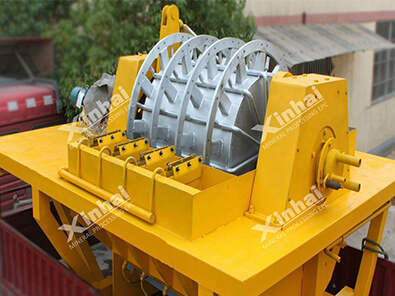
The thickened kaolin is then transferred to dewatering equipment, such as filter presses or vacuum filters. These machines separate additional water from the clay slurry and produce a filter cake with suitable moisture content. Efficient dewatering reduces the energy required for subsequent drying and helps improve the overall economic performance of the processing plant.
2. Kaolin Drying, Grinding, and Packaging
The dewatered kaolin filter cake is transported to drying equipment, such as rotary dryers or flash dryers, depending on the product specifications and production capacity. Drying reduces moisture content and prepares the material for final processing. Temperature and residence time must be properly controlled to maintain the desired physical and chemical properties.
After drying, kaolin may undergo additional grinding, pulverizing, and air classification to achieve the required particle-size distribution. The finished product is then tested for brightness, whiteness, particle size, moisture, and chemical composition. Qualified kaolin is packaged in bags or transported in bulk according to customer requirements.
05 Summary of the Kaolin Mining and Processing Flowchart
BackThe typical kaolin mining and processing flowchart includes the following stages:
1. **Mining:** Extract raw kaolin ore through open-pit mining.
2. **Crushing and Screening:** Reduce oversized materials and prepare the feed.
3. **Washing and Dispersion:** Mix ore with water and separate loose impurities.
4. **Classification:** Use hydrocyclones to separate coarse particles from fine kaolin.
5. **Purification:** Apply magnetic separation, flotation, or chemical bleaching when necessary.
6. **Dewatering:** Remove excess water through thickening and filtration.
7. **Drying and Grinding:** Reduce moisture and achieve the required particle size.
8. **Packaging:** Inspect product quality and prepare finished kaolin for delivery.
The actual processing flowchart varies depending on ore characteristics, impurity composition, required product quality, and production capacity. A well-designed processing plant should combine suitable equipment and optimized operating parameters to maximize kaolin recovery while maintaining consistent product quality.
**Contact our mineral processing experts today to obtain a customized kaolin processing plant solution and equipment quotation.**


RELATED PRODUCTS
-
Jig
-
Rotary Disc Vacuum Filter
-
SF Flotation Cell