+8618335758886
 laura@xinhaimining.com



Lead-Zinc Recovery Processes for Sulfide Lead-Zinc Ores
 zeki
zeki
 Aug 31, 2026
 326
326
If you want to know more details about equipment, solutions, etc, please click the button below for free consultation, or leave your requirements!
 Message
 Chat Now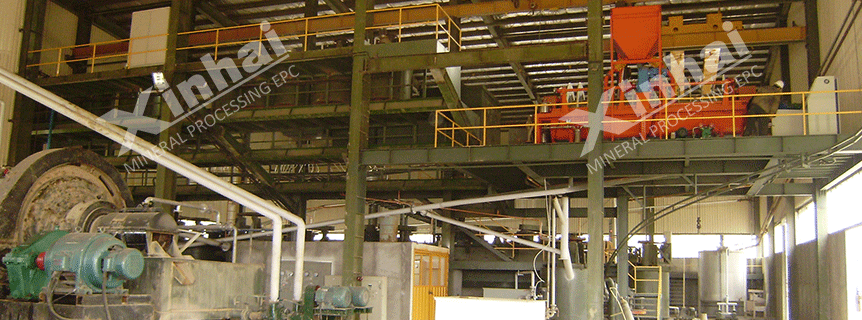
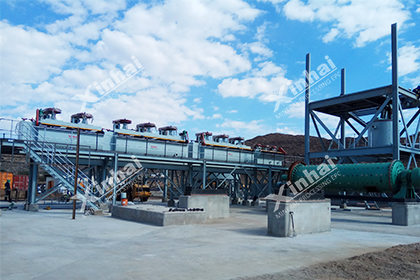
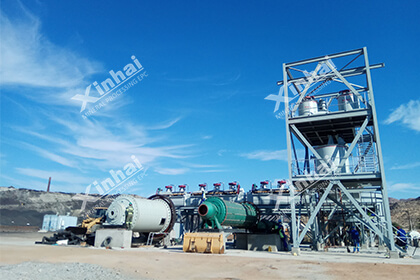
500tpd Lead-Zinc-Ore-Flotation-Plant-in-Iran
Among mined lead-zinc mineral resources, sulfide lead-zinc ores account for over 80%. The separation of lead and zinc sulfide minerals constitutes a critical link in lead-zinc metal recovery operations. How to realize effective recovery of lead and zinc from sulfide lead-zinc ores? This article summarizes five mainstream mineral processing technologies.
01Types of Sulfide Lead-Zinc Ores
BackBefore introducing mineral processing flows, sulfide lead-zinc ores are roughly divided into two categories according to ore structural characteristics: massive compact sulfide lead-zinc ore and disseminated sulfide lead-zinc ore. The two ore types feature markedly different mineral dissemination characteristics, which correspond to distinct lead-zinc recovery schemes.
1.Massive Compact Sulfide Lead-Zinc Ore
This ore type contains high pyrite content and low gangue mineral proportion. Aggregates of galena, sphalerite and pyrite are compact with few pores.
Preferential flotation is mostly adopted for this ore type: suppress zinc sulfide and pyrite to float lead minerals preferentially.
2.Disseminated Sulfide Lead-Zinc Ore
Overall lead and zinc grades of such ores are relatively low. For these ores, the mineral processing flow of lead-zinc bulk flotation followed by regrinding and separation of bulk concentrate is widely applied in production.
02Recovery Processes for Sulfide Lead-Zinc Ores
Back1.Single Flotation
Massive compact sulfide lead-zinc ore has low gangue content, and its raw ore can be approximately regarded as a mixed aggregate of lead, zinc and sulfur with considerable pyrite content, making it suitable for the single flotation flow.
(1) Process Operation
Zinc sulfate-sodium sulfite reagent combination is added into pulp to depress sphalerite, together with lime for pyrite depression, so as to recover lead minerals via preferential flotation.
(2) Flowchart
Raw ore → Grinding → Flotation
(3) Application Scope
High-sulfur massive lead-zinc ores with low gangue content and compact mineral intergrowth.
2. Bulk-Preferential Flotation
(1) Process Flow
Grinding → Lead-zinc bulk flotation → Separation of lead-zinc bulk concentrate
(2) Application Scope
Massive and disseminated lead-zinc ores with high gangue proportion and intimate intergrowth of lead-zinc minerals.
3.Partial Bulk Flotation
Many concentrators adopt partial bulk flotation for processing sulfide lead-zinc ores. In roughing stage, pulp pH value is lowered to bring galena-sphalerite intergrowths into froth layer to obtain bulk rough concentrate. The rough concentrate is further reground to achieve mineral monomer liberation prior to separation, yielding lead concentrate and zinc concentrate; sulfur concentrate is produced from flotation tailings.
(1) Application Scope
Complex sulfide lead-zinc ores containing both easily-floatable lead-zinc minerals and abundant lead-zinc intergrowths.
4.Direct Preferential Flotation
Direct preferential flotation is mostly applied to lead-zinc recovery from disseminated sulfide lead-zinc ores.
(1) Process Characteristics
Lead is floated first to obtain lead concentrate. The tailings from lead flotation are repulped and activated for zinc flotation to produce zinc concentrate and final tailings.
(2) Application Scope
Disseminated lead-zinc ores with relatively coarse mineral dissemination grain size and favorable liberation conditions for galena and sphalerite.
5.Slime-Sand Separation-Flotation
(1) Process Characteristics
This process improves flotation performance of coarse-sand fractions and realizes separate separation of slimes under proper conditions. It mitigates interference caused by fine slimes on overall flotation and reduces metal loss induced by slime coating.
(2) Application Scope
Sulfide lead-zinc ores prone to generating substantial slimes during grinding with prominent flotation differences between coarse and fine mineral particles.
03Summary
BackAbove are five common recovery processes for sulfide lead-zinc ores. It can be observed that pyrite acts as the primary associated component in sulfide lead-zinc ores, requiring depression and separation in nearly all processes. Prior to processing sulfide lead-zinc ores, ore type identification shall be performed. Appropriate mineral processing technology shall be selected combined with multi-element assay reports and test results on dissemination grain size of sulfide minerals.


RELATED PRODUCTS
-
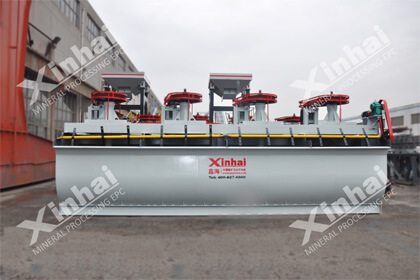
XJB Bar Flotation Cell
-
Overflow Type Ball Mill
-
Transportation Equipment