+8618234403483
 yanzhang19990421@gmail.com



Oxide Copper-Gold Ore Beneficiation Methods
 Laura
Laura
 May 26, 2026
 447
447
If you want to know more details about equipment, solutions, etc, please click the button below for free consultation, or leave your requirements!
 Message
 Chat Now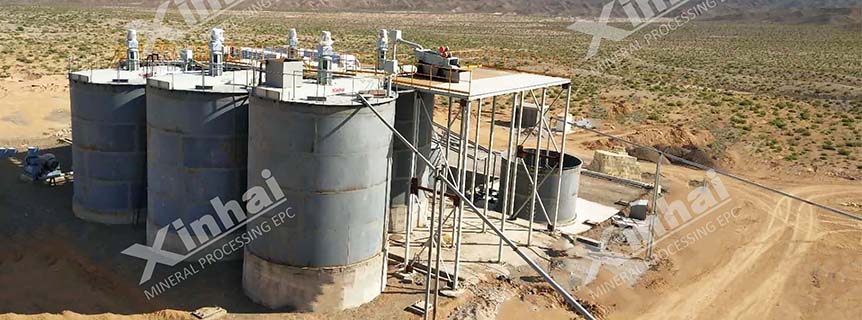
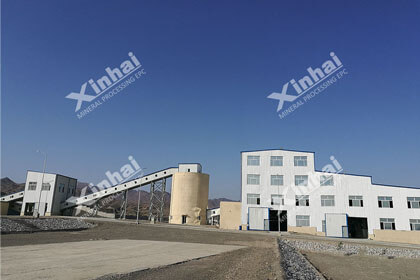
On-site installation of gold ore beneficiation equipment
Oxide copper-gold ores are important mineral resources widely processed in modern mining operations. Due to the complex mineral composition and oxidation degree of these ores, specialized beneficiation methods are required to achieve high recovery rates and stable concentrate quality. Selecting the proper processing technology can significantly improve economic returns while reducing operational costs.
01 Characteristics of Oxide Copper-Gold Ore
Back1. Mineral Composition and Oxidation Properties
Oxide copper-gold ores typically contain minerals such as malachite, azurite, chrysocolla, and cuprite. Gold particles are often finely disseminated within oxidized gangue minerals, making extraction more difficult.
The oxidation level of the ore affects its beneficiation performance. Highly oxidized ores generally respond poorly to conventional flotation and may require chemical activation or leaching treatment.
2. Challenges in Ore Beneficiation
One major challenge is the weak floatability of oxide copper minerals. Without proper reagent systems, copper minerals may not effectively attach to flotation bubbles during separation.
Another issue is the production of fine slimes during grinding. Excessive slimes reduce flotation efficiency, increase reagent consumption, and negatively impact concentrate quality.
02 Main Beneficiation Methods for Oxide Copper-Gold Ore
Back1. Flotation Beneficiation Process
Flotation is one of the most widely used methods for oxide copper-gold ore processing. Sulfidization flotation is commonly applied by adding sodium sulfide to improve mineral surface properties.
Collectors such as xanthates are then introduced to enhance mineral recovery. Proper reagent control can significantly increase both copper and gold recovery rates in flotation circuits.
2. Heap Leaching and Hydrometallurgical Treatment
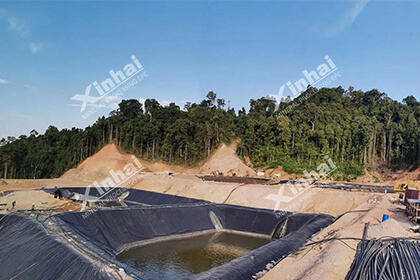
Heap leaching is suitable for low-grade oxide copper-gold ores with large reserves. Crushed ore is stacked on leach pads and irrigated with sulfuric acid or cyanide solutions to dissolve valuable metals.
The dissolved metals are recovered using solvent extraction, electrowinning, or activated carbon adsorption systems. This method offers low energy consumption and lower capital investment.
3. Gravity Separation for Gold Recovery
Gravity separation is highly effective when free or coarse gold particles are present in the ore. Equipment such as centrifugal concentrators, shaking tables, and spiral chutes are commonly used.
This process helps recover gold before flotation or leaching, reducing downstream processing loads. It also lowers reagent usage and improves overall beneficiation efficiency.
03 Factors Affecting Beneficiation Efficiency
Back1. Ore Grade and Grinding Size
The grade of copper and gold directly influences process selection and plant profitability. Higher-grade ores may justify more complex beneficiation circuits and advanced recovery technologies.
Grinding size is also critical for mineral liberation. Proper particle size improves separation efficiency, while overgrinding can create excessive slimes and reduce recovery performance.
2. Reagent Selection and Process Optimization
Choosing suitable flotation reagents is essential for successful oxide ore processing. Sulfidizing agents, collectors, frothers, and pH regulators must be carefully balanced during operation.
Modern process control systems help optimize reagent dosage and operating conditions. This improves concentrate quality, reduces operating costs, and stabilizes plant performance.
3. Environmental and Economic Considerations
Environmental protection is increasingly important in mineral processing operations. Water recycling systems and efficient tailings management help reduce environmental impact and improve sustainability.
Economic factors such as energy usage, reagent consumption, and equipment maintenance also affect the choice of beneficiation technology. Efficient plant design can maximize long-term profitability.
04 Summary
BackOxide copper-gold ore beneficiation requires specialized technologies to achieve efficient metal recovery and stable plant performance. Flotation, heap leaching, and gravity separation are among the most effective methods used in modern mining operations.
The selection of a suitable beneficiation process depends on ore characteristics, mineral composition, and economic conditions. With optimized processing technology and proper reagent control, mining companies can improve recovery efficiency and maximize the value of oxide copper-gold resources.


RELATED PRODUCTS
-
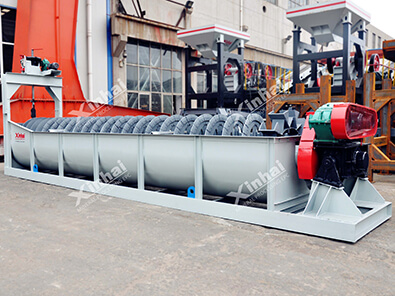
High Dam Spiral Classifier
-
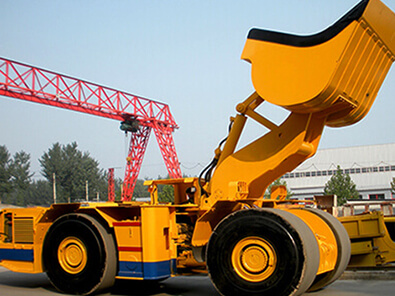
Underground Loading Equipment
-
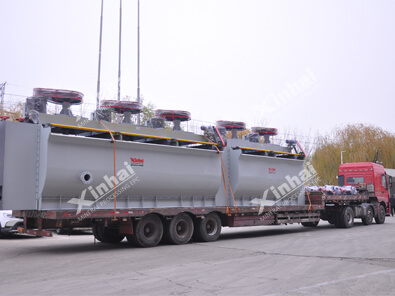
KYF Air Inflation Flotation Cell