+8618234403483
 yanzhang19990421@gmail.com



Purification of Fluorite Ore for Fluorite Concentrate Production
 zeki
zeki
 Sep 24, 2026
 45
45
If you want to know more details about equipment, solutions, etc, please click the button below for free consultation, or leave your requirements!
 Message
 Chat Now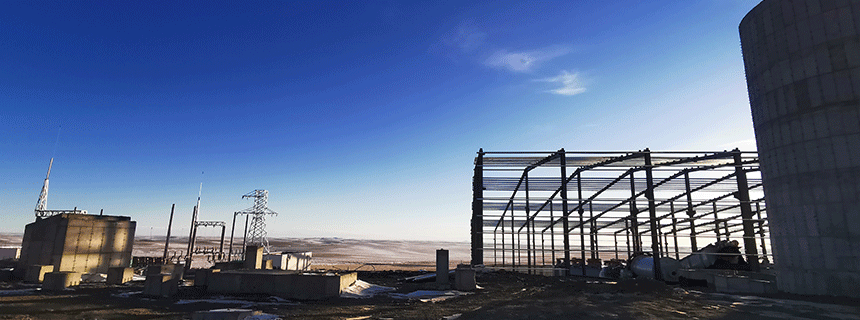
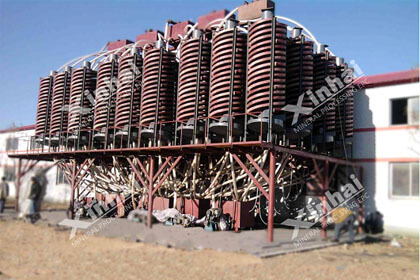
800 tpd Fluorite Processing Plant in Mongolia
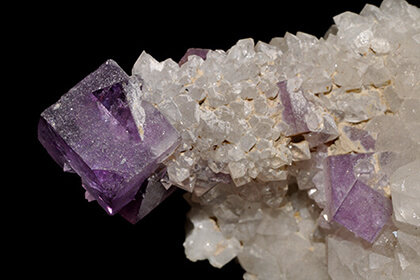
Fluorite ore purification refers to a complete process of removing various gangue minerals and harmful impurities from run-of-mine ore to produce standard fluorite concentrate or high-purity acid-grade fluorite concentrate. Fluorite mineral processing generally adopts a technical route dominated by physical beneficiation and supplemented by chemical purification, with separation achieved via flotation, magnetic separation and gravity separation. The following introduces physical separation processes for fluorite ore.
01Reasons for Impurity Removal in Fluorite Ore
BackQualified fluorite concentrate serves as an important mineral raw material for the fluorochemical, metallurgical and ceramic industries. It can be used to produce hydrofluoric acid, and also acts as a smelting flux and raw material for ceramic glazes. Run-of-mine fluorite ore must undergo beneficiation and impurity removal to meet industrial raw material specifications. High-purity acid-grade fluorite, a critical feedstock for the fluorochemical industry, requires further deep purification based on ordinary concentrate.
02Separation Processes
BackImpurities in fluorite ore occur in multiple forms. Processes such as scrubbing and desliming, gravity separation, magnetic separation, flotation and acid leaching are selected according to mineral dissemination characteristics.
1.Removal of Carbonate Impurities (Calcite, Dolomite)
(1) Fine carbonate particles attached to fluorite grain surfaces in the form of clay and argillaceous films
For argillaceous matter and fine-grained calcite adhering to mineral surfaces, scrubbing-desliming is the preferred removal method. Scrubbing includes high-intensity mechanical scrubbing and agitation scrubbing, with mechanical scrubbing most widely applied in industrial sites.
(2) Fine disseminated calcite and dolomite embedded within the ore
Both calcite and fluorite are calcium-bearing minerals with very similar floatability. Gravity separation and magnetic separation hardly achieve effective separation; flotation is the most efficient separation method for such impurities.
(3) Carbonate impurities enclosed as inclusions inside fluorite crystals
Carbonate impurities in the form of inclusions can scarcely be completely removed by flotation alone. A regrinding operation is required first to liberate mineral intergrowths, followed by acid leaching to dissolve and eliminate the impurities.
2.Removal of Siliceous Impurities (Quartz)
(1) Muddy fine quartz and clay impurities
Fine muddy quartz and clay minerals generated after ore grinding can be largely discharged by desliming operations. Fluorite has lower hardness than quartz; clay tends to slime more easily during grinding, and impurity components are enriched in fine fractions. Desliming achieves preliminary silicon reduction.
(2) Quartz grains closely intergrown with fluorite
Flotation is also adopted for separating quartz from fluorite. In alkaline pulp, water glass acts as a depressant for quartz, while fatty acid collectors selectively capture fluorite for flotation.
3.Removal of Iron-bearing Impurities
(1) Iron oxide films attached to fluorite grain surfaces: removable by mechanical scrubbing and acid leaching;
(2) Magnetic independent minerals such as magnetite and hematite: separated by magnetic separation;
(3) Iron minerals finely disseminated or lenticularly embedded between fluorite grains: iron-bearing gangue remains in the pulp tailings through flotation;
(4) Secondary mechanical iron introduced during grinding: removed by combined magnetic separation and gravity separation.
4.Removal of Barite and Sulfide Mineral Impurities
Barite has floatability similar to fluorite. Bulk flotation is generally adopted to float fluorite-barite mixed concentrate first. Then depressants such as starch and tannin extract are added to depress barite, so as to preferentially float fluorite concentrate.
03Main Mineral Processing Equipment
Back1.Grinding and Scrubbing Equipment
Grinding is the process of crushing and liberating ore by mechanical force to achieve monomer separation of fluorite from associated gangue minerals. Scrubbing-desliming operations are carried out after grinding.
2.Classification and Desliming Equipment
Common classification equipment for fluorite beneficiation includes vibrating screens, spiral classifiers and hydrocyclones.
3.Flotation Equipment
Mechanical agitation flotation machines are mostly selected for fluorite beneficiation.
4.Magnetic Separation Equipment
Wet high-intensity magnetic separators are commonly used.
5.Gravity Separation Equipment
Gravity separation is mostly used for coarse pre-concentration in fluorite processing. Typical equipment includes spiral chutes and shaking tables.
04Conclusion
BackImpurities in run-of-mine fluorite ore occur in complex and diverse modes of occurrence. In production, mineralogical testing of run-of-mine ore shall be performed to clarify the dissemination state of various impurities and select targeted beneficiation methods. Systemic beneficiation tests on ore are recommended in the early stage of the project. Single or combined beneficiation processes can be adopted by combining ore properties, project investment budget and plant site conditions, so as to obtain desirable technical indicators and economic benefits.


RELATED PRODUCTS
-
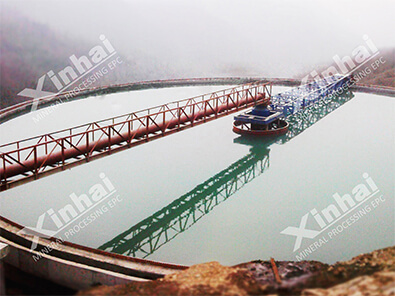
Peripheral Transmission Thickener
-
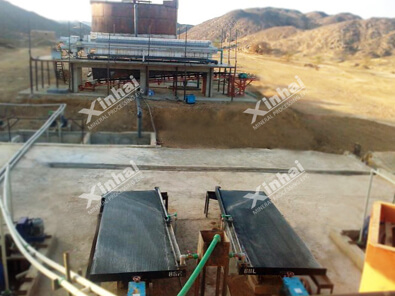
Shaking Table
-
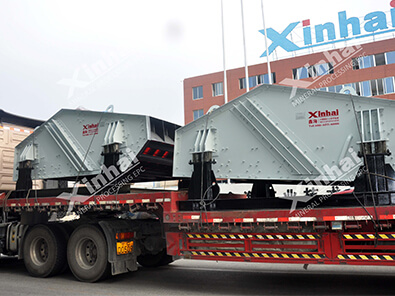
High Frequency Dewatering Screen