+8618234403483
 yanzhang19990421@gmail.com



What are the process steps involved in the flotation of lead-zinc ores?
 zeki
zeki
 Sep 23, 2026
 40
40
If you want to know more details about equipment, solutions, etc, please click the button below for free consultation, or leave your requirements!
 Message
 Chat Now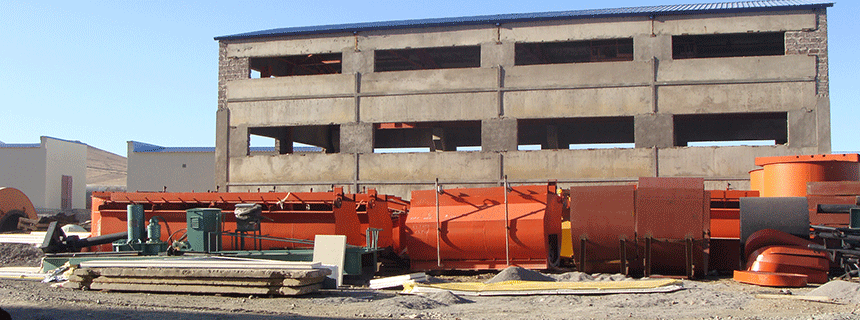
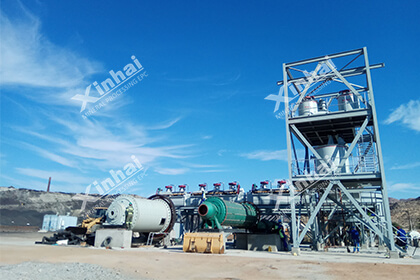
1500-tpd-Lead-Zinc-Project-in-Armenia
01Step 1: Grinding
BackPrior to the lead-zinc flotation operation, ores are ground to the target fineness in a ball mill to achieve monomer dissociation between galena, sphalerite and gangue minerals such as quartz and calcite. For conventional sulphide lead-zinc ores, the grinding fineness requirement is 60%–75% passing 0.074 mm. The upper flotation particle size limit of galena is approximately 0.25 mm, while that of sphalerite is around 0.20 mm. In production, a closed-circuit grinding and classification circuit consisting of ball mills and hydrocyclones is commonly adopted. Qualified overflow slurry is delivered to the subsequent process, and coarse particles return to the mill for regrinding.
02Step 2: Pulp Conditioning
BackThe overflow slurry after grinding and classification is transported to an agitation tank for pulp conditioning.
Lead-zinc preferential flotation has clear range requirements for pulp density. The pulp density for lead roughing is generally controlled at 28%–35%. This range ensures sufficient collision between mineral particles and bubbles without damaging the froth state due to excessive pulp viscosity. The scavenging operation introduces wash water from the froth tank, resulting in reduced pulp density maintained mostly at 22%–30%. Cleaning operations require lower density, typically 15%–22%, to improve concentrate grade.
03Step 3: Reagent Addition and Agitation
BackFlotation reagents alter mineral surface hydrophobicity and adjust floatability to enhance flotation selectivity and separation rate.
In the lead preferential flotation stage, zinc sulphate or sodium sulphite is added to depress sphalerite, paired with pH regulators to control the pulp environment. Xanthate collectors and frothers are then dosed to render galena hydrophobic. Tailing from lead flotation enters the zinc flotation circuit, where copper sulphate is added to activate the depressed sphalerite, followed by supplementary collectors and frothers to recover zinc minerals. The reagent addition sequence generally follows: pH regulator → depressant/activator → collector → frother.
04Step 4: Flotation Separation
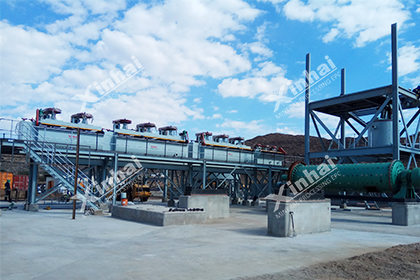
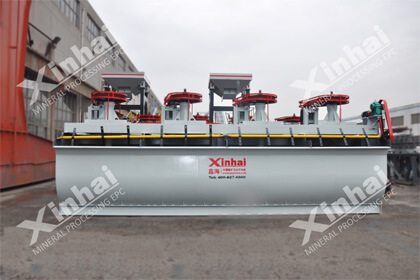
BackFlotation separation is fully performed inside flotation machines. The complete flotation circuit comprises roughing, scavenging and cleaning. Roughing rapidly recovers most valuable minerals; scavenging treats roughing tailings to reclaim residual valuable minerals. Froth products from roughing go to cleaning to further remove entrained gangue and locked particles and upgrade lead concentrate grade. Most concentrators adopt the standard configuration of "one roughing, two scavengings, two to three cleanings". For complex ore properties, a regrinding stage for rough concentrate is added to improve separation performance.
05Step 5: Dewatering
BackLead concentrate and zinc concentrate slurries produced by flotation contain large amounts of water and must undergo dewatering. Major equipment includes thickeners, filters and filter presses. Slurry is fed into high-efficiency thickeners for solid-liquid separation via gravitational settling. Underflow high-density slurry is sent to filter presses for further pressure dewatering, controlling concentrate moisture within 8%–10%.
06Conclusion
BackThe above describes the complete process flow for preferential flotation of sulphide lead-zinc ores. Under normal conditions, flotation yields lead concentrate with a grade of 50%–65% and zinc concentrate with a grade of 45%–52%. For refractory lead-zinc ores featuring high oxidation rate and severe sludging, additional measures are implemented to improve the overall recovery of lead and zinc metals.


RELATED PRODUCTS
-
Ceramic Vacuum Filter
-
Washing Thickener
-
Surface Dumper Equipment