+8618335758886
 laura@xinhaimining.com



What Determines the Cost of a Gold Leaching Plant?
 Sheena
 Nov 10, 2026
 30
If you want to know more details about equipment, solutions, etc, please click the button below for free consultation, or leave your requirements!
 Message
 Chat Now
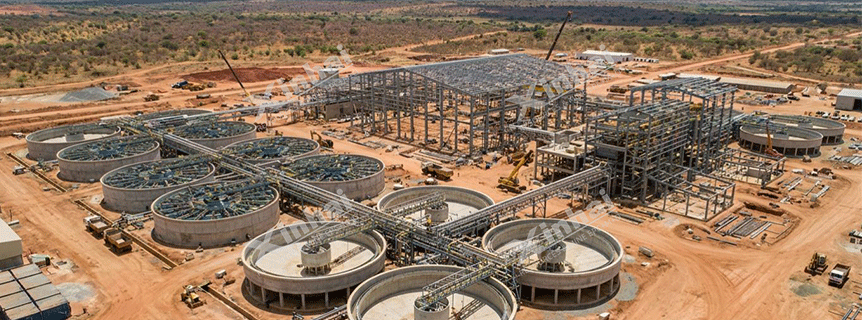
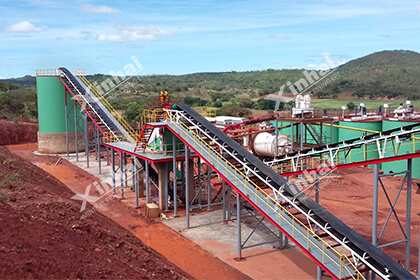
1500tpd-Gold-leaching-plant-overview
Building a gold leaching plant requires much more than purchasing crushers, mills, and leaching tanks. The total investment also includes mineral processing systems, civil construction, power and water supply, tailings management, environmental facilities, engineering, and commissioning.
However, not every gold leaching plant has the same cost structure. Two projects with identical daily processing capacities may require significantly different investments because of differences in ore characteristics, recovery methods, site conditions, and infrastructure requirements.
So, what actually determines the cost of a gold leaching plant? This guide examines the major investment components, the factors that influence capital and operating costs, and how to develop a more reliable project budget before construction begins.
01What Costs Are Included in a Gold Leaching Plant?
BackThe total investment in a gold leaching plant generally consists of several major cost categories. Focusing only on equipment prices can result in a significant underestimation of the actual project budget.
1.1 Process Equipment
Process equipment is one of the most visible parts of plant investment. Its configuration depends on the selected processing flowsheet and the characteristics of the ore.
A conventional gold leaching plant may include:
Crushing and screening equipment: Reduces run-of-mine ore to a suitable size for subsequent processing.
Grinding and classification equipment: Produces the required particle size and liberation level before leaching.
Leaching and adsorption equipment: Provides the necessary conditions for gold dissolution and, where applicable, adsorption.
Gold recovery equipment: Recovers gold from the process solution or loaded adsorbent, depending on the selected flowsheet.
Pumping and conveying systems: Transport ore, slurry, process solutions, and other materials between processing stages.
The equipment budget is affected by equipment capacity, material specifications, wear resistance, automation requirements, and the number of processing units.
1.2 Civil Works and Equipment Installation
Equipment prices do not include all the construction work required to put a plant into operation.
Civil and installation costs may cover:
Site preparation, earthworks, and foundation construction.
Concrete structures, steel platforms, and equipment supports.
Buildings and process plant structures.
Equipment transportation, lifting, and installation.
Process pipelines, electrical cables, and associated connections.
Ground conditions, topography, local construction costs, and the complexity of the plant layout can all influence this part of the budget.
1.3 Power, Water, and Site Infrastructure
A gold leaching plant needs reliable utilities and supporting facilities throughout its operation. Typical infrastructure costs include power supply and distribution, water intake and treatment, internal roads, drainage, workshops, warehouses, laboratories, offices, and accommodation facilities where required.
For remote mining projects, external infrastructure can become a substantial investment. A project may need to develop its own power or water supply systems rather than connect to existing public infrastructure.
1.4 Tailings and Environmental Facilities
Tailings management is another major cost component that should be included in the initial project estimate.
Depending on the selected process and local regulatory requirements, the project may need:
Tailings storage facilities and associated earthworks.
Tailings transportation and return-water systems.
Water collection, recycling, and treatment facilities.
Process residue management and environmental monitoring systems.
Additional environmental protection and closure provisions.
The required capacity, site geology, topography, water balance, and environmental standards determine the design and cost of these facilities.
1.5 Engineering, Commissioning, and Contingency
A complete project budget should also account for costs beyond equipment supply and construction. These may include process engineering, detailed design, procurement management, construction supervision, installation management, commissioning, operator training, initial spare parts, and contingency allowances.
If these indirect and owner-related costs are excluded, an equipment-based estimate may appear attractive but fail to represent the actual capital required to deliver an operating plant.
02Seven Key Factors That Determine Gold Leaching Plant Investment
BackThe total cost of a gold leaching plant is not determined by a single factor. It is the combined result of ore properties, process design, production targets, and project conditions.
2.1 Ore Characteristics and Mineralogy
Ore characteristics are among the most important factors because they determine how gold must be liberated and recovered. For example, relatively simple oxide ores may be suitable for a comparatively straightforward leaching flowsheet. However, gold associated with sulfide minerals, enclosed within other minerals, or affected by preg-robbing may require additional processing stages or pretreatment.
These differences can influence:
The required crushing and grinding configuration.
Whether flotation or other separation stages are necessary.
Whether pretreatment is needed before leaching.
The complexity of the gold recovery circuit.
Tailings characteristics and environmental management requirements.
Therefore, two plants treating the same tonnage may have very different equipment configurations and investment requirements because their ores behave differently during processing.
2.2 Processing Capacity
Processing capacity directly influences equipment sizing and plant layout. A higher-capacity plant generally requires larger or additional crushers, grinding mills, leaching tanks, pumps, pipelines, and tailings facilities. It may also need greater power supply, water supply, and supporting infrastructure.
However, investment does not necessarily increase in direct proportion to processing capacity. Larger projects may benefit from economies of scale because some engineering, management, and infrastructure costs can be shared across a greater production volume.
The key is to select a capacity that matches the mine's ore reserves, production schedule, and long-term operating plan rather than simply choosing the largest possible plant.
2.3 Leaching Process and Flowsheet
Different gold recovery processes require different equipment combinations and infrastructure. For example, a heap leaching operation requires suitable leach pads, solution collection systems, and associated infrastructure. An agitated tank leaching operation requires slurry preparation, tanks, agitation systems, and downstream gold recovery equipment.
CIL and CIP plants also require adsorption-related equipment and facilities for handling and recovering gold from loaded carbon.
If the ore requires flotation or another pretreatment stage, additional equipment and construction costs must be considered.
A more complicated flowsheet does not automatically mean a better project. The selected process should achieve an acceptable balance between recovery performance, investment, operating costs, and project risks.
2.4 Grinding Fineness and Energy Demand
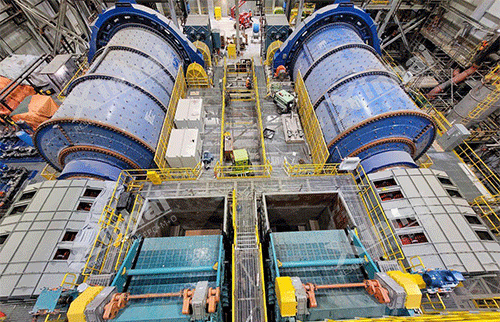
Grinding can represent a substantial part of both initial investment and long-term operating expenditure.
The required grinding fineness depends on how gold occurs in the ore and the degree of mineral liberation needed for effective recovery. Fine grinding may improve gold exposure in some ores, but it can also increase equipment requirements, energy consumption, and maintenance costs.
The main cost considerations include:
Grinding mill capacity and configuration.
Classification equipment and circulating load.
Installed power and electrical infrastructure.
Grinding media and equipment wear.
The relationship between particle size, recovery, and throughput.
A suitable grinding target should be established through mineralogical investigation and metallurgical testing rather than selected arbitrarily.
2.5 Site Location and Infrastructure Conditions
The location of a mining project can significantly affect its construction budget. A plant located near established roads, power networks, and water sources may require less supporting infrastructure than one in a remote area.
Important considerations include transportation distance, local labor availability, construction materials, access roads, power reliability, water availability, and site conditions.
For international projects, equipment import procedures, local taxes, customs duties, exchange-rate exposure, and local content requirements may also affect the final investment.
2.6 Environmental and Tailings Requirements
Environmental requirements influence both plant design and project expenditure. The capacity and design of tailings storage facilities depend on processing throughput, expected operating life, tailings properties, site topography, and geotechnical conditions.
Water management is equally important. Projects may need water recycling, process-water treatment, seepage control, and additional monitoring systems.
The applicable environmental standards and permitting requirements should be identified early. Leaving these items until late-stage engineering can lead to design changes, additional expenditure, and construction delays.
2.7 Automation and Project Execution
Automation level and project delivery arrangements also influence the total investment. A plant with more advanced instrumentation, centralized monitoring, and automated control systems may require higher initial expenditure but can improve operational consistency and process monitoring.
Project execution costs depend on engineering scope, procurement strategy, construction conditions, contractor availability, and the division of responsibilities between the owner and project contractors.
A reliable estimate should clearly define which services, equipment, construction activities, and commissioning responsibilities are included.
03How Different Gold Leaching Processes Affect Plant Cost
BackThe selected processing route determines the major equipment packages, infrastructure requirements, and operating characteristics of a gold leaching plant.
The following comparison illustrates the typical differences.
| Processing route | Main investment components | Important cost considerations |
|---|---|---|
| Heap leaching | Crushing, leach pad, stacking, solution collection and recovery systems | Pad construction, liner system, permeability, solution management |
| Agitated tank leaching | Crushing, grinding, leaching tanks, solid-liquid separation and gold recovery | Grinding requirements, tank capacity, energy demand |
| CIL/CIP | Crushing, grinding, leaching and adsorption circuits, carbon handling and gold recovery | Adsorption equipment, carbon management, downstream recovery |
| Pretreatment + leaching | Additional separation or pretreatment equipment, followed by a suitable recovery circuit | Additional equipment, energy, utilities, engineering and operating complexity |
3.1 Heap Leaching
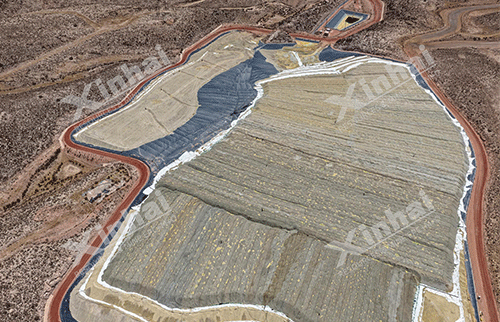
Heap leaching can be an attractive option for certain low-grade ores when their permeability, gold recovery characteristics, and site conditions are suitable.
Its major investment components include leach pads, liners, solution collection systems, pumps, and material handling equipment. Depending on the ore, crushing and agglomeration facilities may also be required.
Although heap leaching can avoid some of the grinding and tank equipment required by conventional agitated leaching, pad construction and water management still represent important project costs.
3.2 Agitated Tank Leaching
Agitated tank leaching involves treating prepared ore slurry in tanks under controlled processing conditions.
Its investment is influenced by grinding requirements, slurry handling capacity, tank volume, agitation systems, and downstream recovery arrangements.
The required tank volume depends partly on the ore's leaching kinetics and the necessary residence time. Therefore, laboratory and pilot-scale testing can help avoid oversized or undersized equipment.
3.3 CIL and CIP
CIL and CIP are commonly used gold recovery processes, but their adsorption arrangements differ.
CIL combines leaching and adsorption in the same series of tanks, while CIP generally separates leaching and adsorption into different stages.
Both routes require suitable gold recovery and carbon handling systems. Their actual cost depends on ore behavior, process conditions, equipment sizing, and the selected downstream recovery configuration.
3.4 Pretreatment Followed by Leaching
Some gold ores cannot achieve satisfactory recovery through direct leaching alone. Depending on the mineralogical characteristics, flotation or other pretreatment methods may be needed before the subsequent gold recovery stage.
These additional operations increase process complexity and may require extra equipment, utilities, construction, and environmental management facilities.
However, evaluating only the additional capital cost would be misleading. The potential improvement in recovery and overall project economics must also be considered.
04How to Estimate Gold Leaching Plant Costs Before Construction
BackA reliable cost estimate should be developed through a structured technical and engineering process. A preliminary equipment list alone is not enough to establish the total project investment.
Step 1: Conduct Ore Sampling and Mineralogical Analysis
The first step is to understand the ore that the plant will process. Representative samples should be collected and evaluated to identify gold occurrence, mineral associations, liberation characteristics, and potential processing challenges.
This information provides the basis for selecting suitable processing routes.
Step 2: Carry Out Metallurgical Testing
Metallurgical testing evaluates how the ore responds to different processing conditions. Depending on the ore characteristics and proposed flowsheet, testing may include grinding, gravity separation, flotation, leaching, and other relevant investigations.
The results help determine expected recovery performance, process requirements, and important design parameters.
Step 3: Develop the Process Flowsheet and Equipment Configuration
Once the processing route has been evaluated, engineers can develop the process flowsheet and determine the required equipment. Equipment sizing should consider throughput, operating hours, process residence time, slurry characteristics, and expected production conditions.
This stage connects metallurgical performance with the actual plant design.
Step 4: Assess Infrastructure and Construction Requirements
The estimate should cover not only the process plant but also the supporting facilities required for operation. These include power, water, roads, buildings, workshops, laboratories, tailings facilities, drainage, and other site infrastructure.
Construction conditions and local requirements should also be evaluated.
Step 5: Prepare a Complete Project Cost Estimate
The final estimate should consolidate equipment supply, transportation, installation, civil works, electrical and instrumentation systems, engineering, construction management, commissioning, owner-related costs, and contingency. The estimate should also clearly state its scope, assumptions, pricing basis, and level of engineering maturity.
This makes it easier to compare different process options and identify potential budget gaps before making an investment decision.
05Conclusion
BackThe cost of a gold leaching plant is ultimately determined by the interaction of ore characteristics, processing capacity, flowsheet selection, equipment requirements, site infrastructure, environmental standards, and project execution. A reliable investment estimate must therefore begin with representative ore testing and process design, followed by a complete assessment of equipment, construction, infrastructure, and operating costs.


RELATED PRODUCTS
-
Centrifugal Separator
-
Autogenous Mill
-
Raymood Mill