+8618335758886
 laura@xinhaimining.com



Four Major Influencing Factors of Fluorite Flotation
 zeki
 Oct 30, 2026
 21
If you want to know more details about equipment, solutions, etc, please click the button below for free consultation, or leave your requirements!
 Message
 Chat Now
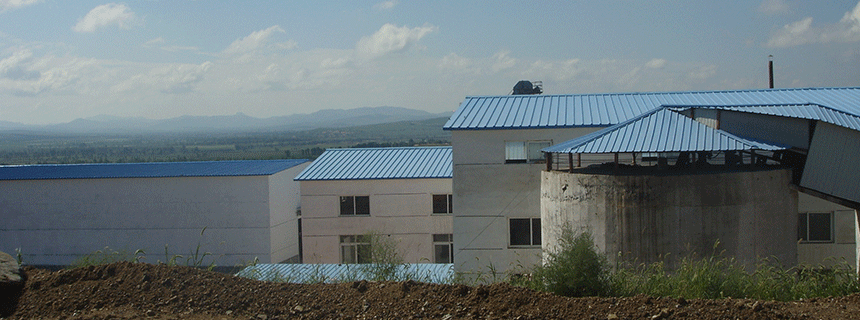
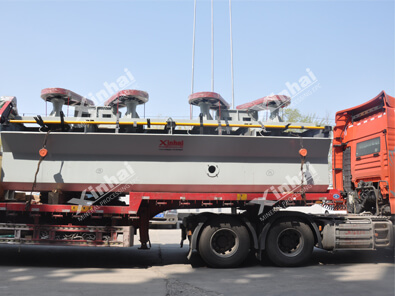
600 tpd Fluorspar Processing Plant in Inner Mongolia China
01Effect of Pulp pH on Fluorite Flotation
BackPulp pH directly changes the surface electrical properties of fluorite and associated gangue minerals, and also governs the existing form of collectors, leading to obvious variations in fluorite flotation recovery.
In fatty acid collector systems, fluorite shows favourable collector adsorption under weakly alkaline conditions, with the suitable pH range of 8.0–9.5 for most industrial operations. In acidic environments with excessively low pH, fatty acids tend to precipitate in molecular form and their collecting capacity declines sharply. Under strongly alkaline conditions with excessively high pH, hydroxide films form on mineral surfaces to hinder collector adsorption, and fluorite recovery gradually decreases.
02Effect of Particle-Bubble Interaction on Fluorite Flotation
BackThe fundamental flotation process involves collision, adhesion and mineralization between mineral particles and bubbles. Fluorite fractions of different particle sizes behave differently in flotation: medium-sized fluorite particles adhere to bubbles most readily. Overly coarse particles have large mass and cannot be supported by bubbles. Ultra-fine particles feature high specific surface area, low collision probability and are prone to slime coating, which greatly increases separation difficulty. Appropriately reducing bubble size raises the collision probability between bubbles and fine fluorite particles and improves mineralization of fine fluorite. Suitable bubble sizes for fluorite vary with reagent schemes. In modified fatty acid systems, ultra-fine fluorite particles of -10 μm match fine bubbles of 40–55 μm; the -20+10 μm fraction adapts to bubbles of approximately 55–65 μm; medium-sized particles of -38+20 μm correspond to favourable bubble sizes of 60–75 μm.
03Effect of Unavoidable Metallic Ions on Fluorite Flotation
BackGrinding and mineral dissolution release various metallic ions into pulp. Associated calcite, iron oxides and other minerals further promote ion accumulation. These ions alter mineral surface properties through chemical reactions and electrostatic adsorption and disturb flotation. The main ions with prominent impacts on fluorite flotation include calcium ions, magnesium ions, ferric ions and aluminium ions.
Calcium ions, mostly from dissolution of fluorite and calcite, are the most abundant ions in pulp. Free calcium ions consume substantial fatty acid collectors to form calcium soap precipitates, raising reagent consumption and deteriorating separation selectivity. Magnesium ions, ferric ions and aluminium ions strongly depress fluorite flotation. Rising ion concentration reduces fluorite recovery, activates some gangue minerals and increases impurities in fluorite concentrate.
The depression intensity follows the sequence: ferric ions > aluminium ions > magnesium ions > calcium ions. These ions continuously accumulate when process water is recycled, persistently impairing flotation indices. To tackle this problem, systematic beneficiation tests shall be carried out according to mineral composition, and suitable depressants and water conditioning measures shall be adopted to mitigate adverse effects of unavoidable ions.
04Effect of Flotation Reagents on Fluorite Flotation
BackFlotation reagents constitute the core of fluorite flotation. Fluorite has limited natural floatability, and its surface properties resemble those of calcite. Selective separation cannot be achieved by collectors alone, and combined use of collectors, depressants and pH regulators is required.
Anionic fatty acid collectors, including oleic acid, oxidized paraffin soap and various modified fatty acid soaps, are widely used for fluorite flotation. Conventional oleic acid exhibits poor collecting performance at low temperatures, so low-temperature-resistant modified fatty acid collectors are adopted in low-temperature mining areas to improve separation efficiency. Combined collectors are commonly applied in production to balance collecting power and selectivity and cut reagent dosage.
Collectors alone cannot separate fluorite from calcite and quartz, so depressants are indispensable. Water glass and acidified water glass are common depressants to suppress silicate gangue such as quartz. For carbonate gangue like calcite, combined depressants including acidified water glass, sodium hexametaphosphate and tannins are used to selectively depress gangue flotation while preserving the floatability of fluorite.
05Conclusion
BackThe above are four key factors affecting fluorite flotation. Restricted by mineral paragenesis, grinding fineness and recycled water quality, fluorite flotation is a relatively complex system. Prior to the construction or process modification of fluorite concentrators, systematic beneficiation tests are recommended. Rational flotation flowsheets shall be formulated based on test results to reduce fluorite losses, raise fluorite concentrate grade and overall recovery, and realize efficient utilization of mineral resources.


RELATED PRODUCTS
-
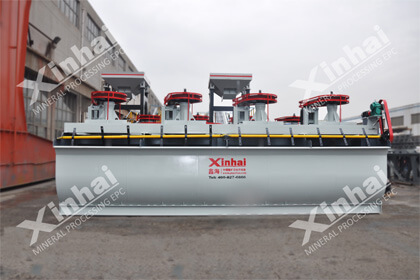
BF Flotation Cell
-
JJF Flotation Cell
-
SF Flotation Cell