+8618335758886
 laura@xinhaimining.com



Gravity Separation for Iron Ore Beneficiation: Complete Guide
 Laura
Laura
 Aug 29, 2026
 316
316
If you want to know more details about equipment, solutions, etc, please click the button below for free consultation, or leave your requirements!
 Message
 Chat Now
the construction of the mineral processing plant
Iron ore gravity separation is an important beneficiation method used to improve the quality of iron ore by removing lighter waste materials and increasing iron concentration. Based on differences in mineral density, the process separates valuable iron-bearing minerals from gangue through physical forces such as gravity, water flow, and centrifugal movement. Compared with some chemical-based beneficiation methods, gravity separation offers simple operation, lower energy consumption, and reduced environmental impact, making it a valuable technique in suitable iron ore processing applications.
This article explains the iron gravity separation process, including its principles, equipment, influencing factors, applications, and advantages in modern iron ore beneficiation.
01 Principles Of Iron Gravity Separation
Back1. Density Difference Of Minerals
The foundation of iron gravity separation is the difference in specific gravity between iron-bearing minerals and unwanted gangue materials. Minerals such as hematite, magnetite, and other iron oxides usually have higher densities than materials like quartz and silicate minerals. During the separation process, heavier iron minerals respond differently under gravity forces and can be concentrated, while lighter waste particles are removed. This physical difference allows gravity methods to upgrade iron ore efficiently when suitable mineral conditions exist.
2. Iron Ore Particle Behavior
The movement behavior of iron ore particles plays an important role in gravity separation performance. Particle size, shape, density, and degree of liberation influence how effectively minerals can be separated. Coarse iron particles with clear density differences are generally easier to recover, while fine particles may require specialized equipment or additional processing methods. Proper crushing, grinding, and classification help improve mineral liberation and create suitable feed conditions for efficient gravity separation.
3. Separation Process Flow
The iron gravity separation process typically includes ore preparation, classification, concentration, and concentrate collection stages. Raw iron ore is first crushed and screened to achieve appropriate particle sizes. After preparation, the material enters gravity equipment where heavier iron minerals are separated from lighter gangue. The recovered concentrate may undergo additional upgrading or dewatering before final use. A well-designed process flow improves iron recovery, concentrate quality, and overall beneficiation efficiency.
02 Iron Gravity Separation Equipment
Back1. Jig Separator For Iron Ore
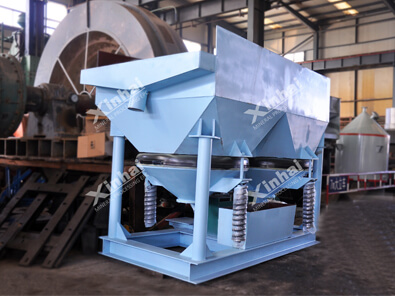
Jig separators are widely used in iron ore gravity separation, especially for processing coarse particles. The equipment separates minerals through repeated water pulsation, creating stratified layers according to density. Heavier iron-bearing particles move downward and are collected as concentrate, while lighter materials are discharged separately. Jigs are suitable for certain hematite and other iron ore deposits where density differences are sufficient. Their high processing capacity, simple structure, and low operating requirements make them useful in beneficiation plants.
2. Spiral Concentrator For Iron
Spiral concentrators are common gravity separation machines used in iron ore processing plants. They separate minerals through the combined effects of gravity and centrifugal forces as slurry flows along a spiral channel. Dense iron minerals move toward the inner section of the spiral, while lighter gangue materials move outward. Spiral concentrators are especially effective for processing fine iron ore particles and are valued for their continuous operation, low energy consumption, and minimal maintenance requirements.
3. Shaking Table For Iron Recovery
Shaking tables provide precise gravity separation for recovering fine iron minerals. The equipment uses mechanical vibration, water flow, and gravity to separate particles according to density and size. During operation, iron-rich particles move toward concentrate zones while lighter materials are washed away. Although shaking tables usually have lower processing capacity than other equipment, they provide excellent separation accuracy. They are often used for laboratory testing, concentrate cleaning, and small-scale iron ore beneficiation applications.
4. Centrifugal Separation Equipment
Centrifugal concentrators enhance traditional gravity separation by creating stronger separation forces. These machines improve the recovery of fine iron-bearing particles that may not separate effectively under normal gravity conditions. Through high-speed rotation, dense mineral particles are concentrated while lighter materials are removed. Although more commonly associated with other heavy mineral applications, centrifugal technology can support iron ore beneficiation where fine particle recovery is required and where improved concentration efficiency is economically beneficial.
03 Factors Affecting Iron Beneficiation
Back1. Ore Characteristics
The characteristics of iron ore strongly influence gravity separation performance. Important factors include mineral composition, iron content, particle size distribution, and the relationship between iron minerals and gangue materials. Ores with significant density differences between iron minerals and impurities are more suitable for gravity methods. Before selecting equipment, mineral testing is often required to evaluate separation potential. Understanding ore properties helps engineers design efficient beneficiation systems and achieve better recovery results.
2. Feed Size Control
Feed particle size is a critical factor in iron gravity separation. If particles are too large, valuable minerals may remain locked with waste materials, reducing separation efficiency. If particles are too fine, gravity forces may become insufficient for effective recovery. Proper crushing, grinding, and classification create suitable particle sizes for different gravity equipment. Maintaining consistent feed conditions allows separation machines to operate more effectively and produce higher-quality iron concentrates.
3. Equipment Optimization
Optimizing equipment operation is essential for achieving stable iron ore beneficiation performance. Parameters such as water flow rate, feed concentration, vibration intensity, and machine settings directly influence separation results. Regular monitoring and adjustment help maintain recovery efficiency and reduce mineral losses. Modern processing plants increasingly use automated control systems to improve equipment performance and ensure consistent operation. Proper optimization allows gravity separation circuits to deliver reliable results under changing production conditions.
04 Applications And Advantages
Back1. Hematite Beneficiation
Gravity separation is commonly applied in hematite beneficiation because hematite often has a higher density than associated gangue minerals. When hematite particles are sufficiently liberated, gravity methods can effectively upgrade ore quality by removing lighter impurities. Equipment such as jigs, spirals, and shaking tables may be combined depending on ore conditions. This approach helps improve iron concentration while reducing the amount of material requiring further treatment, making the beneficiation process more economical.
2. Magnetite Processing
Magnetite is usually processed through magnetic separation because of its strong magnetic properties, but gravity separation can also support certain processing stages. Gravity methods may help classify particles, remove low-density materials, or assist in combined beneficiation circuits. When integrated with other technologies, gravity separation can improve overall processing efficiency and resource utilization. The best approach depends on mineral characteristics, production objectives, and the design of the complete iron ore processing system.
3. Sustainable Iron Ore Processing
Iron gravity separation provides environmental benefits by relying mainly on physical separation principles. Compared with processes requiring large amounts of chemical reagents, gravity methods can reduce chemical consumption and simplify waste management. Lower energy requirements and simpler equipment designs also contribute to more sustainable mining operations. As the industry focuses on cleaner production methods, gravity separation continues to play an important role in developing efficient and environmentally responsible iron ore beneficiation solutions.
05 Summary
BackIron gravity separation is an effective beneficiation process that improves iron ore quality by separating dense iron minerals from lighter gangue materials. Through equipment such as jig separators, spiral concentrators, shaking tables, and centrifugal concentrators, mining operations can achieve better recovery and concentrate quality. The success of the process depends on ore characteristics, particle size control, and equipment optimization. With its economic and environmental advantages, gravity separation remains an important technology for suitable iron ore beneficiation projects.
Contact our specialists today to receive a customized iron ore gravity separation solution and obtain a competitive quotation.


RELATED PRODUCTS
-
Activated Carbon Regenerator
-
Leaching Agitation Tank
-
Jig