+8618335758886
 laura@xinhaimining.com



Top Gravity Separation Techniques Used in Modern Mining
 Laura
Laura
 Jul 13, 2026
 412
412
If you want to know more details about equipment, solutions, etc, please click the button below for free consultation, or leave your requirements!
 Message
 Chat Now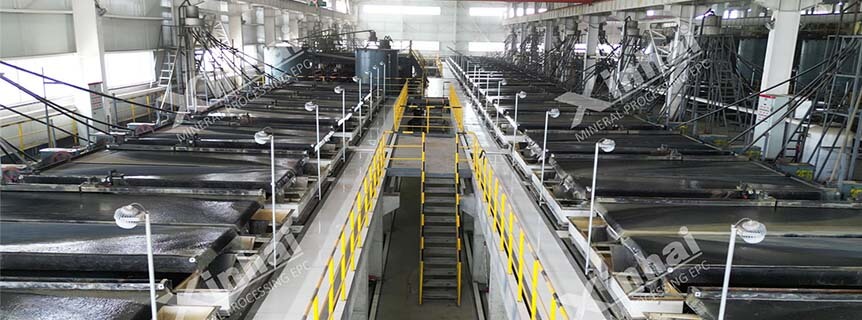
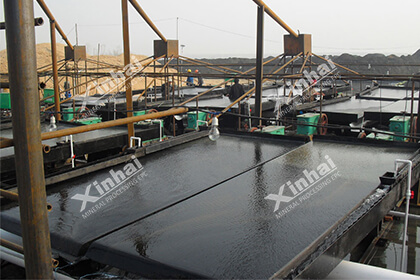
shaking tables are in operation
Gravity separation techniques are essential mineral processing methods that separate valuable minerals from unwanted materials by utilizing differences in density. These techniques rely on natural forces such as gravity, water movement, and centrifugal effects to achieve mineral concentration without extensive chemical treatment. Used for centuries and continuously improved through modern engineering, gravity separation remains an important solution for recovering gold, tin, tungsten, iron ore, chromite, coal, and other valuable resources. Its efficiency, low operating cost, and environmental advantages make it widely applied in mining operations worldwide.
This article introduces the top gravity separation techniques used in modern mining, explaining their principles, equipment features, applications, and benefits in mineral recovery.
01 Principles Of Gravity Separation Techniques
Back1. Density-Based Separation Method
Gravity separation techniques work by exploiting differences in specific gravity between valuable minerals and surrounding waste materials. When mineral particles are exposed to gravity forces, heavier particles and lighter particles move differently, allowing them to be separated. Dense minerals settle faster or move toward specific collection areas, while lighter materials are removed as waste. This simple physical principle forms the foundation of many mineral processing systems and enables efficient concentration without changing the chemical structure of the minerals.
2. Influence Of Particle Characteristics
The effectiveness of gravity separation techniques depends greatly on the physical characteristics of mineral particles. Particle size, shape, density, and degree of liberation influence how materials respond during separation. Larger and heavier particles are generally easier to recover, while fine particles may require enhanced separation methods. Proper ore preparation through crushing, screening, and grinding improves particle behavior and helps processing equipment achieve better recovery performance, higher concentrate quality, and more stable operation.
3. Role Of Processing Conditions
Operating conditions have a direct impact on the performance of gravity separation techniques. Factors such as water flow rate, feed concentration, equipment settings, and material distribution must be carefully controlled. Even small adjustments can affect separation accuracy and recovery efficiency. Modern mining plants often use monitoring systems and process optimization methods to maintain stable conditions. Effective control of these parameters allows gravity separation circuits to maximize mineral recovery while reducing losses during processing.
02 Main Gravity Separation Techniques
Back1. Jigging Separation Technique
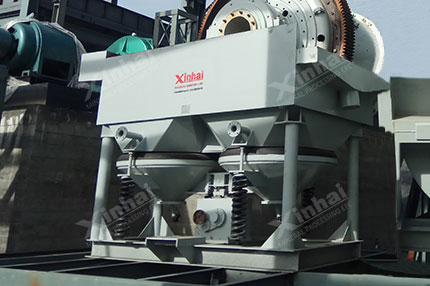
Jigging is one of the oldest and most widely used gravity separation techniques in mineral processing. The method uses pulsating water movement to create layers of particles according to density. Heavy minerals move downward through the material bed, while lighter materials remain above and are discharged separately. Jigging is commonly applied for recovering coarse gold, tin, tungsten, manganese, and iron ore. Its simple design, high processing capacity, and reliable performance make it suitable for many mining operations.
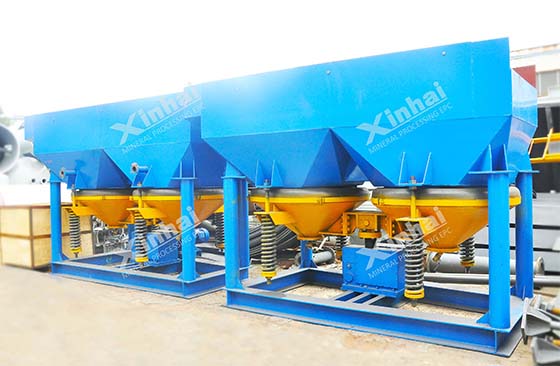
Jigging Separation Technique
2. Shaking Table Technique
Shaking table separation is a precision gravity technique that combines gravity, water flow, and mechanical vibration. During operation, mineral slurry moves across an inclined table surface, where heavier particles are concentrated in specific areas while lighter materials are carried away. This technique is highly effective for recovering fine valuable minerals such as gold, tungsten, and tin. Although shaking tables usually process lower volumes compared with some other equipment, they provide excellent separation accuracy and concentrate quality.
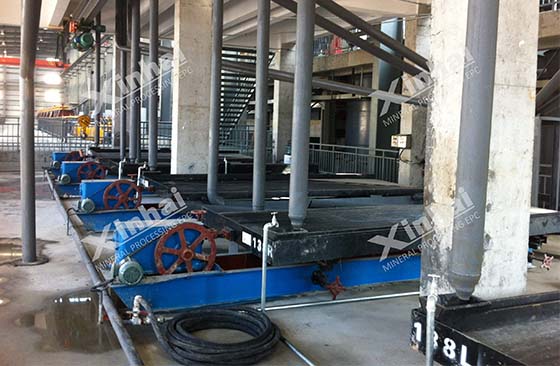
Shaking Table Technique
3. Spiral Concentration Technique
Spiral concentration is a widely adopted gravity separation technique used for continuous mineral processing. The method uses a spiral-shaped channel where slurry flows downward while gravity and centrifugal effects separate particles according to density. Heavy minerals move toward the inner section of the spiral, while lighter materials travel outward. Spiral concentrators require little maintenance because they have no complex moving parts. They are commonly used for iron ore, chromite, coal, and mineral sands processing due to their efficiency and reliability.
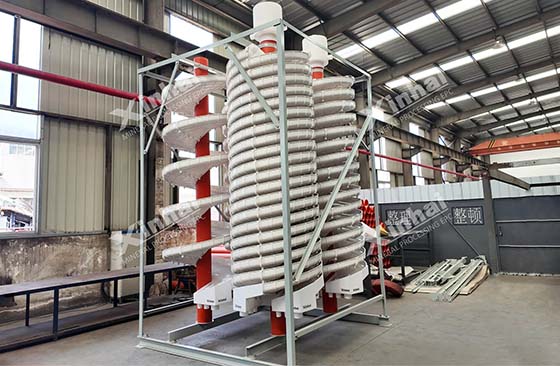
Spiral Concentration Technique
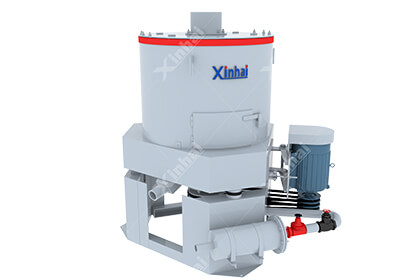
4. Centrifugal Separation Technique
Centrifugal separation is an advanced gravity technique designed to recover fine and ultrafine heavy minerals. Unlike traditional methods that rely only on natural gravity, centrifugal equipment generates stronger forces to improve particle separation. This technology is especially valuable in gold processing because it can capture fine free gold that may escape conventional equipment. Modern centrifugal concentrators provide high recovery rates, compact designs, and automated operation, making them increasingly important in advanced mineral processing circuits.
03 Applications Of Gravity Techniques
Back1. Gold Mineral Recovery
Gold recovery is one of the most common applications of gravity separation techniques. Because gold has a much higher density than most surrounding minerals, gravity methods can efficiently capture free gold particles. Mining operations often combine jigging, shaking tables, and centrifugal separation to recover different sizes of gold particles. These techniques help reduce mineral losses, decrease reliance on chemical extraction methods, and improve overall processing efficiency. Gravity separation remains an important part of many modern gold recovery plants.
2. Heavy Mineral Processing
Gravity separation techniques are widely used for processing heavy minerals because of their natural density differences. Minerals such as tin, tungsten, chromite, and manganese can be effectively upgraded through gravity-based methods. These techniques remove lighter waste materials and increase the concentration of valuable minerals before further treatment. Heavy mineral processing plants often combine multiple gravity methods to achieve better recovery results. This flexibility allows gravity separation to support various mineral production industries worldwide.
3. Industrial Mineral Applications
Many industrial minerals benefit from gravity separation techniques during beneficiation. Iron ore, coal, mineral sands, and other resources are commonly processed using gravity-based equipment. These methods help improve material quality by removing unwanted components and producing higher-grade concentrates. Because gravity separation requires relatively simple equipment and limited chemical usage, it remains an attractive option for industrial mineral producers seeking reliable and economical processing solutions.
04 Advantages And Future Development
Back1. Cost Effective Processing
One major advantage of gravity separation techniques is their economic efficiency. Compared with many chemical beneficiation methods, gravity processes generally require lower energy consumption and fewer operating materials. Equipment such as jigs, spirals, and tables can operate continuously with manageable maintenance requirements. These benefits help mining companies reduce production expenses while maintaining effective mineral recovery. For many deposits, gravity separation provides a practical balance between processing performance and operational cost.
2. Environmental Benefits
Gravity separation techniques support more sustainable mining practices because they mainly rely on physical forces rather than chemical reactions. Reduced chemical consumption helps lower environmental risks and decreases the need for complex waste treatment systems. Water recycling and efficient process design can further improve sustainability. As mining companies focus more on environmentally responsible operations, gravity separation continues to gain attention as a cleaner mineral processing solution.
3. Future Technology Development
The future of gravity separation techniques will continue to develop through automation, intelligent control systems, and improved equipment designs. Advanced monitoring technologies allow operators to optimize processing conditions and maintain higher recovery rates. Research into fine particle recovery and complex ore treatment is also expanding the application range of gravity methods. With increasing demand for minerals used in renewable energy and advanced technologies, gravity separation will remain an important technique in modern mining.
05 Summary
BackGravity separation techniques provide efficient and sustainable solutions for mineral recovery by using differences in density and particle behavior. Methods such as jigging, shaking tables, spiral concentration, and centrifugal separation each offer unique advantages for different mining applications. These techniques are widely used for gold, heavy minerals, iron ore, coal, and industrial mineral processing. Through proper equipment selection and process optimization, gravity separation continues to improve recovery efficiency, reduce costs, and support environmentally responsible mining operations.
Contact our experts today to receive a customized gravity separation solution and obtain a competitive quotation for your mining project.


RELATED PRODUCTS
-
XCF Air Inflation Flotation Cell
-
Hydraulic Motor Driving Center Thickener
-
Autogenous Mill