+8618234403483
 yanzhang19990421@gmail.com



Types of Ball Mills
 zeki
zeki
 Sep 24, 2026
 10
10
If you want to know more details about equipment, solutions, etc, please click the button below for free consultation, or leave your requirements!
 Message
 Chat Now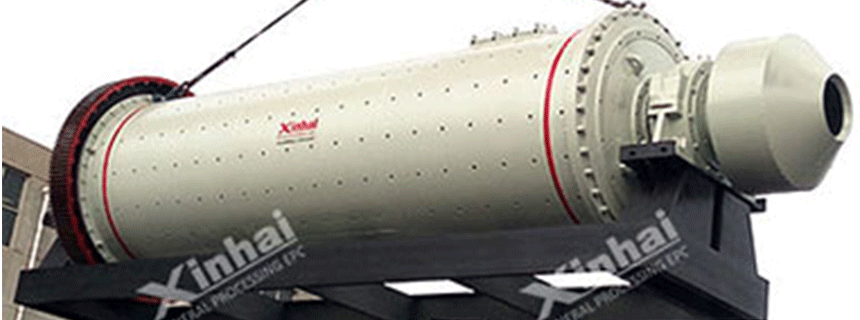
01Wet Grid-type Ball Mill
BackThe wet grid-type ball mill is a forced-discharge grinding equipment and the most commonly adopted equipment for primary grinding in domestic mineral processing plants.
1.Working Principle
Ore together with slurry enters the cylinder through the feed hollow shaft. As the cylinder rotates, steel balls of different specifications inside the cylinder are lifted to a certain height. The steel balls fall by gravity to generate impact crushing on ore. Meanwhile, friction and grinding occur among steel balls, liners and ore. When the ground slurry reaches the discharge end, forced low-level discharge is realized via the grid plate and lifting buckets. Qualified ore particles quickly pass through the grid plate into lifting buckets and are then discharged from the mill through the hollow shaft, while coarse particles remain inside the cylinder for regrinding.
2.Advantages
(1) Forced discharge shortens the residence time of slurry in the cylinder, effectively reducing over-grinding of minerals. It is suitable for grinding heavy metal ores.
(2) Under the same equipment specification, its throughput is 10‑25% higher than that of overflow ball mills with high grinding efficiency.
(3) Suitable for coarse grinding conditions with relatively uniform product particle size. It is mostly combined with spiral classifiers to form a closed-circuit grinding circuit and applied in the primary grinding operation of concentrators.
3.Disadvantages
(1) The grid plate is a wearable part, and its inspection and replacement are cumbersome.
(2) It has many structural components and heavy dead weight, resulting in higher investment in civil engineering for foundations.
02Wet Overflow Ball Mill
BackThe wet overflow ball mill relies on gravity flow discharge of slurry and is mostly used for secondary fine grinding and concentrate regrinding processes.
1.Working Principle
Ore material enters the cylinder with slurry and undergoes grinding through impact and friction of steel balls. The inner diameter of the discharge hollow shaft is larger than that of the feed end. The slurry level inside the cylinder keeps rising. When the slurry level exceeds the lower edge of the discharge hollow shaft, slurry overflows and discharges automatically by the liquid level difference. Some coarse particles and high-specific-gravity minerals settle at the bottom of the cylinder. They can overflow out of the mill cylinder with slurry only after being fully ground into fine particles.
2.Advantages
(1) No grid plate inside the equipment, featuring simple structure and low daily maintenance workload.
(2) Longer ore residence time for grinding produces finer discharge particle size, suitable for fine grinding and concentrate regrinding operations.
(3) Stable and reliable operation, applicable to large-scale concentrators. It is often matched with hydrocyclones to form a closed-circuit grinding system.
3.Disadvantages
(1) Non-forced discharge may easily cause over-grinding of high-specific-gravity minerals, which adversely affects the recovery indices of subsequent flotation and gravity separation.
(2) The throughput of the same-size model is lower than that of grid-type ball mills.
03Dry Grid-type Ball Mill
BackThe dry grid-type ball mill is a grid-discharge grinding equipment without slurry medium and adopting air flow for material discharge.
1.Working Principle
Dried ore materials are fed into the cylinder. The rotation of the cylinder drives steel balls to impact and grind ore. Flowing air is introduced into the cylinder. Fine ground powder passes through the grid plate at the discharge end and is carried out of the mill by air flow, while coarse particles stay in the cylinder for repeated grinding. Subsequent dust collection equipment collects the ground powder.
2.Advantages
(1) No water required, suitable for ore grinding in water-scarce areas or ores prone to mud formation when contacting water.
(2) Forced discharge via grid plate enables fast powder discharge and low risk of material over-grinding.
3.Disadvantages
(1) Heavy dust is generated on site, so the complete system must be equipped with sound dust removal facilities.
(2) Poor material fluidity during grinding leads to lower throughput compared with wet models of the same specification.
04Dry Overflow Ball Mill
BackThe dry overflow ball mill completes material discharge by means of air flow carrying materials and gravity flow of material bed, mostly used for dry fine grinding of non-metallic ores.
1.Working Principle
Dried ore enters the cylinder and is impacted and ground by steel balls. Continuous air flow is introduced into the cylinder to keep materials being finely ground. As the material level inside the cylinder rises, fine powder is carried out of the mill through the discharge hollow shaft by air flow, and coarse materials remain inside the cylinder for grinding.
2.Advantages
(1) Simple structure for convenient maintenance, and fine particle size of finished products.
(2) No water demand, adapted to dry processing of building materials and non-metallic ores.
3.Disadvantages
(1) The particle size uniformity of ground products is average, and coarse particles tend to accumulate inside the mill.
(2) Strict dust control is required, and its application proportion in metallic ore mineral processing is low.
05Conclusion
BackGrid-type ball mills feature forced discharge, large throughput and mild over-grinding, suitable for coarse grinding and primary grinding. Their drawbacks lie in complex structure and heavy maintenance workload for grid plates.Overflow ball mills have simple structure and convenient maintenance, and can produce fine ground products for secondary fine grinding and concentrate regrinding. However, high-specific-gravity minerals are prone to over-grinding, and the single-machine throughput is limited.Wet ball mills generate little dust during production and have high grinding efficiency, so wet models are selected by most metallic ore concentrators. Dry ball mills require no water, subject to restrictions of regions and ore properties, and are mainly used in water-deficient mining areas and non-metallic ore processing.


RELATED PRODUCTS
-
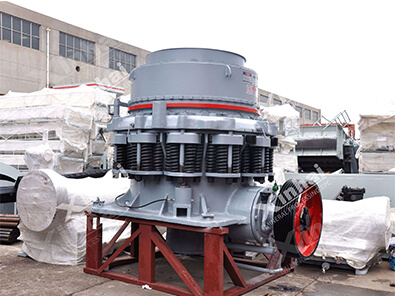
Spring Cone Crusher
-
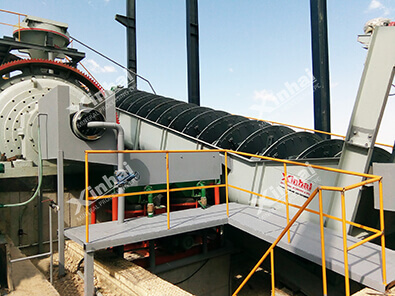
Submerged Spiral Classifier
-
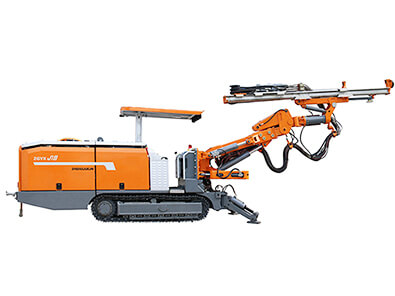
Rock Drilling Equipment