+8618335758886
 laura@xinhaimining.com



15 Q&A You Need to Know Before Buying a Ball Mill
 Shirley
 Sep 09, 2022
 4370
4370
If you want to know more details about equipment, solutions, etc, please click the button below for free consultation, or leave your requirements!
 Message
 Chat Now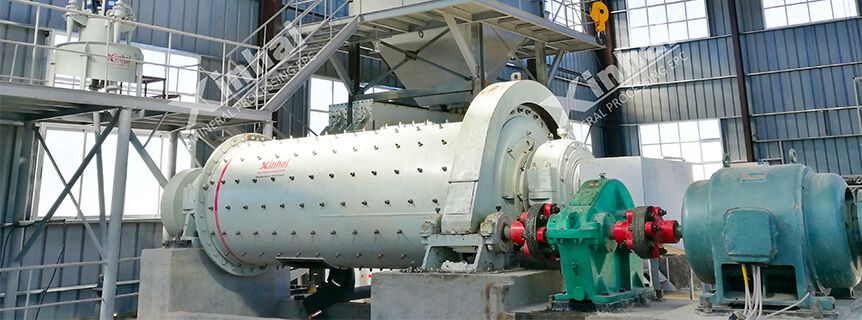
Before buying a ball mill, you need to know the model, output, structure, etc. of the ball mill. Before the ball mill is put into production, you need to know how to load the balls and the ratio of the media. During the use process, you should consider how to increase the output and how to solve the problems such as the swelling of the ball mill.
This article has compiled 15 frequently asked questions about ball mills, let's dive in!
01 What are the types of mills?
BackDepending on the mill media, the ball mill media is steel balls. The rod mill medium is steel rod. The gravel mill medium is gravel. The autogenous mill uses its own ore as the medium. Adding an appropriate amount of steel balls to the autogenous mill constitutes a so-called semi-autogenous mill.
Depending on the mill media, the ball mill media is steel balls. The rod mill medium is steel rod. The gravel mill medium is gravel. The autogenous mill uses its own ore as the medium. Adding an appropriate amount of steel balls to the autogenous mill constitutes a so-called semi-autogenous mill.
According to the shape of the casing, the ball mill is divided into short cylindrical, tubular and conical. According to the different discharge methods, it is divided into overflow type discharge and grid type discharge.
02 How are ball mill specifications expressed?
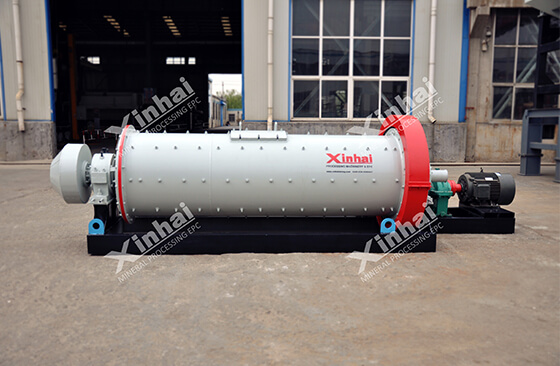
BackThe representation method of the ball mill model is: diameter length, which is represented by D×L symbol. For example, a 2700×2100mm ball mill has a diameter of 2700mm and a length of 2100mm.
03 What is the ball mill critical speed?
BackIn production, the speed at which the outer layer of grinding medium starts centrifugal operation is called the critical speed of the mill. Calculated as follows: Calculation formula of critical revolution: n =42.2/nrev/min
Among them: D is the effective diameter of the mill cylinder, that is, the diameter of the cylinder specification minus twice the average thickness of the lining plate (m).
04 What is the expression method of grinding fineness?
BackThe fineness of the grinding product is usually screened with a 200-mesh sieve of a standard sieve, and expressed as a percentage of the total product under the sieve (mesh is the number of sieve holes in each inch of sieve mesh layer, and is used as named sieve).
05 What is the ball mill grinding efficiency?
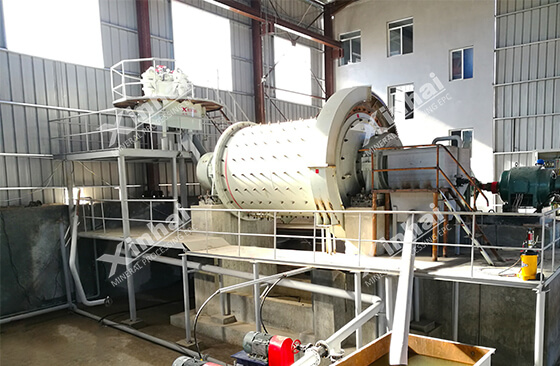
BackThe grinding efficiency of a ball mill refers to the amount of ore that can be processed per 1 kWh (one degree) of electrical energy consumed, and there are several ways to express it.
Tons of raw ore processed per degree of electricity consumed, that is, ton/kWh.
Tons of grinding products per kilowatt of electricity consumed are calculated according to the specified grade (usually -200 mesh).
Measured in tons of surface area per kilowatt hour.
06 What is qualified particle size?
BackQualified particle size means that the upper limit of particle size should be smaller than the specified relatively large particle size, and the lower limit of particle size should be subtracted from the over-pulverized part.
07 How does a ball mill work?
BackWhen the mill is rotating at a certain speed, the centrifugal force is generated, which causes friction between the medium and the cylinder, and is rotating together with the cylinder. When it reaches a certain height, its own gravity is strong centrifugal force, it will be thrown from the cylinder and fall, thus breaking the ore. At the same time, because of the sliding phenomenon in the medium, the grinding effect on the ore is also produced. Under the action of the impact force and grinding force of the medium, the ore is crushed.
08 How does the medium move in the mill?
BackThere are three kinds of medium movement track: ① Falling type (low speed operation) ② Drop type (normal speed) (3) Centrifugal operation (the movement track of the medium and the cylinder is consistent).
The motion law of grinding medium mainly has the following four points:
① When the mill runs at a certain speed, the medium moves regularly under the action of centrifugal force and gravity.
② The motion trajectory of the grinding medium in the cylinder is composed of upward movement of the arc trajectory and downward movement of the parabola trajectory.
③ The rising height of each layer is different. The height of the outer to the inner medium decreases in sequence.
④ The rotation period of each layer is different, the closer to the inner layer, the shorter the rotation period.
09 What are the composition of the ball mill structure?
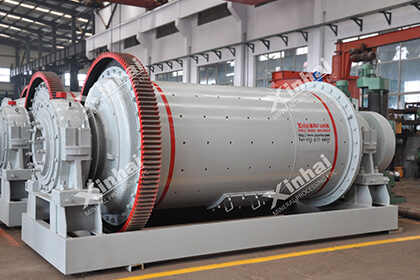
BackThe ball mill is mainly composed of six parts, such as the cylinder part, the mine department, the mine discharge department, the transmission department, the bearing department and the lubrication system.
10 What are the operating factors that affect the work of the grinding-classifying unit?
BackThe influencing factors can be roughly classified into the following three categories:
① Ore properties: Including hardness, mud content, feeding particle size and required fineness of grinding products, etc.
② Mill structure: Including mill type, specification, speed, etc.
③ Operating conditions: Mainly include grinding medium, pulp, concentration, sand return ratio and classification efficiency.
11 How to choose the grinding medium material?
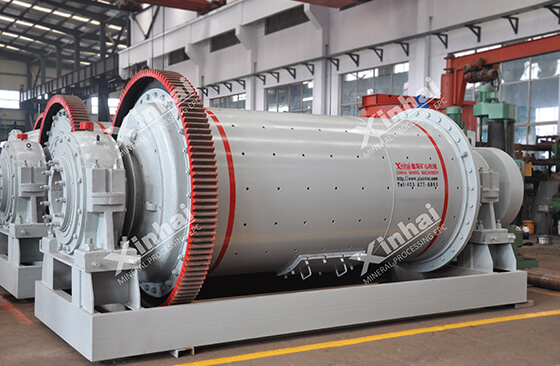
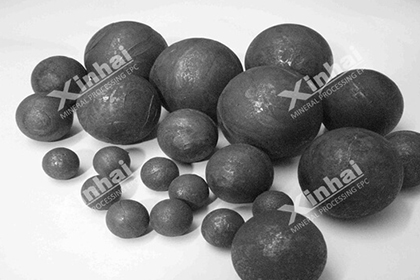
BackWhen selecting the material of the grinding medium, the specific gravity, hardness, wear resistance, price, processing and manufacturing conditions of the material should be considered. At present, steel or iron materials are generally used. In production, steel is commonly used for large balls, iron for small balls, steel for coarse grinding, and iron for fine grinding. In recent years, rare earth medium manganese ductile iron balls have been successfully used to replace steel balls.
12 How to determine the amount of steel balls loaded in a ball mill?
BackThe amount of balls loaded has a certain influence on the grinding efficiency. When the balls are loaded less, the efficiency of the mill is low. When too many balls are loaded, the inner balls are prone to interference during operation, which destroys the normal circulation of the balls and reduces the grinding efficiency.
Practice has proved that the amount of balls loaded is related to the rotation rate of the mill. When the running speed of the mill is low, more balls can be loaded, and less when the speed is high.
For grid type ball mill: filling rate φ=4045%
For overflow type ball mill: filling rate φ=3540%
13 How to improve the technical efficiency of the mill?
BackTo improve the technical efficiency of the mill, the following aspects can be considered:
Adopt closed-circuit grinding process.
In the selection of equipment, a rod mill with peripheral discharge should be used for rough grinding, and a grid-type ball mill should be used for fine grinding.
14 How to determine the size and proportion of steel balls?
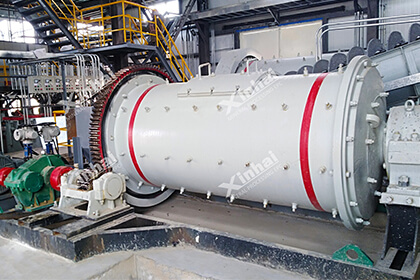
BackThe size and proportion of the steel ball are mainly determined by the physical and mechanical properties of the ore and the particle size composition of the ore.
When dealing with ore with high hardness and coarse particle size, it needs to have a large impact force, and it is necessary to add steel balls with a larger size. When the processed ore is softer and the feed particle size is smaller (less), and the product particle size is required to be finer, grinding should be the main method, and steel balls with smaller size can be loaded.
Ball mills on production sites are generally loaded with balls of various diameters. According to a certain proportion, it can process materials composed of ore particles of different sizes. Theoretically speaking, only by ensuring a certain proportion of various balls can be adapted to the particle size composition of the material to be ground, and a good grinding effect can be achieved.
15 How to deal with the belly of the ball mill?
BackFirst of all, it is necessary to analyze the changes in the properties of the ore, whether the ore supply, water supply, sand return, overflow particle size, etc. are normal. Generally, the following measures can be taken in operation:
① Reduce the ore feeding amount of the mill or stop feeding ore in a short time
② Adjust the water consumption, that is, strictly control the grinding concentration
③ Reasonable addition of grinding media
16To Wrap Up
BackThe above are some Q&A about ball mill. If you want to know more about ball mill, you can contact the online service or submit a message, we will contact you soon.


RELATED PRODUCTS
-
Hammer Crusher
-
XJB Bar Flotation Cell
-
Press Filter
.jpg "Grinding Machine in the Factory")