+8618234403483
 yanzhang19990421@gmail.com



Comprehensive Review of the Full Processing Flow for Gold Ore Beneficiation
 zeki
zeki
 Jul 29, 2026
 328
328
If you want to know more details about equipment, solutions, etc, please click the button below for free consultation, or leave your requirements!
 Message
 Chat Now
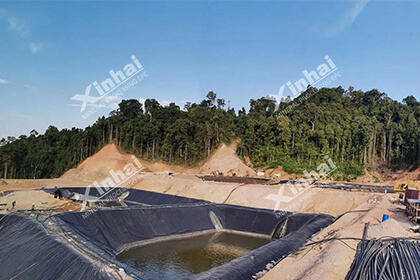
Russian-500tpd-Gold-Mine-Gravity-Separation-Plant
Gold is a scarce precious metal with both monetary and industrial attributes. Featuring stable chemical inertness, excellent ductility, and superior electrical and thermal conductivity, it is widely applied in electronic components, aerospace new materials, precious metal currency, jewelry, and chemical catalysis. Natural gold ore contains extremely low gold tenor, generally ranging from 0.5 g to 5 g per tonne of ore. Direct smelting is infeasible, so a complete beneficiation flow is required to separate gangue minerals including quartz, feldspar, pyrite and clay, realize the enrichment and purification of gold, and produce high-grade gold concentrate or crude gold feedstock. This paper systematically sorts out the mainstream full beneficiation flow for lode gold ore, analyzes the core processes, equipment and technical logic of each section, and fully demonstrates the complete processing system from run-of-mine ore to qualified gold products.
01Basic Types and Separation Characteristics of Gold Ores
Back1.Lode Gold Ore
Mined from underground or open-pit primary rock masses, gold grains exist in two forms: native gold and encapsulated gold in sulfides. One type consists of coarse free gold with monomer particle size greater than 0.1 mm, suitable for direct recovery via gravity separation. The other type comprises micro-fine disseminated gold with grains encapsulated inside pyrite and arsenopyrite, mostly smaller than 0.03 mm. Such gold requires flotation to enrich gold-bearing sulfide minerals or cyanide leaching for dissociation and recovery.
2.Placer Gold Ore
Secondary sedimentary deposits formed in river channels and terraces. Gold grains are mostly free monomers without dense gangue encapsulation. Crushing and grinding are unnecessary, and separation can be achieved merely by gravity separation equipment, featuring simple processes and low reagent consumption.
02Complete Beneficiation Flow of Gold Ore
BackThe standard beneficiation system for lode gold ore consists of five core sections: crushing and screening, grinding and classification, separation and enrichment, and concentrate dewatering.
1.Crushing and Screening Pretreatment
Crushing serves as the preconditioning process prior to beneficiation. The three-stage one-closed-circuit crushing flow is widely adopted in the industry to progressively reduce ore lump size and provide qualified feed for the grinding section.
(1) Coarse crushing: Run-of-mine ore is fed into a jaw crusher via feeding equipment, reducing large ore blocks to 150–300 mm.
(2) Secondary and fine crushing: Coarse crushing products are conveyed to a hydraulic cone crusher for secondary crushing, with particle size lowered to 20–70 mm.
(3) Closed-circuit screening: Crushed materials are delivered to a circular vibrating screen for classification. Undersized qualified fine ore is stored in a fine ore bin, while oversize coarse particles return to the cone crusher for regrinding to form a closed circulation.
2.Grinding and Classification
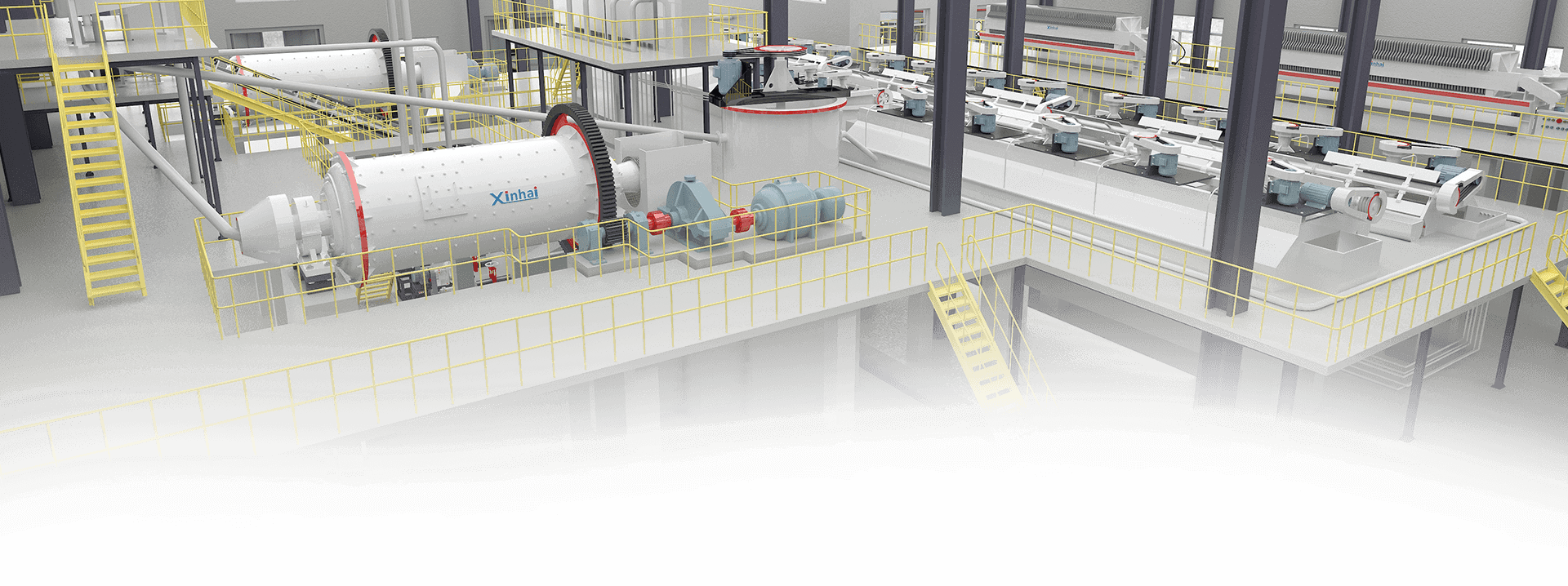
Fine ore after crushing enters the grinding system. Wet grinding enables complete liberation of gold particles from gangue minerals, which constitutes a critical procedure determining the maximum gold recovery rate. The grinding-hydrocyclone closed-circuit circulation is commonly adopted in industrial production.
(1) Grinding: A grate ball mill is used for primary grinding to rapidly discharge coarse particle slurry; an overflow ball mill is matched for fine grinding to conduct deep grinding of micro-fine gold-bearing sulfides.
(2) Classification circulation: Ground slurry is pumped into hydrocyclones for classification. Qualified fine overflow (typically 65%–85% passing 200 mesh) is sent to the separation section; coarse underflow particles return to the ball mill for regrinding to stably control grinding fineness.
3.Separation and Enrichment Section
Based on gold grain dissemination size and mineral paragenetic relationships, gravity separation, flotation and cyanide leaching are adopted independently or in combination.
(1) Gravity Separation
Separation relies on the significant density difference between native gold and gangue minerals. This technique requires no chemical reagents and boasts low operating costs, and is only applied to recover coarse free gold.
Common equipment: centrifugal concentrator, spiral chute, jig, shaking table
(2) Flotation
The standard flotation flow adopts one roughing, two scavengings and three cleanings. Roughing produces low-grade rough concentrate; scavenging recovers residual gold-bearing sulfides in tailings; multiple cleanings upgrade the grade of gold concentrate. Gravity separation equipment can be deployed for flotation tailings to recover residual coarse gold and improve overall recovery.
(3) Cyanide Leaching Process (All-slime CIL/CIP Carbon-in-leach Method)
Applicable to micro-fine oxidized gold ore and low-grade gold flotation concentrate. Under alkaline aerobic conditions, cyanide solution dissolves solid gold to generate soluble gold cyanide complexes. Activated carbon is then used to adsorb gold ions, and carbon-laden gold undergoes desorption and electrowinning to produce gold sludge.
CIL (Carbon-in-Leach): Activated carbon is directly added into leaching tanks for simultaneous leaching and adsorption, featuring a shorter flow sheet.
CIP (Carbon-in-Pulp): Full ore leaching is completed first, followed by delivery to adsorption tanks for gold recovery.
Supporting equipment: thickener, aerated leaching tank, desorption-electrowinning unit.
03Conclusions
BackGold ore beneficiation acts as a core intermediate process connecting mining and gold smelting. Process selection for the integrated flow including crushing, grinding, separation, dewatering and purification evolves alongside the rising proportion of low-grade, micro-fine and complex refractory gold ore resources. Composite processes such as stage grinding-stage flotation, combined gravity-flotation separation, and pretreatment prior to carbon leaching are gaining increasing popularity. Continuous upgrades of supporting equipment including large energy-saving ball mills, high-efficiency flotation columns, and sealed harmless cyanide treatment facilities help enhance the overall gold recovery rate, reduce reagent and energy consumption, and realize green and efficient production in gold mines.


RELATED PRODUCTS
-
Drum Filter
-
Dry Magnetic Separator
-
Hammer Crusher