+8618234403483
 yanzhang19990421@gmail.com



How to Build a Chrome Ore Processing Plant: A Comprehensive Guide
 zeki
zeki
 Apr 30, 2026
 689
689
If you want to know more details about equipment, solutions, etc, please click the button below for free consultation, or leave your requirements!
 Message
 Chat Now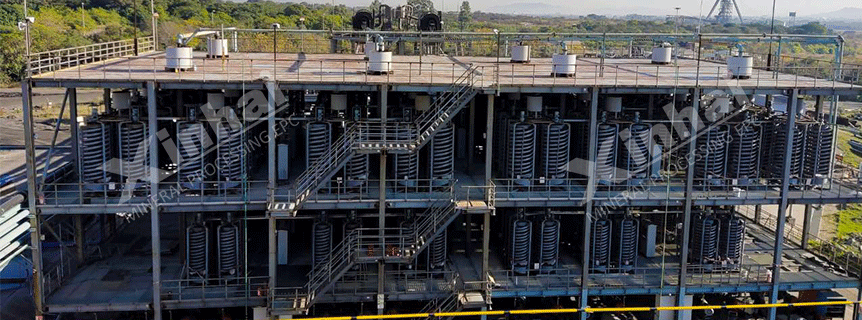
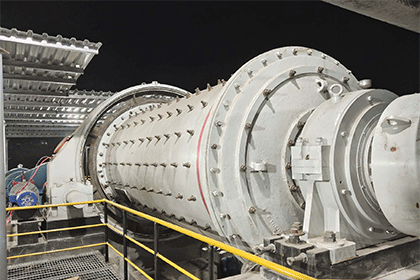
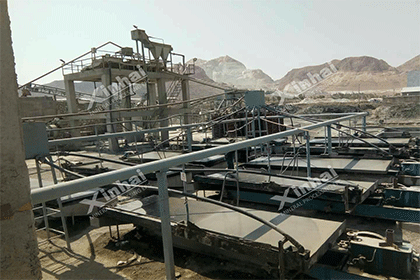
South-Africa-3000-tpd-Chromite-Flotation-Plant
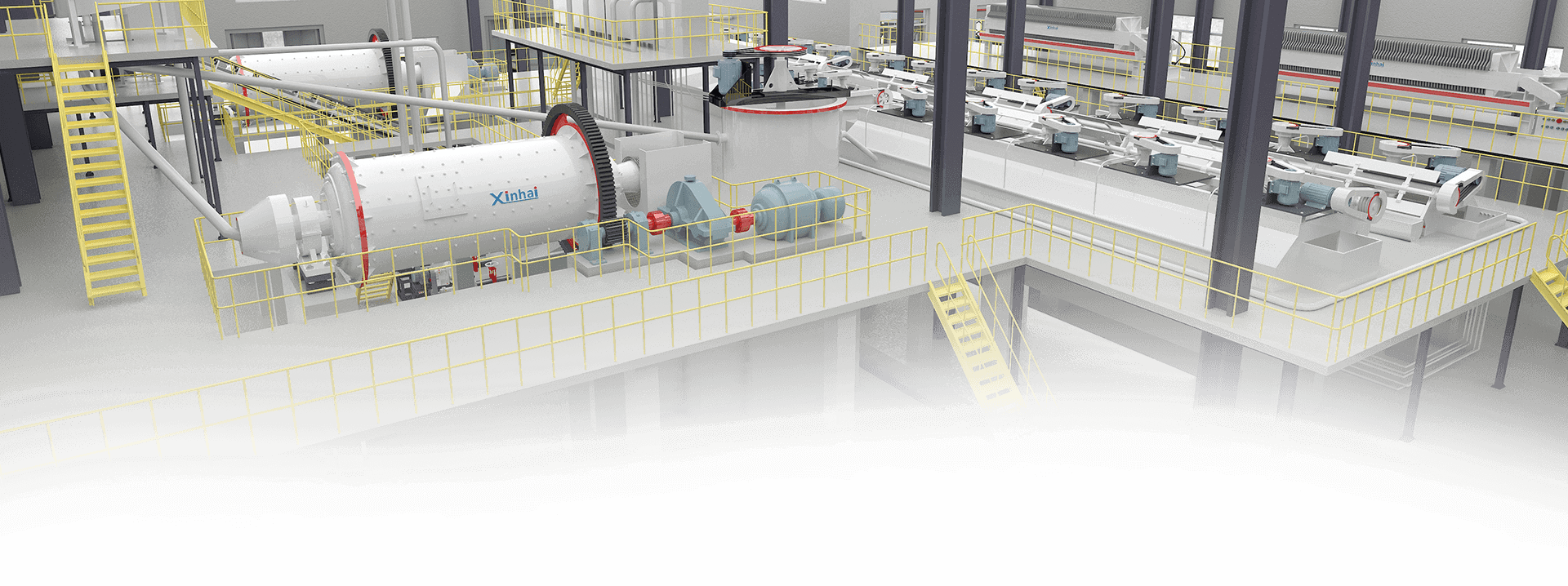
Building a chrome ore processing plant requires systematic planning, professional engineering design, strict equipment selection, standardized construction and commissioning, as well as standardized operation and environmental management. This guide covers the whole process from project planning to operation, providing a complete reference for investors and project teams.
01Project Planning
Back1.Feasibility Study
Conduct a comprehensive feasibility study covering technical, economic, environmental and risk dimensions.
(1)Evaluate chrome ore reserves, grade, embedded particle size, mineral composition and ore washability
(2)Analyze market demand for metallurgical grade, chemical grade and refractory grade chrome concentrate
(3)Compare mainstream processes such as gravity separation, magnetic separation and flotation
(4)Assess infrastructure conditions such as transportation, water and electricity
(5)Identify risks such as policy, environmental protection and market fluctuations
2.Define Project Scope and Objectives
(1)Clarify core indicators to guide subsequent design and construction:
(2)Daily/annual processing capacity of raw ore
(3)Target grade and recovery rate of chrome concentrate
(4)Product types (lump concentrate, fine powder, pelletizing raw material)
(5)Construction period, investment budget and expected return
3.Financial Planning and Financing
Prepare detailed investment estimation, including civil engineering, equipment, installation, miscellaneous expenses and working capital. Develop financing plans through equity, bank loans, joint ventures and other channels, and conduct sensitivity analysis to ensure project financial sustainability.
02Site Selection and Acquisition
Back1.Geological and Ore Condition Survey
Conduct geological exploration and ore testing to master ore occurrence conditions, physical and chemical properties, and provide data support for process selection.
2.Site Conditions
Prioritize sites with the following advantages:
(1)Close to mining areas or raw ore supply bases to reduce transportation costs
(2)Convenient transportation, close to roads, railways or ports
(3)Abundant and reliable water sources and stable power supply
(4)Flat terrain, suitable for plant layout and expansion
(5)Avoid ecological protection areas, basic farmland and residential concentrated areas
3.Environmental Impact Assessment and Approval
Carry out environmental impact assessment (EIA) in accordance with local regulations, formulate pollution control and ecological restoration plans, and obtain environmental protection, land, safety and other permits.
4.Land Acquisition and Community Cooperation
Complete land acquisition or leasing procedures, strengthen communication with local communities, ensure stable project construction and operation.
03Process Design and Engineering
Back1.Core Process Flow Design
Chrome ore processing is dominated by gravity separation, supplemented by magnetic separation and flotation. The typical full process is as follows:
Raw Ore → Washing & Desliming → Crushing → Screening → Grinding → Classification → Gravity Separation → Magnetic Separation → Dewatering → Concentrate
(1)Washing and desliming
Remove mud to avoid affecting separation efficiency
(2)Crushing and screening
Two-stage or three-stage crushing, closed-circuit screening, control the particle size into the mill
(3)Grinding and classification
Wet grinding, combined with classifier or hydrocyclone to achieve monomer dissociation
(4)Gravity separation
Jig, spiral chute, shaking table, suitable for coarse, medium and fine particles respectively
(5)Magnetic separation
High-gradient magnetic separation to improve concentrate grade
(6)Dewatering
Concentrator, filter, dryer to meet product moisture requirements
2.Plant and Infrastructure Design
(1)Workshop layout
Reasonable vertical and horizontal layout to reduce material transportation and energy consumption
(2)Storage
Raw ore yard, intermediate ore yard, concentrate yard, tailings pond
(3)Utilities
Water supply and drainage, power distribution, automation control system
(4)Environmental protection
Wastewater recycling, dust removal, noise reduction, tailing treatment and reuse
04Equipment Procurement
Back1.Equipment List and Selection Principles
Key equipment for chrome ore processing plant:
(1)Crushing
Jaw crusher, cone crusher
(2)Grinding
Ball mill, rod mill
(3)Screening
Vibrating screen
(4)Separation
Jig, spiral chute, shaking table, magnetic separator
(5)Auxiliary
Pump, conveyor, classifier, dewatering equipment
(6)Selection principles
Adapt to ore properties, stable performance, energy saving, easy maintenance, and matching with production capacity.
2.Supplier Selection
Select qualified suppliers with rich experience in chrome ore processing, inspect technical strength, performance cases, after-sales service and spare parts supply capacity.
3.Contract and Delivery Management
Sign detailed procurement contracts, clarify technical parameters, delivery time, acceptance criteria, payment terms and after-sales service, and track production and delivery to ensure on-time supply.
05Construction and Commissioning
Back1.Civil Engineering and Construction
Select professional construction teams, formulate construction plans and schedules, strictly implement safety and quality standards, and complete workshops, foundations, storage yards and supporting facilities.
2.Equipment Installation and Calibration
Carry out equipment installation, positioning, connection and commissioning under the guidance of engineers and suppliers to ensure accurate alignment and stable operation.
3.Single Machine and Joint Test Run
(1)Single machine test
Check no-load and load operation of each equipment
(2)Joint test run
Full process linkage, test process fluency and index stability
(3)Parameter optimization
Adjust grinding concentration, separation frequency, water volume and other parameters to reach design capacity and indicators
4.Acceptance and Handover
Complete project acceptance with relevant departments, transfer technical documents, and train operators.
06Operational Management
Back1.Team Building and Training
Recruit and train operators, maintenance personnel, technicians and managers, formulate operating procedures, and conduct regular skill and safety training.
2.Production and Quality Control
(1)Establish daily production management system to stabilize output
(2)Strict raw ore, intermediate product and final product testing
(3)Control concentrate grade, moisture and impurity content to meet customer standards
3.Supply Chain and Cost Management
Stabilize raw ore supply, control consumption of steel, water, electricity and consumables, reduce production costs, and optimize inventory and logistics.
4.Safety and Environmental Management
(1)Implement safety production responsibility system to prevent mechanical injury, electric shock and other accidents
(2)Operate environmental protection facilities stably, realize wastewater recycling, standardize tailings disposal, and fulfill environmental responsibilities
07Conclusion
BackThe construction of a chrome ore processing plant is a systematic project. Only through scientific planning, professional design, standardized construction and refined operation can we achieve stable production, high recovery rate, low cost and environmental compliance. It is recommended to cooperate with professional mineral processing design institutes and equipment suppliers to ensure project success and long-term profitability.


RELATED PRODUCTS
-
Hydrocyclone
-
Linear Vibrating Screen
-
Centrifugal Separator