+8618335758886
 laura@xinhaimining.com



How to Start a Chrome Mining Project: Mining and Processing Guide
 Sheena
 Nov 23, 2026
 21
If you want to know more details about equipment, solutions, etc, please click the button below for free consultation, or leave your requirements!
 Message
 Chat Now
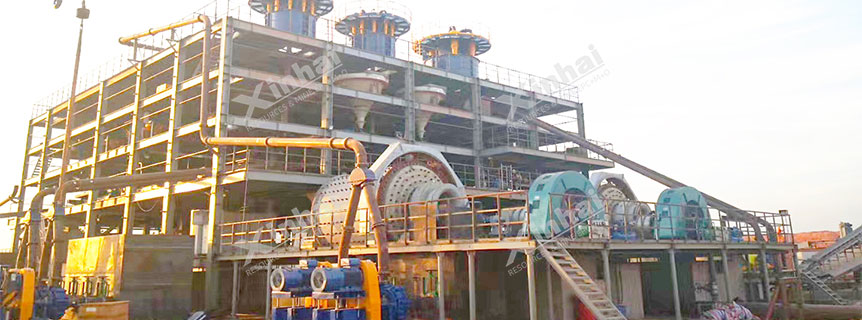
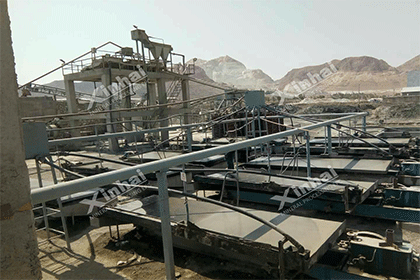
2500tpd-chrome-wash-plant
Starting a chrome mining project involves much more than identifying a chromite deposit and purchasing mining equipment. A successful project requires geological investigation, mining method selection, metallurgical testing, processing plant design, infrastructure planning, and financial evaluation.
For mining investors and project developers, understanding how to start a chrome mining project is essential for controlling capital investment, improving ore recovery, and ensuring stable production.
This guide explains the key stages of chrome mining project development, from deposit evaluation and mining methods to beneficiation plant design, equipment selection, and operating cost considerations.
01Evaluate the Chrome Ore Deposit Before Starting
BackThe first step in developing a chrome mining project is determining whether the deposit has sufficient resources and economic potential to support commercial production.
Chromite deposits vary in geological structure, ore grade, thickness, depth, and mineral composition. These characteristics directly influence mining methods, processing requirements, and project investment.
Key Factors to Investigate
1. Geological reserves and resources
Determine the estimated quantity and distribution of chromite ore through geological mapping, drilling, sampling, and resource estimation. Understand the confidence level of the resource information and whether further exploration is required.
2. Chrome ore grade
The chromium content and Cr/Fe ratio are important indicators of concentrate quality. Buyers may also specify limits for silica, phosphorus, sulfur, and other impurities.
3. Deposit structure
Chromite deposits may occur as continuous layers, irregular pods, or secondary deposits formed through weathering and transportation. Their geometry determines how the ore can be extracted.
4. Mining conditions
Evaluate ore depth, overburden thickness, terrain, groundwater conditions, and access to the deposit. These factors influence mining equipment requirements and operating costs.
A detailed geological assessment provides the foundation for estimating mineable resources, selecting extraction methods, and determining the appropriate processing capacity.
02Conduct Ore Testing and Metallurgical Evaluation
BackBefore purchasing equipment or finalizing a processing flowsheet, representative ore samples should be tested to determine their beneficiation characteristics.
Not all chrome ores respond equally to the same separation process. Some deposits contain coarse chromite particles that can be recovered through gravity separation, while others contain fine or intergrown minerals requiring more complex treatment.
Essential Chrome Ore Tests
Chemical analysis: Determines Cr₂O₃ content, Cr/Fe ratio, and major impurities.
Mineralogical analysis: Identifies chromite, gangue minerals, and their mineral associations.
Particle size analysis: Evaluates the size distribution of chromite and gangue.
Mineral liberation analysis: Determines the grinding size required to liberate chromite from surrounding minerals.
Beneficiation tests: Evaluates gravity separation, magnetic separation, and other suitable processing methods.
For example, if chromite is relatively coarse and well liberated, a crushing, screening, and jigging circuit may be sufficient. If valuable chromite is concentrated in finer fractions, additional grinding or fine-particle separation tests may be necessary.
The objective is to establish a practical process route that balances concentrate grade, recovery, equipment investment, and operating costs.
03Select the Right Chrome Mining Method
BackThe mining method should be selected according to deposit depth, ore body geometry, geological conditions, production targets, and economic feasibility. The two main methods used in chrome mining are open-pit mining and underground mining.
3.1 Open-Pit Chrome Mining
Open-pit mining is suitable for chromite deposits located relatively close to the surface, particularly large deposits with favorable geological continuity.
The main operations include:
Overburden stripping and site preparation.
Drilling and blasting where required.
Excavation and loading of ore.
Hauling ore to the processing plant or stockpile.
Open-pit mining generally offers higher production flexibility and easier access for large mining equipment. However, stripping ratios, waste disposal requirements, and land disturbance must be considered during project evaluation.
3.2 Underground Chrome Mining
Underground mining is used when chromite deposits extend to greater depths or occur in narrow, steeply dipping ore bodies.
Common mining methods include room-and-pillar mining and sublevel stoping, depending on ore body geometry and ground conditions.
Underground operations require specialized equipment, ventilation systems, ground support, mine drainage, and more complex mine planning.
Although underground mining generally involves higher development and operating costs, it allows access to deeper resources that cannot be economically extracted through open-pit methods.
04Design the Chrome Ore Processing Plant
BackOnce the mining method and ore characteristics have been established, the next step is designing a chrome ore processing plant. The main objective is to separate chromite from gangue minerals and produce a concentrate that meets the required market specifications.
A typical chrome beneficiation plant may include crushing, screening, grinding, gravity separation, magnetic separation, and dewatering. However, not every project requires all these stages.
4.1 Crushing and Screening
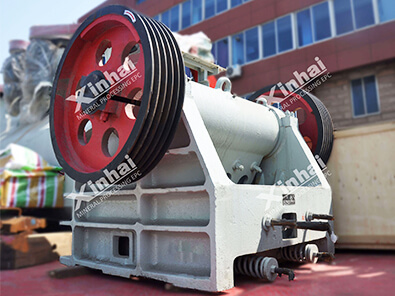
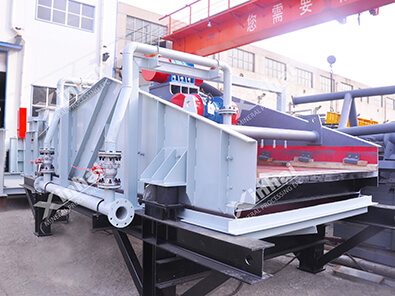
Run-of-mine chrome ore is first reduced to a suitable particle size. Jaw crushers are commonly used for primary crushing, while cone crushers may be used for secondary crushing. Vibrating screens classify the crushed ore into different size fractions.
Proper size classification is important because different particle sizes may require different beneficiation equipment.
4.2 Washing and Desliming
Some chrome deposits contain clay, mud, and fine impurities that interfere with separation efficiency. Washing equipment, such as log washers and trommel screens, can remove clay and loosen agglomerated materials.
Desliming may also be necessary to remove excessive fine particles before gravity separation.
4.3 Gravity Separation
Gravity separation is the core beneficiation method for many chrome ore processing plants. Chromite has a relatively high specific gravity compared with common gangue minerals such as quartz and some silicate minerals. This density difference allows chromite to be concentrated using gravity separation equipment.
Common equipment includes:
Jig Machines
Jig concentrators are suitable for recovering coarse and medium-sized chromite particles. They are widely used in chrome ore beneficiation plants because of their relatively simple operation and adaptability to different feed conditions.
Spiral Concentrators
Spiral concentrators are used for suitable fine-to-medium-sized particles. They provide continuous separation and can be arranged in multiple stages to improve concentrate quality.
Shaking Tables
Shaking tables are suitable for recovering fine heavy mineral particles where a relatively high separation precision is required. They are often used for cleaning or treating selected fine fractions.
The equipment combination should be determined through beneficiation tests rather than selected solely according to processing capacity.
4.4 Magnetic Separation
Magnetic separation may be introduced when the ore contains associated magnetic minerals or when additional upgrading is required. Depending on the magnetic properties of the target minerals and impurities, low-intensity or high-intensity magnetic separators may be considered.
Magnetic separation is generally used as a supplementary process rather than a universal replacement for gravity separation.
4.5 Dewatering and Concentrate Handling
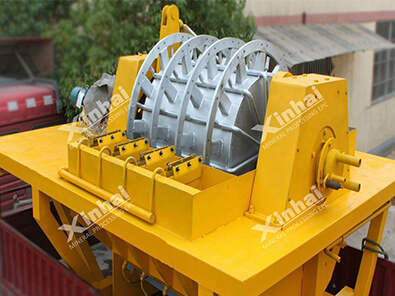
After beneficiation, the chrome concentrate is sent to a dewatering system. Thickeners, vacuum filters, and filter presses can reduce moisture content and recover process water.
The final concentrate is then stored, transported, or prepared for further metallurgical processing according to customer requirements.
05Estimate Chrome Mining Project Investment and Operating Costs
BackUnderstanding project costs is essential before construction begins. The total investment in a chrome mining project depends on mining conditions, processing capacity, infrastructure requirements, and the complexity of the beneficiation flowsheet.
5.1 Capital Expenditure (CAPEX)
Initial project investment generally includes:
Exploration and engineering: Geological investigation, drilling, laboratory testing, feasibility studies, and plant engineering.
Mining development: Site preparation, mine access, roads, and mining equipment.
Processing plant: Crushing, screening, washing, beneficiation, and dewatering equipment.
Infrastructure: Power supply, water systems, workshops, warehouses, offices, and supporting facilities.
Tailings management: Tailings storage facilities, pipelines, water recovery, and environmental protection systems.
Construction and installation: Civil works, equipment foundations, installation, and commissioning.
A complete CAPEX estimate should include indirect costs, engineering and project management expenses, contingency, and initial working capital.
5.2 Operating Expenditure (OPEX)
Operating costs are mainly associated with:
Mining and ore transportation.
Electricity and water consumption.
Labor and equipment maintenance.
Grinding media and consumables.
Tailings handling and environmental management.
Concentrate transportation and logistics.
To evaluate project profitability, investors should consider the relationship between ore grade, concentrate grade, recovery rate, production capacity, and selling price.
A low-cost plant is not necessarily the most profitable solution if it produces low-quality concentrate or loses significant amounts of valuable chromite in tailings.
06Plan Infrastructure and Environmental Management
BackInfrastructure planning is an important part of chrome mining project development. Insufficient attention to supporting facilities can lead to construction delays and unexpected capital expenditure.
6.1 Essential Infrastructure
Power supply: Crushing, grinding, pumping, and beneficiation equipment require a reliable electricity supply. Power demand should be estimated during the engineering stage.
Water supply: Washing and gravity separation require process water. Water recycling systems can reduce fresh water consumption.
Tailings facilities: Tailings storage and transportation systems should be designed according to plant capacity, tailings characteristics, site conditions, and applicable regulations.
Supporting facilities: Workshops, warehouses, laboratories, offices, access roads, drainage systems, and maintenance facilities are necessary for continuous operation.
Environmental management should also address dust emissions, wastewater treatment, land rehabilitation, and safe tailings storage.
Planning these facilities together with the processing plant helps avoid costly modifications during construction and operation.
07Conclusion
BackStarting a chrome mining project requires systematic planning, from geological evaluation and metallurgical testing to mining method selection, beneficiation plant design, and investment assessment.
The most important factor is matching the mining and processing strategy to the actual characteristics of the chromite deposit. A properly designed crushing, screening, gravity separation, and supplementary beneficiation system can help improve chromite recovery, achieve the required concentrate quality, and control operating costs.


RELATED PRODUCTS
-
Jaw Crusher
-
Linear Vibrating Screen
-
Rotary Disc Vacuum Filter