+8618234403483
 yanzhang19990421@gmail.com



Iron Ore Mining Process Flow Chart
 Sheena
 Sep 18, 2026
 3
3
If you want to know more details about equipment, solutions, etc, please click the button below for free consultation, or leave your requirements!
 Message
 Chat Now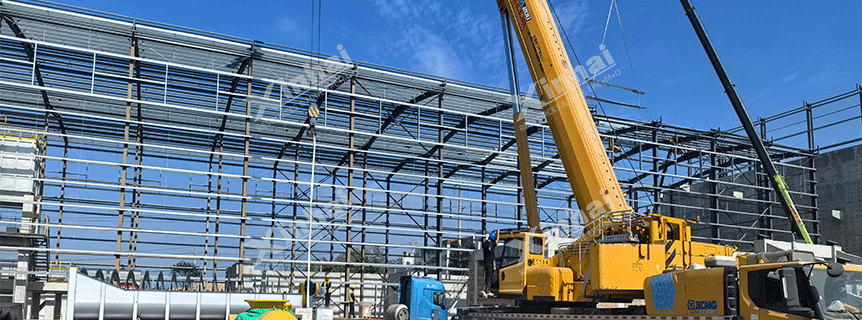
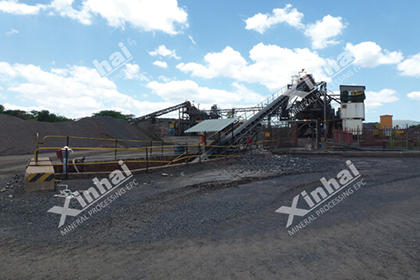
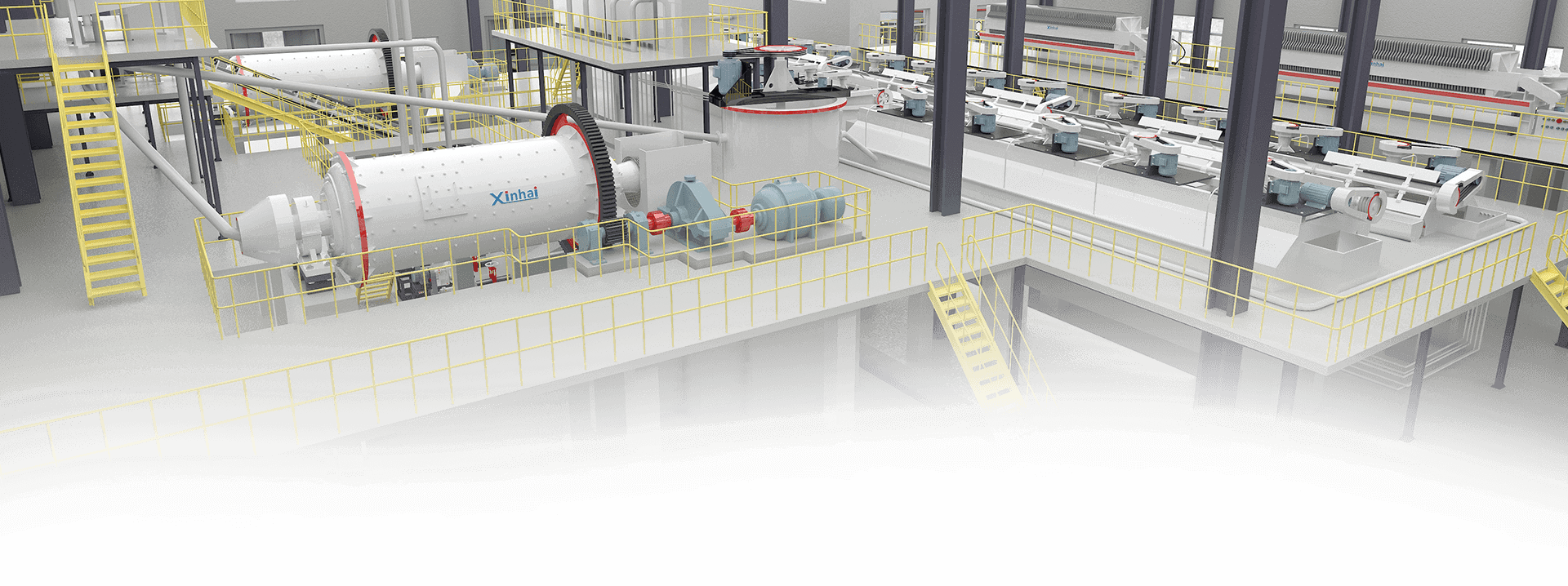
Grinding-and-magnetic-separation-of-600,000-tpa-iron-ore
Iron ore mining is a multi-stage process that begins with extracting ore from the deposit and ends with producing a concentrate or other marketable iron-bearing product. A typical iron ore mining process flow chart may include mining, crushing, screening, grinding, classification, beneficiation, and concentrate dewatering. Some high-grade ores may require only crushing and screening, while lower-grade magnetite or hematite ores may require grinding and several beneficiation stages to produce a saleable concentrate.
Understanding the flow chart is important when evaluating an iron ore project because every stage has a specific purpose. The following guide explains how iron ore moves from the mine to the final concentrate and how the process changes according to ore type.
01Iron Ore Mining Process Flow Chart
BackA simplified iron ore mining and processing flow can be represented as:
Exploration & Mine Development--Ore Mining--Crushing--Screening--Grinding & Classification--Beneficiation--Concentrate Thickening--Filtration--Iron Ore Concentrate
This is a general framework rather than a fixed flowsheet. Some projects may stop after crushing and screening if the mined ore already meets market specifications. Others may introduce magnetic separation, gravity separation, flotation, or multiple cleaning stages to improve iron grade and reduce impurities. The final process depends mainly on the ore mineralogy, iron grade, liberation characteristics, and the type of gangue minerals associated with the iron-bearing minerals.
02Iron Ore Mining
BackThe first stage is to extract iron-bearing material from the deposit. The mining method is determined by the depth and geometry of the orebody, terrain, overburden thickness, stripping ratio, and overall project economics.
1. Open-Pit Iron Ore Mining
Open-pit mining is commonly used when the orebody is relatively close to the surface and can be economically accessed by removing overburden and waste rock.
The basic operation involves: Drilling → Blasting → Loading → Hauling
Drill rigs prepare blast holes, explosives fragment the rock, and excavators or loaders move the broken ore into haul trucks. Waste rock is transported separately to designated waste areas. The key challenge is maintaining good ore and waste control. Excessive dilution can lower the feed grade, while leaving too much ore behind can reduce resource recovery.
2. Underground Iron Ore Mining
Underground mining may be considered when the orebody is too deep or when open-pit mining would require excessive stripping. Compared with open-pit operations, underground mining generally requires more extensive underground infrastructure, ventilation, access development, and ore-handling systems. The appropriate method depends on orebody geometry, rock conditions, depth, and production requirements. Regardless of the mining method, the objective is to deliver a consistent ore feed to the processing plant while minimizing dilution and unnecessary material movement.
03Crushing and Screening
BackAfter mining, run-of-mine iron ore often contains large rocks that are unsuitable for downstream processing. Crushing reduces the feed to a manageable size, while screening separates different particle-size fractions.
A typical crushing circuit may be arranged as: Primary Crushing → Secondary Crushing → Screening
1. Primary Crushing
A jaw crusher is commonly used for primary crushing because it can handle large run-of-mine material and reduce it to a size suitable for subsequent processing.
2. Secondary Crushing
Cone crushers or other suitable crushers may be used to further reduce the particle size when a finer product is required. The appropriate crushing configuration depends on feed size, ore hardness, plant capacity, and the target product size.
3. Screening
Vibrating screens separate crushed material according to particle size. Oversize material can be returned for further crushing, while material within the required size range proceeds to the next stage. Screening can also be used to produce different commercial products where the mine produces lump ore or other coarse-size fractions. Not every iron ore needs extensive crushing. If the ore is naturally coarse, high grade, and sufficiently liberated, a simpler crushing and screening circuit may be adequate.
04Grinding and Classification
BackGrinding becomes important when the iron-bearing minerals are too closely associated with gangue to be separated efficiently at the crushing stage.
The objective is to liberate the iron minerals from the surrounding gangue, rather than simply grind the ore as fine as possible.
A common grinding circuit is: Ball Mill → Hydrocyclone → Fine Product
The ball mill reduces particle size, while the hydrocyclone classifies the grinding product. Coarser particles are generally returned for further grinding, while sufficiently fine material moves to beneficiation. Grinding size is one of the most important design parameters in an iron ore plant. If the ore is under-ground, valuable iron minerals may remain locked with gangue, reducing recovery and concentrate grade. If it is over-ground, energy consumption increases and excessive slimes may be generated, making downstream separation more difficult. Therefore, the optimum grinding size should be determined through mineralogical examination and beneficiation testing.
05Iron Ore Beneficiation Methods
BackOnce the ore has been sufficiently liberated, beneficiation is used to increase iron grade and remove unwanted gangue.
The main methods include: Magnetic separation; Gravity separation; Flotation; Combined separation processes. The most suitable method depends on the type of iron-bearing mineral and the properties of the associated gangue.
1. Magnetic Separation
Magnetic separation is widely used for magnetite and other iron-bearing minerals with suitable magnetic properties. Because magnetite responds strongly to magnetic fields, magnetic separators can concentrate it efficiently after grinding and classification.
A typical magnetite route may therefore be: Crushing → Grinding → Classification → Magnetic Separation → Concentrate. Depending on the ore, multiple magnetic separation stages may be used to improve concentrate grade and recovery.
2. Gravity Separation
Gravity separation uses differences in density between iron-bearing minerals and lighter gangue. Spiral chutes, shaking tables, and other gravity separators may be considered where the density contrast and particle-size distribution are favorable. Gravity separation can be useful for some hematite or other iron ores, particularly when the valuable minerals are sufficiently liberated and the size distribution is suitable. However, gravity separation is not automatically appropriate for every iron ore. Its performance should be verified through testing.
3. Flotation
Flotation is commonly used when the iron-bearing minerals are fine or when gangue minerals such as silica are difficult to remove using physical methods alone. In many iron ore applications, reverse flotation is used to float silica-bearing gangue while retaining iron minerals in the non-float product.
The general concept is: Conditioning → Flotation → Cleaner Flotation → Iron Concentrate. The reagent system and flotation conditions depend strongly on the mineralogy of the ore.
4. Combined Beneficiation
Some deposits cannot be upgraded efficiently using a single separation method. A plant may therefore combine: Magnetic Separation + Gravity Separation. The purpose is to exploit different physical or chemical properties at different stages of the process.
06Iron Ore Beneficiation Process for Different Ore Types
BackOne of the most important points when reading an iron ore mining process flow chart is that the flowsheet can change substantially depending on the type of iron ore.
1. Magnetite Iron Ore
Magnetite is strongly magnetic, so magnetic separation is often the principal concentration method.
A typical flowsheet may be: Mining → Crushing → Grinding → Classification → Magnetic Separation → Thickening → Filtration
For some deposits, multiple stages of grinding and magnetic separation may be required to achieve the desired concentrate grade.
2. Hematite Iron Ore
Hematite is weakly magnetic compared with magnetite, and some hematite deposits contain significant amounts of silica or other gangue.
Depending on the mineralogy, the process may involve: Crushing → Screening → Grinding → Gravity Separation / Magnetic Separation / Flotation → Concentrate Dewatering
The exact combination depends on the liberation size and the physical and chemical properties of the ore.
3. Limonite and Other Low-Grade Iron Ores
More difficult iron ores may require a combination of washing, classification, gravity separation, magnetic separation, or flotation.
In some cases, beneficiation may also require additional treatment because the iron minerals are very fine or closely associated with clay and other impurities. This is why mineralogical characterization should be completed before choosing the final process.
07Concentrate Thickening and Filtration
BackAfter beneficiation, the iron concentrate normally contains a significant amount of water, particularly when wet magnetic separation or flotation is used. The concentrate is therefore sent to a dewatering circuit.
1. Thickening
A thickener uses sedimentation to increase the solids concentration and recover relatively clear process water. The recovered water can often be recycled back to the plant, helping reduce fresh-water demand.
2. Filtration
A filter press, vacuum filter, or other suitable filtration system then removes additional water from the thickened concentrate. The result is a more manageable iron concentrate with a moisture level suitable for transportation, storage, or downstream processing.
A typical dewatering circuit is: Concentrate → Thickener → Filter → Iron Concentrate
Dewatering is more than a final housekeeping step. Efficient water recovery can reduce water consumption and improve the overall operating efficiency of the plant.
08Iron Ore Beneficiation Equipment
BackThe equipment used in an iron ore processing plant depends on the selected flowsheet, but common equipment includes:
| Equipment | Main Function |
|---|---|
| Jaw Crusher | Primary crushing |
| Cone Crusher | Secondary crushing |
| Vibrating Screen | Screening and size separation |
| Ball Mill | Fine grinding |
| Hydrocyclone | Classification |
| Magnetic Separator | Magnetic iron recovery |
| Spiral Chute | Gravity separation |
| Flotation Machine | Removal of suitable gangue |
| Thickener | Concentrate dewatering and water recovery |
| Filter Press | Final concentrate dewatering |
Equipment should not be selected individually without considering the entire process. For example, increasing grinding capacity without confirming the required liberation size may simply increase energy consumption without improving recovery.
09Conclusion
BackAn iron ore mining process flow chart shows how ore moves from extraction through size reduction, liberation, beneficiation, and dewatering to become a marketable iron concentrate. While a simplified route can be described as Mining → Crushing → Screening → Grinding → Beneficiation → Dewatering, the actual process depends heavily on the type and quality of the iron ore.
A successful iron ore processing plant therefore starts with ore characterization and beneficiation testing, followed by process design and equipment selection. The goal is not to create the most complicated flowsheet, but to build the simplest process capable of achieving the required iron grade, recovery, concentrate quality, and project economics.


RELATED PRODUCTS
-
CLF Flotation Cell
-
Desorption Electrolysis System
-
Pregnant Solution Purification Tank