+8618234403483
 yanzhang19990421@gmail.com



Separation Processes for Different Types of Quartz Ores
 zeki
zeki
 Jul 30, 2026
 260
260
If you want to know more details about equipment, solutions, etc, please click the button below for free consultation, or leave your requirements!
 Message
 Chat Now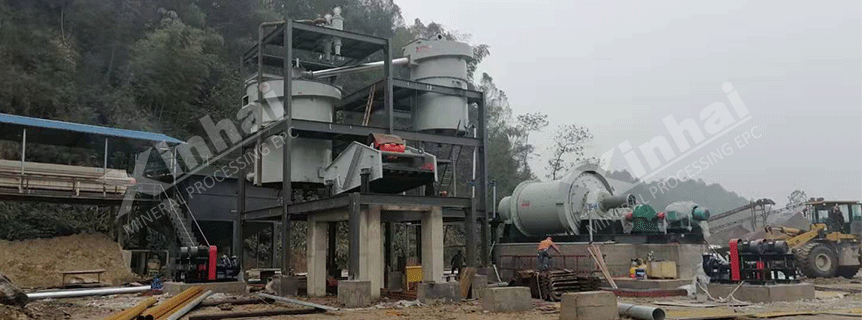
800-tpd-Quartz-Sand-Project-in-Hunan,China
Quartz (SiO₂) is a widely used silicate non-metallic mineral featuring stable chemical properties, high hardness and excellent light transmittance. It serves as a core raw material for the glass, ceramic, photovoltaic, semiconductor and optical fiber industries.Common separation methods for quartz ores include hand sorting, photoelectric pre-concentration, gravity separation, magnetic separation and flotation. Hand sorting and photoelectric pre-concentration are mostly adopted for the pretreatment of lump run-of-mine ore. Gravity separation and magnetic separation are primarily applied to remove high-density impurities and magnetic minerals in advance. Reverse flotation constitutes the core purification technology for quartz. This paper mainly introduces mainstream mineral processing flowsheets for four common types of quartz ores.
01Mineral Processing of Feldspar-Bearing Quartz Ore
BackFeldspar-bearing quartz ore is the most widely distributed type, mainly composed of quartz, K-feldspar and albite, with minor associated sericite and clay minerals. The core objective of mineral processing is to reduce alumina impurities in quartz concentrate.
Quartz and feldspar share similar crystal structures and surface properties, leading to difficult separation. Insufficient grinding results in inadequate mineral liberation and excessive aluminium impurities, whereas over-grinding readily generates slimes and lowers quartz recovery. The staged grinding plus staged reverse flotation process is widely adopted in industrial sites to balance mineral liberation and production recovery. Fluorine-free acidic reverse flotation has become the prevailing industrial technology at present.
02Mineral Processing of Iron- and Mica-Bearing Quartz Ore
BackThis type of quartz ore is mainly associated with mica, tourmaline, hematite and limonite. Iron impurities and platy mica adhere to quartz surfaces.
A combined process consisting of physical pretreatment, magnetic separation and flotation is adopted for production:
1.Scrubbing and desliming
High-speed mechanical scrubbing strips iron oxide films on quartz surfaces. Ultrasonic scrubbing can be supplemented to strengthen the removal of fine adherent impurities.
2.High-intensity magnetic separation for iron removal
High-gradient magnetic separators with magnetic induction above 1.6 T are used to remove iron oxides, weakly magnetic mica and tourmaline.
3.Reverse flotation for mica removal
Under weakly acidic conditions, amine collectors are used to float mica, while lignosulfonate acts as a quartz depressant. For high-purity production requirements, secondary magnetic separation can be implemented after flotation to thoroughly eliminate residual iron impurities.
03Mineral Processing of Carbonate-Associated Quartz Ore
BackThe ore is mostly intergrown with calcite and dolomite; some deposits additionally contain feldspar, forming multi-element intercalated textures. The main separation challenge lies in the acid-soluble property of carbonate minerals, as well as competitive reagent adsorption between carbonates and silicate gangue, which interferes with separation performance.
The extremely poor floatability of calcite under weakly acidic conditions provides the fundamental basis for separation. The standard technological flow is as follows:
1.Hydroclassification is carried out first to remove fine slimes and eliminate disturbances to flotation;
2.Reverse flotation is performed in an acidic system (pH 2.5–4) to remove feldspar impurities;
3.The pulp pH is adjusted to 5–6. Dextrin, tannin extract and other depressants are added to inhibit quartz, and fatty acid collectors are utilised to float carbonate gangue.
04Mineral Processing of Sulfide and Heavy Mineral-Associated Quartz Ore
BackThis type of quartz ore is associated with sulfide minerals such as pyrite, galena and sphalerite, together with heavy minerals including zircon, rutile and garnet. Most such ores contain recoverable metallic values. Therefore, mineral processing needs to simultaneously realise sulfide mineral enrichment and quartz purification.
The industrialised process adopts preferential sulfide flotation followed by combined purification of flotation tailings:
1.Under neutral pulp conditions, xanthate collectors are applied for preferential flotation of sulfides to recover valuable lead and zinc concentrates. Flotation tailings are taken as feedstock for quartz purification;
2.The tailings are sequentially treated by gravity separation to remove high-density heavy minerals, multi-stage magnetic separation for iron elimination, and reverse flotation to remove feldspar and mica, ultimately producing qualified high-purity quartz concentrate.
05Conclusions
BackThere exists no universal separation flowsheet for quartz ores. Customised schemes must be formulated according to mineral intercalation characteristics, impurity types and target product specifications. Quartz for ordinary construction materials and conventional glass manufacturing can meet quality requirements only via scrubbing, gravity separation and single-stage magnetic separation, featuring simple processes and low costs. For high-purity quartz applied in photovoltaic, optical and semiconductor sectors, combined multi-stage grinding-magnetic separation-flotation circuits are required, supplemented by advanced purification procedures such as acid leaching, calcination and water quenching to satisfy ultra-high purity specifications.


RELATED PRODUCTS
-
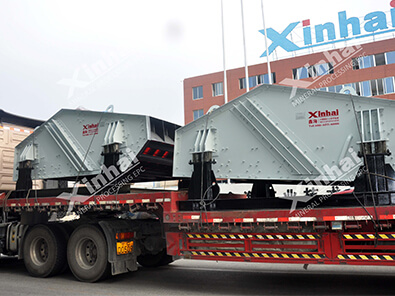
High Frequency Dewatering Screen
-
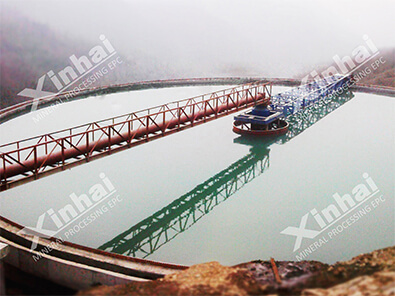
Peripheral Transmission Thickener
-
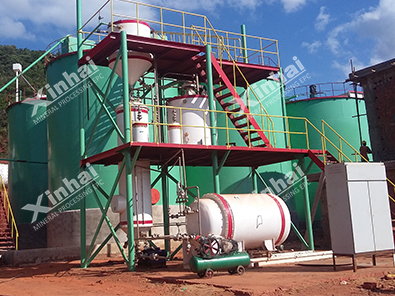
Desorption Electrolysis System