+8618335758886
 laura@xinhaimining.com



Why Different Gold Ores Require Different Leaching Processes?
 Sheena
 Nov 09, 2026
 20
If you want to know more details about equipment, solutions, etc, please click the button below for free consultation, or leave your requirements!
 Message
 Chat Now
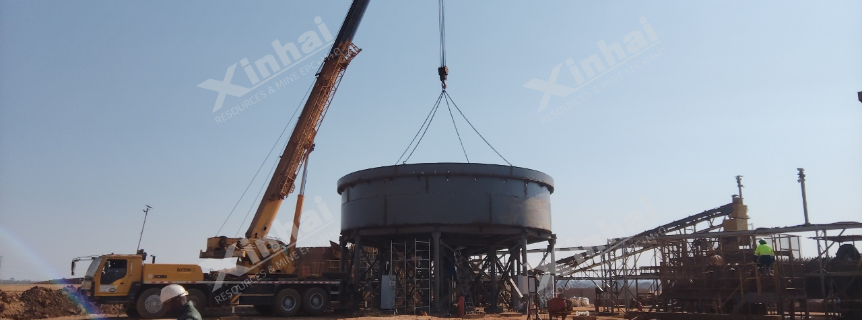
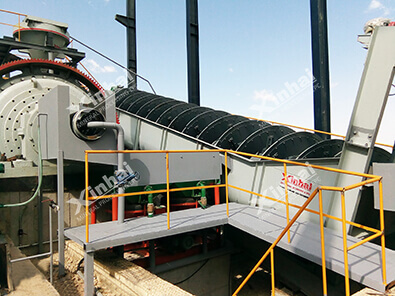
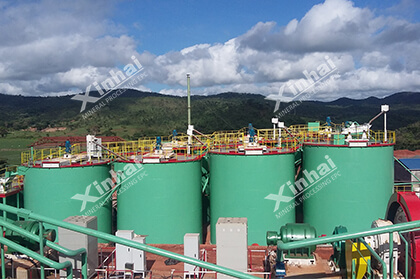
Installation site of a gold leaching plant
Gold leaching is widely used to extract gold from ores, but not every gold deposit can be processed using the same leaching flowsheet. Some ores respond well to direct cyanidation, while others require grinding optimization, gravity separation, flotation concentration, or additional pretreatment before gold can be effectively recovered.
The main reason is that gold does not occur in the same mineralogical form in every deposit. In some ores, gold is exposed and relatively easy to dissolve. In others, fine gold particles are enclosed within sulfide minerals, associated with carbonaceous material, or affected by minerals that consume leaching reagents.
Choosing the wrong gold leaching process can result in low recovery, excessive reagent consumption, and unnecessary operating costs. Therefore, understanding ore characteristics is essential before selecting a processing route.
This article explains how different types of gold ores behave during leaching, which processing methods are suitable for each type, and how mineralogical analysis and metallurgical testing help determine the most economical gold recovery flowsheet.
01Why Gold Ores Require Different Leaching Processes?
BackThe suitability of a gold leaching process depends primarily on the occurrence of gold and the mineral composition of the ore. Even when two deposits have similar gold grades, their processing requirements may differ significantly. Three mineralogical factors are particularly important.
1.1 Gold Occurrence and Liberation
Gold may occur as coarse free particles, fine particles associated with quartz, or microscopic inclusions within sulfide minerals. These differences determine how easily the leaching solution can contact gold.
When gold is sufficiently liberated, direct cyanidation may achieve satisfactory extraction. However, when gold is enclosed within other minerals, additional grinding or pretreatment may be necessary to expose it.
1.2 Gangue and Associated Minerals
The minerals surrounding gold can influence reagent consumption and leaching performance. For example, certain copper minerals consume cyanide, while sulfide minerals may affect oxygen consumption and solution chemistry.
Carbonaceous materials can also adsorb dissolved gold, causing preg-robbing losses. Consequently, evaluating the entire mineral composition is just as important as determining the gold grade.
1.3 Ore Texture and Processing Behavior
Ore hardness, particle size distribution, porosity, and clay content can influence crushing, grinding, slurry preparation, and solution movement.
For example, clay-rich ores may create difficulties in thickening, filtration, and heap-leach solution percolation. These characteristics can make an otherwise suitable leaching process difficult to operate economically.
In practice, gold ore classification should go beyond simply identifying oxide and sulfide ores. Mineralogical analysis and metallurgical testing are needed to establish how the ore will behave under actual processing conditions.
02How Do Different Gold Ore Types Affect Leaching Process Selection?
BackDifferent gold ores require different processing strategies because the factors limiting gold extraction are not the same. The following ore types illustrate why a single leaching flowsheet cannot be applied universally.
2.1 Oxide Gold Ore: Direct Cyanidation Is Often Suitable
Oxide gold ores are commonly formed through weathering and oxidation of primary mineral deposits. Gold may occur as liberated particles or be associated with oxidized minerals, making it relatively accessible to conventional leaching. For suitable oxide ores, direct cyanidation can provide an effective processing route without requiring complex pretreatment.
A typical flowsheet may include:
Crushing and grinding: Reduce ore size and expose gold particles where necessary.
Classification: Control the particle size entering the leaching circuit.
Cyanide leaching: Dissolve accessible gold under suitable chemical conditions.
Gold recovery: Recover dissolved gold through activated-carbon adsorption or another suitable recovery method.
Tailings treatment: Manage residual cyanide, process water, and tailings according to environmental requirements.
For relatively low-grade ores with suitable permeability and leaching characteristics, heap leaching may also be considered. The final choice between heap leaching and agitated tank leaching depends on ore permeability, extraction kinetics, processing time, water availability, and project economics.
However, not every oxide ore is easy to process. Some oxidized ores contain clay, copper minerals, or fine gold particles that can still cause low recovery or high reagent consumption. Metallurgical testing is therefore necessary before confirming the flowsheet.
2.2 Sulfide Gold Ore: Flotation or Oxidation Pretreatment May Be Required
Sulfide gold ores commonly contain pyrite, arsenopyrite, or other sulfide minerals. Gold may occur as exposed particles associated with sulfides or as microscopic inclusions enclosed within their mineral structures.
When gold is finely disseminated within sulfide minerals, direct cyanidation may produce poor extraction because the leaching solution cannot adequately access the gold.
Depending on the degree of gold liberation and sulfide association, two processing strategies may be evaluated.
Option 1: Direct grinding and cyanidation
If gold is sufficiently liberated after grinding, direct cyanidation may be technically feasible. Grinding conditions should be established through mineralogical and metallurgical testing to determine whether additional liberation produces a meaningful improvement in extraction.
Option 2: Flotation concentration followed by pretreatment
When gold is strongly associated with sulfide minerals, flotation can concentrate the gold-bearing sulfides into a smaller mass for further treatment. The resulting concentrate may then undergo an appropriate oxidation process before cyanidation.
Common pretreatment options include:
Roasting: Oxidize sulfide minerals at elevated temperatures to improve gold accessibility. Gas treatment and emission control are important design considerations.
Pressure oxidation (POX): Use elevated temperature, pressure, and an oxidizing environment to break down sulfide minerals.
Bio-oxidation: Use microorganisms to oxidize suitable sulfide minerals under controlled conditions.
These methods have different capital requirements, operating costs, environmental considerations, and technical limitations. The appropriate option depends on concentrate characteristics, gold deportment, and project economics.
2.3 Carbonaceous Gold Ore: Preg-Robbing Must Be Addressed
Some gold ores contain natural carbonaceous material that can adsorb dissolved gold from the cyanide solution. This phenomenon is called preg-robbing.
The problem is that gold may dissolve successfully but subsequently be adsorbed onto the natural carbon in the ore. As a result, the final gold recovery can be significantly lower than the initial leaching extraction. The processing strategy must therefore address both gold dissolution and gold loss through adsorption.
Depending on the activity and distribution of carbonaceous material, potential approaches include:
Mineralogical and preg-robbing tests: Determine the amount and activity of natural carbonaceous material and evaluate its influence on dissolved gold.
Pre-oxidation or other pretreatment: Evaluate suitable treatments that reduce preg-robbing effects, depending on the ore characteristics.
Flotation concentration: Consider separating carbonaceous material or concentrating valuable minerals where test results demonstrate technical feasibility.
Modified gold recovery flowsheet: Evaluate the suitability of activated-carbon adsorption and other process configurations to limit gold losses.
CIL processing is sometimes considered for preg-robbing ores because activated carbon is present during leaching and can compete with natural carbonaceous material for dissolved gold. However, CIL does not automatically eliminate preg-robbing, and its effectiveness must be confirmed through testing.
2.4 Refractory Gold Ore: Conventional Cyanidation May Not Be Enough
Refractory gold ores are characterized by poor gold extraction under conventional cyanidation conditions. This behavior may result from gold encapsulation within sulfide minerals, association with carbonaceous material, or other mineralogical and chemical limitations. Simply increasing cyanide dosage or extending leaching time often fails to resolve the underlying problem.
For refractory ores, the processing route may involve several additional stages:
Flotation: Concentrate gold-bearing sulfide minerals and reduce the mass requiring intensive treatment.
Oxidation pretreatment: Break down the minerals that prevent gold from contacting the leaching solution.
Cyanidation: Dissolve the gold after suitable pretreatment.
Gold recovery: Recover dissolved gold through an appropriate adsorption or solution-recovery circuit.
The main challenge is balancing the additional recovery achieved through pretreatment against its capital and operating costs. For this reason, refractory gold projects generally require more extensive mineralogical analysis, laboratory testing, and potentially pilot-scale studies before final process selection.
03How Do Associated Minerals Influence Gold Leaching?
BackGold mineralogy is not the only factor affecting leaching performance. Other minerals in the ore can consume reagents, interfere with gold dissolution, or create operational difficulties in the processing plant. Understanding these interactions helps explain why ores with similar gold grades can have very different reagent consumption and recovery rates.
3.1 Copper Minerals: Increased Cyanide Consumption
Copper minerals can react with cyanide and form soluble copper-cyanide complexes. This consumes cyanide that would otherwise be available for gold dissolution.
Ores containing significant amounts of reactive copper minerals may therefore require higher reagent consumption and additional process evaluation.
Depending on the mineralogy, possible approaches include selective flotation, suitable copper removal processes, or other flowsheet modifications. The choice should be based on copper deportment, cyanide consumption tests, and the expected economic benefit.
3.2 Pyrite and Arsenopyrite: Gold Encapsulation and Reagent Demand
Pyrite and arsenopyrite are common in sulfide-bearing gold deposits. When gold is finely enclosed within these minerals, direct cyanidation may achieve limited extraction.
These sulfides can also influence oxygen demand and overall reagent consumption. In some deposits, arsenic content introduces additional environmental and residue-management requirements.
Mineralogical analysis can determine whether the sulfides need to be concentrated and oxidized before cyanidation or whether direct treatment is sufficient.
3.3 Clay Minerals: Slurry Handling and Leaching Problems
Clay minerals may cause high slurry viscosity, poor settling, and difficulties in thickening and filtration. In heap-leach operations, excessive fines and clay can also reduce permeability and interfere with solution distribution.
Depending on the ore, appropriate crushing, screening, classification, washing, or agglomeration may be considered.
These measures should be evaluated according to the actual clay content and ore behavior rather than applied as standard requirements for every gold deposit.
3.4 Silver and Other Valuable Metals: Additional Recovery Considerations
Silver commonly occurs alongside gold and may also dissolve during cyanidation. Other associated metals can influence reagent consumption, solution composition, and downstream recovery.
When silver or other valuable metals contribute significantly to project revenue, the processing flowsheet should consider their recovery alongside gold. This can affect the selection of adsorption, solution treatment, and final metal-recovery equipment.
04How to Select the Right Gold Leaching Process for Different Ores
BackSelecting a gold leaching process should follow a systematic evaluation of ore characteristics, metallurgical performance, and economic requirements. The objective is to identify a flowsheet that achieves acceptable recovery without introducing unnecessary processing complexity.
4.1 Step 1: Conduct Mineralogical Analysis
Mineralogical analysis establishes how gold occurs and which minerals may interfere with leaching. Techniques such as optical microscopy, scanning electron microscopy with energy-dispersive spectroscopy (SEM-EDS), and automated mineralogy can provide information about gold association, sulfide content, and mineral liberation.
These results help determine whether direct cyanidation is worth evaluating or whether additional concentration or pretreatment should be investigated.
4.2 Step 2: Carry Out Metallurgical Leaching Tests
Laboratory tests should evaluate gold extraction under different conditions and identify the main limitations affecting performance.
Depending on the proposed processing route, testing may include bottle-roll tests, agitated leach tests, diagnostic leaching, reagent-consumption studies, and column leach tests.
The test program should establish not only the final extraction but also leaching kinetics, reagent demand, residual gold, and potential downstream recovery losses.
4.3 Step 3: Compare Alternative Processing Routes
When direct cyanidation does not achieve satisfactory results, alternative flowsheets should be compared.
For example, sulfide-associated gold may benefit from flotation concentration followed by oxidation pretreatment, while suitable oxide ores may be processed through direct cyanidation or heap leaching.
The comparison should consider gold recovery, concentrate quality where applicable, reagent consumption, energy requirements, water demand, environmental controls, and equipment investment.
4.4 Step 4: Evaluate Technical and Economic Feasibility
The final process selection should be based on both metallurgical performance and project economics. A more complex flowsheet may increase recovery but also require additional equipment, energy, reagents, infrastructure, and environmental management facilities.
A feasibility assessment should therefore compare the expected value of additional recovered gold with the incremental capital and operating costs. Ore variability, mining plans, processing capacity, and site conditions must also be considered before finalizing the design.
05Comparison of Gold Ore Types and Suitable Leaching Processes
BackThe following table summarizes the main differences between common gold ore types and the processing routes that may be considered.
| Gold ore type | Main processing challenge | Potential processing route |
|---|---|---|
| Oxide gold ore | Gold accessibility, clay or reactive gangue | Direct cyanidation; heap leaching for suitable ores |
| Sulfide gold ore | Gold associated with sulfide minerals | Grinding and cyanidation, or flotation followed by pretreatment |
| Carbonaceous gold ore | Preg-robbing | Suitable pretreatment and modified gold recovery flowsheet |
| Refractory gold ore | Gold encapsulation or other refractory characteristics | Flotation, oxidation pretreatment, followed by cyanidation |
| Copper-bearing gold ore | High cyanide consumption | Selective concentration or suitable copper-management processes |
These are preliminary process-selection guidelines, not fixed rules. A deposit may contain several ore types simultaneously, and the most suitable flowsheet may involve different processing routes for different ore domains.
06Conclusion
BackDifferent gold ores require different leaching processes because gold occurrence, mineral composition, and ore behavior determine how effectively gold can be dissolved and recovered; therefore, mineralogical analysis and metallurgical testing are essential for selecting a technically suitable and economically viable processing flowsheet.


RELATED PRODUCTS
-
Submerged Spiral Classifier
-
High Frequency Dewatering Screen
-
Dry Magnetic Separator