+8618335758886
 laura@xinhaimining.com



Antimony Ore Mineral Processing
 zeki
zeki
 Aug 29, 2026
 280
280
If you want to know more details about equipment, solutions, etc, please click the button below for free consultation, or leave your requirements!
 Message
 Chat Now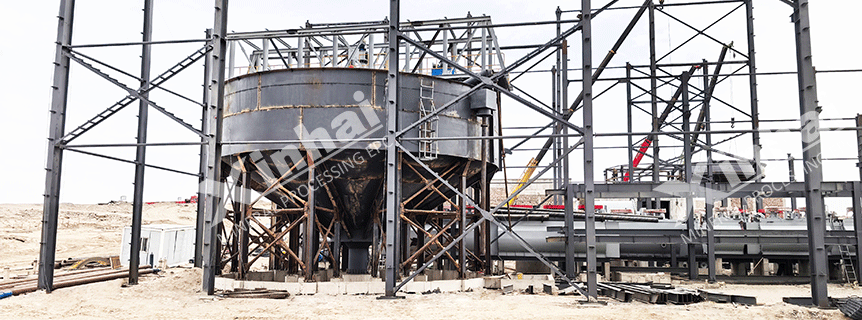
1000-tpd-Antimony-Ore-Verification-Test-+-Mineral-Processing-Equipment
In general, antimony ores fall into two major categories: antimony sulfide ores and antimony oxide ores. Most antimony ores feature uneven grain-size dissemination of target minerals. Many ores contain harmful impurities such as arsenic, lead and iron, while some orebodies host associated valuable components including gold and silver. Accordingly, mineral processing of antimony ores faces multiple technical challenges.
01Mineral Processing of Antimony Oxide Ores
Back1.Ore Properties
Principal antimony oxide minerals include stibiconite, cervantite and senarmontite. Gangue minerals are predominantly quartz and clay-bearing silicate minerals. Formed by supergene oxidation of primary antimony sulfide orebodies through weathering, these ores are frequently associated with impurity elements such as iron, arsenic and lead. Compared with primary antimony sulfide ores, antimony oxide ores exhibit severe sliming and high clay content, alongside poor floatability, rendering them relatively refractory feedstock.
2.Mineral Processing Methods
Gravity separation serves as the core technique for antimony oxide ore processing.
(1) Weathered Antimony Oxide Ores
Weathered antimony oxide ores normally carry substantial slimes. A washing-gravity separation flowsheet is widely adopted on-site. Run-of-mine ore is first washed to remove clay slimes; part of the cleaned ore can be directly produced as lump concentrate. The remaining material is further treated via jigs and shaking tables. Partial fine-grained antimony minerals are lost in ore-washing overflow, which is retreated by gravity separation or high-intensity magnetic separation for antimony recovery. For deeply buried primary antimony oxide ores, dense-medium separation and jigging are applied to discard gangue and obtain lump antimony concentrate.
(2) Antimony Oxide Ores with High Iron Impurities
In certain antimony oxide ores, iron occurs mainly as limonite with intimate intergrowth between iron-bearing minerals and antimony minerals. Antimony-iron separation cannot be satisfactorily achieved solely by gravity separation or flotation. For such ores, an industrial combined flowsheet of ore washing-reductive roasting-gravity separation is adopted. Roasting modifies the magnetic properties of iron-bearing minerals to facilitate subsequent antimony-iron separation.
02Mineral Processing of Antimony Sulfide Ores
Back1. Ore Properties
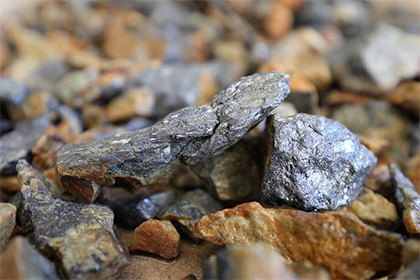
Antimony sulfide ores constitute the primary feedstock for metallic antimony smelting, with stibnite (Sb₂S₃) as the major valuable mineral. These ores possess complex compositions and commonly contain associated pyrite and galena. Some orebodies host associated gold and silver with high comprehensive recovery potential. Well-crystallized stibnite is macroscopically identifiable and amenable to hand sorting. Nevertheless, fine-grained dissemination in certain ores demands sufficient grinding to achieve mineral liberation.
2. Mineral Processing Methods
Flotation is the dominant processing technique for antimony sulfide ores, frequently combined with gravity separation for coarse-grained ores.
(1) Monomineralic Sedimentary Antimony Sulfide Ores
Flotation is extensively deployed for ordinary monomineralic antimony sulfide ores. After crushing and grinding, pH adjustment together with activator and collector dosing enables roughing, cleaning and scavenging to separate stibnite from pyrite and gangue minerals. Some ores feature microscale dissemination, posing great challenges to mineral liberation and restricting the attainment of ultra-high-grade concentrates. Hand sorting can be incorporated in the crushing stage for coarse-grained high-grade lump ores to directly produce high-grade lump antimony concentrate and reduce downstream processing load.
(2) Mixed Sulfide-Oxide Antimony Ores
Mixed sulfide-oxide antimony ores, containing both stibnite and antimony oxide minerals, represent the most prevalent ore type in mines. A combined gravity-flotation flowsheet is implemented on-site. Coarse fractions are treated by jigging and spiral chutes for gravity-based recovery. Gravity-separation tailings are reground and fed into flotation circuits to recover antimony sulfide components. Flotation tailings are further processed by shaking tables to reclaim fine-grained antimony oxides for improved overall recovery.
(3) Complex Arsenic-Bearing Antimony Sulfide Ores
Elevated arsenic content in some antimony sulfide ores leads to arsenic reporting to antimony concentrate and interferes with subsequent smelting. In flotation circuits, reagent regimes are optimized with depressants to suppress arsenopyrite and other arsenic-bearing minerals for antimony-arsenic separation. For a small fraction of intractable ores, roasting-based arsenic removal is implemented in downstream smelting operations.
03Principal Mineral-Processing Equipment
Back1.Ore-Washing Equipment
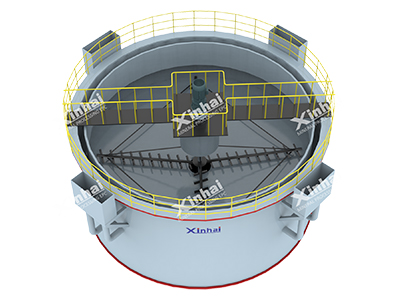
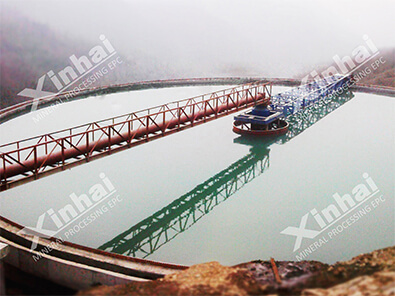
Given severe sliming of antimony oxide ores, ore washing constitutes the primary operation. Cylindrical ore washers in combination with trough washers are commonly utilized. Clay slimes are stripped from lump ore surfaces via cylinder rotation and high-pressure water jet scouring. Sludge generated from washing flows into sedimentation tanks for material recovery, preventing slimes from entering downstream units and impairing separation performance.
2.Gravity-Separation Equipment
Gravity separation equipment represents the workhorse for antimony ore beneficiation.
(1) Jigs
Jigs handle coarse lump antimony ore. Pulsing water currents induce density-based stratification of feed materials. High-density antimony minerals settle to the bed bottom for discharge, whereas gangue is carried away by overflow water. Jigs deliver satisfactory separation performance for medium-to-coarse-size feed.
(2) Shaking Tables
Shaking tables treat jig tailings and fine-grained antimony ores. Through reciprocating table-surface motion and water-flow scouring, minerals segregate into distinct bands across the table surface according to density and particle size, enabling efficient fine-concentrate collection.
(3) Spiral Chutes
Spiral chutes process medium-fine fractions and ore slimes. Centrifugal-force-driven stratification occurs as pulp flows along spiral troughs. Featuring simple structures and zero power consumption, they are widely used in roughing to discard tailings.
3.Flotation Equipment
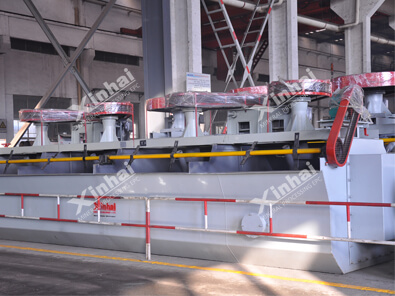
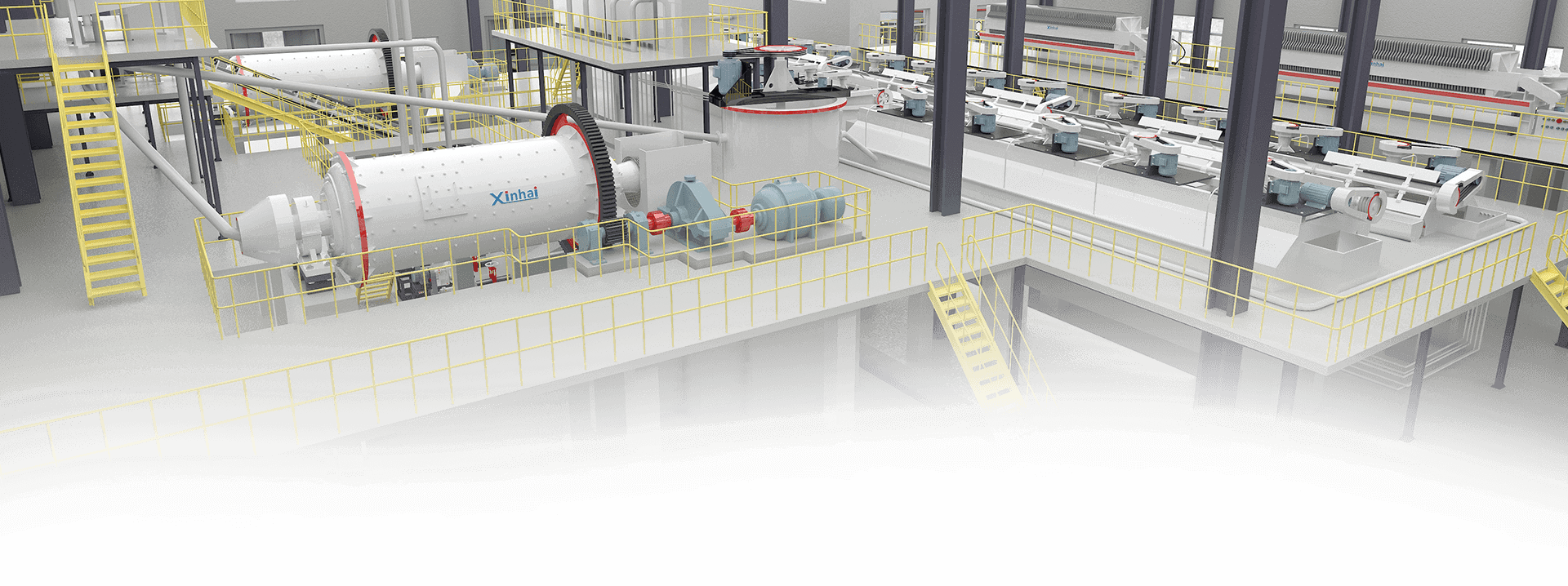
Antimony sulfide flotation circuits mainly consist of ball mills and flotation machines. Ball mills grind ore down to particle sizes required for mineral liberation. Flotation machines agitate and aerate pulp so that hydrophobic stibnite particles attach to air bubbles and float upward, achieving separation from pyrite and gangue. Multiple banks of flotation cells are configured in series for roughing, cleaning and scavenging to progressively upgrade antimony concentrate.
4.Magnetic-Separation and Roasting Equipment
Reductive roasting and magnetic separation are adopted for iron-rich antimony oxide ores. Roasting is generally performed in rotary kilns, where iron-bearing minerals are magnetized under reducing atmospheres. Roasted discharge is then fed into high-intensity magnetic separators to realize antimony-iron separation. High-intensity magnetic separators are also deployed to recover fine antimony lost in ore-washing overflow.
04Summary
BackBoth antimony oxide ores and antimony sulfide ores contain refractory varieties. Intimate intergrowth of antimony minerals with iron, arsenic, lead and gangue minerals, fine-grained dissemination and slime interference constitute persistent challenges throughout antimony mineral-processing workflows.


RELATED PRODUCTS
-
JJF Flotation Cell
-
Washing Thickener
-
Peripheral Transmission Thickener