+8618335758886
 laura@xinhaimining.com



Basic Introduction to Tungsten Ore
 zeki
zeki
 Jun 29, 2026
 573
573
If you want to know more details about equipment, solutions, etc, please click the button below for free consultation, or leave your requirements!
 Message
 Chat Now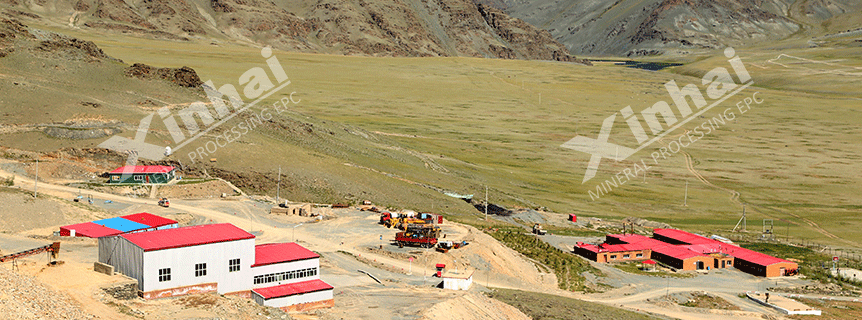
150-tpd-Tungsten-Gravity-Separation-Plant-in-Mongolia
Tungsten is a rare strategic metal with irreplaceable military and industrial value. Tungsten ore serves as the upstream raw material of the entire tungsten product industrial chain. With the continuous iteration and optimization of mineral processing equipment and flotation reagent systems, the recovery rate and finished grade of tungsten concentrate have steadily improved, guaranteeing stable supply for the whole industrial chain. This paper systematically sorts out the physical and chemical characteristics of mainstream industrial tungsten ores and their downstream application scenarios, elaborates on mature existing separation processes, and focuses on analyzing the complete technical flow of fine-grained scheelite flotation.
01Physical and Chemical Properties of Tungsten Ores
BackMore than 20 tungsten-bearing minerals have been discovered in nature, yet only wolframite and scheelite possess industrial mining and separation value. The two types feature drastically different physical and chemical properties, which directly determine the design scheme of mineral processing flowsheets.
1. Wolframite
Wolframite is a complete isomorphic solid solution formed by ferberite and hübnerite, commonly known as iron-manganese tungsten ore in the industry. It appears iron-black to brownish black with submetallic luster and weak magnetism. Its deposits mostly occur in quartz vein lodes, and the theoretical trioxide tungsten (WO₃) content of pure wolframite minerals is approximately 76%.
2. Scheelite
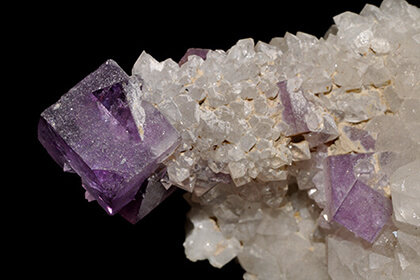
Scheelite has a chemical composition of calcium tungstate. Its ore bodies are mostly milky white, pale yellow or light pink. The mineral is non-magnetic and mainly hosted in skarn-type deposits, often associated with gangue minerals such as fluorite, calcite and molybdenite. The theoretical WO₃ content of pure scheelite minerals is around 80%.
02Application Fields of Tungsten
BackAll major industrial powers across the globe classify tungsten as a critical strategic mineral, hailed as the "teeth of industry" and "strategic metal". Purified tungsten concentrate acts as a core upstream raw material, supporting multiple industrial chains including cemented carbide, national defense and aerospace, new energy, semiconductor electronics and special steel.
1. Cemented Carbide Industry
This sector accounts for nearly 45% of global total tungsten consumption. Tungsten carbide cutting tools, mining drill bits, wear-resistant dies and wear-resistant accessories for engineering machinery manufactured from tungsten concentrate are core consumables for machining, mining excavation and infrastructure construction, which are irreplaceable in modern high-end manufacturing.
2. National Defense and Aerospace Sector
High-density and high-temperature-resistant tungsten alloys are applied to armor-piercing projectile cores, high-temperature components of aero-engines, missile counterweights and thermal protection parts of hypersonic vehicles. Tungsten materials are listed as first-class strategic reserve materials by all nations.
3. New Energy and Semiconductor Electronics
Ultra-fine tungsten wire has gradually replaced molybdenum wire for silicon wafer slicing in the photovoltaic industry. High-purity tungsten hexafluoride prepared from tungsten concentrate is the core electronic gas for chip etching. Tungsten wires, tungsten electrodes and high-temperature electronic components all rely on high-purity tungsten raw materials.
4. Special Steel and Chemical Industry
Adding tungsten elements into steel can drastically enhance the high-temperature strength, wear resistance and corrosion resistance of high-speed steel, heat-resistant steel and tool steel.
03Mainstream Separation Processes for Tungsten Ore
BackNatural raw tungsten ore is often intergrown with gangue minerals including quartz, fluorite, calcite and sulfide metal ores, requiring multi-stage separation operations to produce qualified tungsten concentrate. A combined multi-process flowsheet is widely adopted for complex mixed wolframite-scheelite ores.
1. Gravity Separation
Gravity separation is the core separation method for coarse-grained wolframite. It separates target minerals from light gangue by virtue of their large density difference under gravity and centrifugal force.
(1) Core equipment: jig, shaking table, spiral chute and centrifugal concentrator.
(2) Advantages: low reagent consumption, low production cost, excellent separation selectivity for coarse and medium-grained tungsten minerals.
(3) Disadvantages: poor recovery performance for micro-fine slimes below 0.074 mm; an independent fine slime recovery process is required as auxiliary, accompanied by high overall water consumption.
2. Flotation Process
Flotation is the mainstream technology for separating fine-grained scheelite and mixed tungsten ores. Reagents are added to adjust the hydrophobicity difference between tungsten minerals and gangue; target minerals attach to foams and float upward to realize separation, consisting of roughing and multi-stage cleaning operations.
(1) Advantages: efficient recovery of micro-fine tungsten minerals, high finished concentrate grade, suitable for fine disseminated scheelite ores.
(2) Disadvantages: large consumption of collectors, depressants and pH regulators; high pressure on tailings water treatment; strict control over pulp temperature and stirring duration.
3. Magnetic Separation
Leveraging the weak magnetism of wolframite and non-magnetic properties of scheelite and gangue, high-gradient high-intensity magnetic separators are deployed to purify crude tungsten rough concentrate and remove iron-bearing magnetic impurities. It is mostly adopted as an auxiliary cleaning procedure after gravity separation.
(1) Advantages: simple operation, large handling capacity and stable operation cost.
(2) Disadvantages: incapable of separating non-magnetic intergrown gangue, and cannot serve as the primary separation flowsheet for raw ore alone.
04Flotation Flowsheet of Scheelite
BackScheelite generally features fine dissemination grain sizes, making single gravity separation unable to achieve ideal recovery rates; hence flotation becomes the core separation technology.
1. Crushing and Grinding
Raw ore is crushed to 10–25 mm via jaw crushers and cone crushers, then fed into ball mills operating in closed circuit with vibrating screens to fully liberate scheelite minerals from gangue such as calcite, fluorite and quartz.
2. Pre-flotation of Sulfide Ores
Prior to scheelite flotation, xanthate collectors are used to preferentially float out sulfide minerals including molybdenite, galena and pyrite, eliminating their interference with scheelite flotation.
3. Roughing and Cleaning of Scheelite
After removing sulfide ores, sodium carbonate is added to adjust the alkaline pulp environment, and oleic acid collectors are used to improve the hydrophobicity of scheelite, producing rough concentrate via flotation. Multiple cleaning stages are conducted on rough concentrate to upgrade its grade: water glass is added as a depressant in cleaning stages to inhibit flotation of fluorite and calcite.
4. Core Flotation Reagents
Reagent formulations directly determine all economic indicators of scheelite flotation:
(1) Collectors: oleic acid, oxidized paraffin soap, which adsorb onto scheelite mineral surfaces to enhance floatability;
(2) Depressant: water glass, suppressing flotation of calcium-bearing gangue such as fluorite and calcite;
(3) pH Regulator: sodium carbonate, stabilizing the alkaline pulp environment and optimizing separation performance of collectors. For fine wolframite slimes, a combined flotation-centrifugal gravity separation process is industrially adopted to improve the comprehensive recovery rate of tungsten across all particle sizes.
05Conclusion
BackThe selection of tungsten ore separation flowsheets requires comprehensive consideration of multiple factors including mineral dissemination grain size, associated gangue types, concentrate grade targets and on-site production and operation costs. As high-grade easy-to-process tungsten resources are gradually depleted, low-grade fine-grained refractory tungsten ores have become the main mining targets. Continuous upgrading of low-temperature eco-friendly flotation reagents, high-efficiency centrifugal gravity separation equipment and micro-fine slime recovery technologies will further boost the comprehensive utilization rate of tungsten resources and sustain stable supply of high-quality tungsten concentrate for downstream strategic industries.


RELATED PRODUCTS
-
Autogenous Mill
-
Tilted Plate Thickener
-
Hydraulic Motor Driving Center Thickener