+8618335758886
 laura@xinhaimining.com



Beneficiation of Phosphate Rock: Process and Equipment
 Sheena
 Aug 19, 2026
 324
324
If you want to know more details about equipment, solutions, etc, please click the button below for free consultation, or leave your requirements!
 Message
 Chat Now
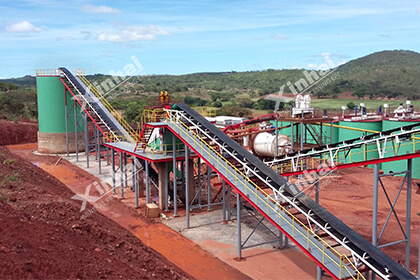
Uganda-720tpd-Phosphate-Ore-Processing-Plant-Project Phosphate rock is the primary raw material for producing phosphoric acid, phosphate fertilizers, and other phosphorus-based products. The beneficiation of phosphate rock aims to increase the P₂O₅ grade, remove unwanted gangue, and recover as much phosphate as possible into a marketable concentrate. Depending on the mineralogy and particle size of the ore, phosphate beneficiation may involve crushing, screening, washing, desliming, grinding, flotation, gravity separation, or magnetic separation. The quality of phosphate rock has a direct influence on downstream fertilizer and phosphoric acid production. Low-grade ore with excessive gangue may require additional treatment and can increase transportation, grinding, reagent, and processing costs. Beneficiation can improve the economic value of a phosphate deposit in several ways. Removing low-value gangue concentrates the phosphate minerals into a smaller product stream, producing a higher-grade phosphate concentrate. Silica, clay, carbonate minerals, iron, aluminum, and other impurities may interfere with downstream processing. Their removal can improve feed quality. A properly designed flowsheet aims to recover a high proportion of the valuable phosphate minerals rather than simply producing a high-grade concentrate. Upgrading the ore at the mine site can reduce the amount of gangue transported and processed in subsequent operations. A consistent, higher-quality phosphate concentrate can provide more suitable feed for phosphoric acid and fertilizer production. A typical phosphate beneficiation process may be arranged as: Crushing → Screening → Washing & Desliming → Grinding & Classification → Flotation → Concentrate Dewatering However, this is only a general flowsheet. Some phosphate ores can be upgraded effectively through washing and screening alone, while others require flotation or additional separation stages. Not every plant requires every stage. The simplest effective flowsheet is generally preferred because unnecessary processing stages increase capital and operating costs. Crushing and screening establish the appropriate particle size for phosphate beneficiation. A jaw crusher is commonly used for primary crushing of large phosphate rocks. Depending on the ore characteristics and required product size, cone crushers or impact crushers may be used for secondary crushing. After crushing, vibrating screens can separate material according to size and return oversize particles for further crushing. The main objectives are to: Reduce the run-of-mine ore to a manageable size Produce a consistent feed for washing or grinding Remove unsuitable coarse material Improve downstream equipment performance Crushing should be controlled carefully. Excessive size reduction can generate unnecessary fines, which may complicate washing, desliming, and flotation. Washing is one of the most important phosphate beneficiation methods for clay-rich phosphate ores. Fine clay and slime can coat phosphate particles, consume flotation reagents, increase pulp viscosity, and reduce separation selectivity. Removing these materials before further beneficiation can significantly improve process performance. Common washing and desliming equipment includes: Trommel scrubber Log washer Hydrocyclone Spiral classifier A trommel scrubber can provide both scrubbing and screening, making it suitable for phosphate ore containing sticky clay or weathered material. For more difficult clay-rich ores, a log washer can provide stronger scrubbing action to break down clay-bound particles and liberate phosphate minerals. Hydrocyclones can then be used to separate fine slimes from coarser phosphate-bearing particles. A simplified washing circuit may be: Phosphate Ore → Scrubbing → Screening → Desliming → Phosphate Product Whether washing alone can achieve the required grade depends on the amount and nature of the gangue. Grinding is required when phosphate minerals are not sufficiently liberated after crushing and washing. A ball mill is commonly used for fine grinding, while hydrocyclones or other classifiers control the particle size of the grinding product. The objective is to expose phosphate minerals from surrounding gangue without producing excessive ultrafines. Overgrinding can be problematic because very fine particles may: Increase reagent consumption Reduce flotation selectivity Increase slime generation Increase energy consumption Therefore, grinding should be optimized according to the liberation size determined by mineralogical and laboratory testing. Flotation is one of the most widely used methods for upgrading phosphate rock when physical separation alone cannot achieve the required concentrate quality. The process relies on differences in surface properties between phosphate minerals and associated gangue. Depending on the ore mineralogy, flotation may be designed as direct flotation or reverse flotation. a. Direct Flotation In direct flotation, phosphate minerals are selectively floated and collected in the froth product. This approach can be considered when the flotation chemistry provides sufficient selectivity between phosphate minerals and gangue. b. Reverse Flotation In reverse flotation, unwanted gangue minerals are floated while the phosphate minerals remain in the non-float product. Reverse flotation can be useful for certain phosphate ores, particularly where silica or other gangue minerals can be selectively floated. A typical flotation circuit may include: Conditioning → Rougher Flotation → Scavenger Flotation → Cleaner Flotation Gravity separation can be considered when phosphate minerals have a sufficient density difference from associated gangue minerals. Common equipment includes: Spiral chute Shaking table Other gravity concentrators Gravity separation has the advantage of relatively low reagent consumption and can be useful in specific mineralogical conditions. However, it is not a universal solution for phosphate rock. If phosphate minerals and gangue have similar densities or are very finely disseminated, gravity separation may provide limited selectivity. For this reason, gravity separation should be evaluated through laboratory testing before being incorporated into the final flowsheet. Magnetic separation is generally used as an auxiliary beneficiation method when the phosphate ore contains suitable magnetic impurities. Some phosphate deposits contain iron-bearing minerals that can be removed using magnetic separation, depending on their magnetic susceptibility. Magnetic separation may be positioned: Before flotation After gravity separation As a final cleaning stage The equipment may include wet drum magnetic separators or high-intensity magnetic separators, depending on the properties of the target impurities. The key consideration is mineralogy. Simply detecting iron in a chemical analysis does not automatically mean magnetic separation will be effective, because different iron minerals have very different magnetic properties. The most important principle in phosphate beneficiation is that ore characteristics determine process selection. Before designing a plant, several parameters should be investigated. P₂O₅ Grade: The initial P₂O₅ content provides a basic indication of ore quality and helps determine the upgrading requirement. Phosphate Mineralogy: The type of phosphate mineral and its association with gangue directly affect the available beneficiation methods. Silica Content: High silica content may require flotation or other separation methods to produce a suitable concentrate. Clay Content: High clay content often makes washing and desliming important parts of the process. Carbonate Content: Calcite and dolomite can be difficult to separate from phosphate minerals because of their similar surface and physical properties. Special flotation strategies may therefore be required. Liberation Size: Mineralogical analysis should determine how finely the ore must be ground before phosphate minerals are sufficiently liberated. Particle Size Distribution: The size distribution determines whether screening, washing, gravity separation, or flotation is most appropriate. The overall selection process can be summarized as: Ore Characterization → Laboratory Testing → Process Selection → Flowsheet Design → Equipment Selection The beneficiation of phosphate rock is designed to improve P₂O₅ grade, remove gangue minerals, and maximize phosphate recovery before downstream processing. Depending on the ore characteristics, the process may involve crushing, screening, washing, desliming, grinding, flotation, gravity separation, magnetic separation, and dewatering. Clay-rich ores often benefit from washing and desliming, while siliceous or carbonate-rich ores may require more selective flotation. Gravity and magnetic separation can be incorporated when the mineralogical conditions are favorable. Ultimately, there is no single phosphate rock beneficiation process suitable for every deposit. Mineralogical analysis, laboratory beneficiation tests, and process optimization should be completed before selecting the final flowsheet and equipment. A well-designed process can improve concentrate quality while controlling energy, reagent, water, and overall operating costs.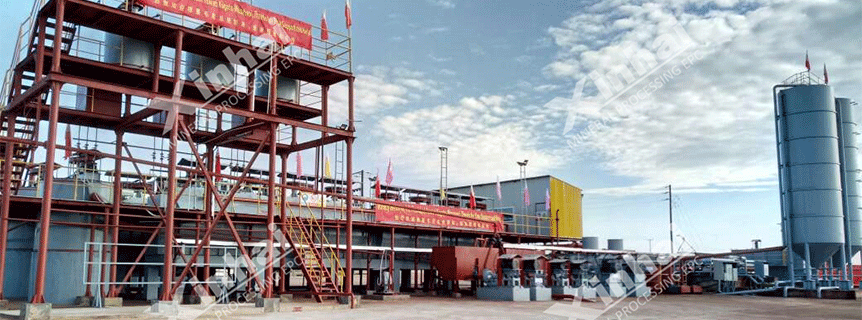
01Why Is Phosphate Rock Beneficiation Important?
Back
1.1 Increase P₂O₅ Grade
1.2 Remove Harmful or Unwanted Impurities
1.3 Improve Phosphate Recovery
1.4 Reduce Processing and Transportation Costs
1.5 Improve Downstream Processing
02Beneficiation of Phosphate Rock Process
Back
2.1 Crushing and Screening
2.2 Washing and Desliming
2.3 Grinding and Classification
2.4 Phosphate Rock Flotation
2.5 Gravity Separation
2.6 Magnetic Separation
03How to Choose the Right Phosphate Rock Beneficiation Process?
Back
04Conclusion
Back


RELATED PRODUCTS
-
Surface Auxiliary Equipment
-
Transportation Equipment
-
Centrifugal Separator