+8618234403483
 yanzhang19990421@gmail.com



Coal Gangue Beneficiation Process Guide: Gravity Separation and Flotation
 Sheena
 Aug 10, 2026
 310
310
If you want to know more details about equipment, solutions, etc, please click the button below for free consultation, or leave your requirements!
 Message
 Chat Now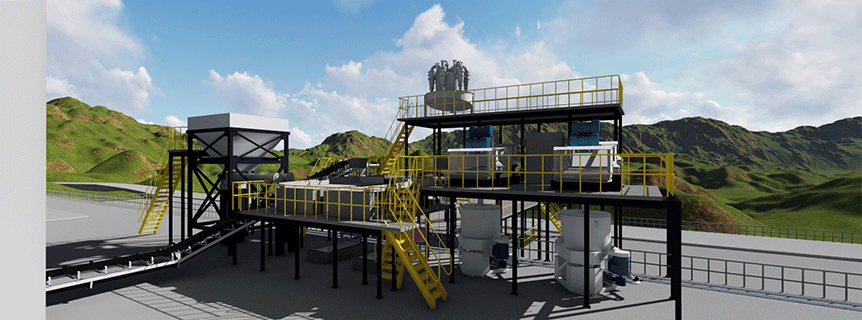
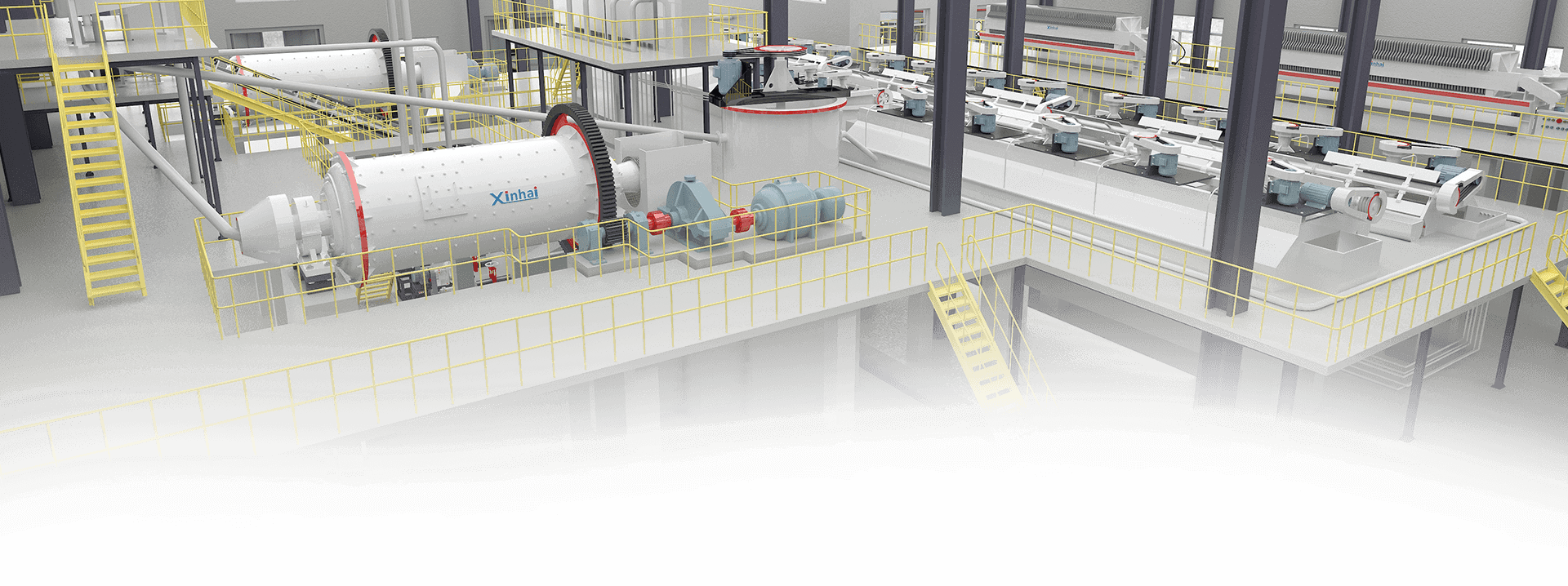
3D-diagram-of-gravity-separation-and-flotation-for-sulfur-bearing-coal-gangue
Coal gangue often contains carbonaceous matter closely associated with pyrite and other sulfur-bearing minerals. If flotation is applied directly to the raw material, the carbonaceous components may exhibit natural floatability, consume flotation reagents, and enter the froth product together with sulfur-bearing minerals. This can reduce flotation selectivity, lower sulfur recovery, and make it difficult to obtain a high-grade sulfur concentrate.
For this type of material, a gravity separation–flotation combined process, in which gravity separation is placed before flotation, can provide a more practical solution. By using density differences to remove part of the low-density carbonaceous material first, the process reduces carbon interference before flotation and creates more favorable conditions for selective sulfur recovery.
A typical process route is:
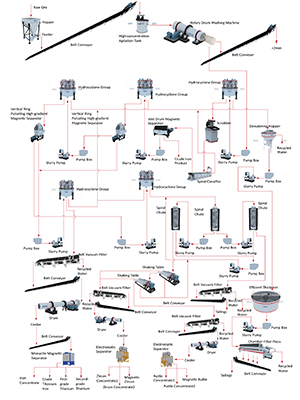
Grinding → Shaking Table Gravity Separation → Flotation → Concentrate Dewatering
This article explains the process design in detail, including why gravity separation should be placed before flotation, why a shaking table is suitable for fine sulfur-bearing minerals, how targeted flotation reagents further reduce carbon interference, and why the simplified flowsheet can be attractive for small- and medium-scale coal gangue sulfur recovery projects.
01Why Is Coal Gangue Beneficiation Difficult?
BackThe main challenge in coal gangue beneficiation is not simply separating valuable minerals from waste. It is achieving selective separation when carbonaceous matter and sulfur-bearing minerals occur together.
Pyrite (FeS₂) is commonly the main sulfur-bearing mineral targeted for recovery. However, its occurrence characteristics vary from deposit to deposit. Pyrite may occur as relatively coarse grains, fine disseminations, or particles closely associated with carbonaceous matter and gangue minerals.
Carbonaceous components can interfere with flotation in several ways. Their natural hydrophobicity may cause them to float together with sulfide minerals, while their surface properties can also affect reagent adsorption and froth stability. As a result, direct flotation may produce a concentrate containing excessive carbon or require a more complicated reagent scheme to maintain sulfur recovery and concentrate grade.
Therefore, the process should not focus solely on improving flotation performance. A more effective strategy is to remove part of the interfering carbonaceous material before flotation.
This leads to the core process principle:
Use gravity separation for pre-concentration and carbon rejection, followed by flotation for the recovery of remaining fine sulfur-bearing minerals.
02Coal Gangue Sulfur Recovery Process Flow
BackFor coal gangue containing fine sulfur-bearing minerals and carbonaceous components, the recommended process is gravity and flotation.
Gravity separation takes advantage of the density difference between high-density sulfur-bearing minerals and lower-density carbonaceous and gangue components. It can recover part of the relatively well-liberated sulfur minerals while simultaneously reducing the amount of carbon entering the flotation circuit.
Flotation then processes the remaining material and focuses on recovering fine sulfur-bearing particles that are difficult to recover efficiently by gravity separation alone.
This creates a two-stage recovery strategy rather than relying on a single separation method.
1. Grinding: Liberate Sulfur Minerals Before Separation
Coal gangue is first crushed if necessary and then ground to an appropriate fineness. The objective is not simply to achieve the finest possible particle size, but to liberate sulfur-bearing minerals from carbonaceous matter and gangue while avoiding excessive production of slimes.
The optimal grinding size should therefore be determined through mineralogical analysis and laboratory beneficiation tests.
An appropriate grinding operation should achieve three objectives:
Liberate pyrite and other sulfur-bearing minerals from surrounding gangue.
Produce a particle size suitable for shaking table separation.
Avoid excessive overgrinding that may generate slimes and reduce separation efficiency.
For fine-grained coal gangue, grinding and classification conditions should be carefully controlled because excessive fines may negatively affect both gravity separation and flotation.
2. Gravity Separation First: Reduce Carbon Interference
The most important feature of this process is that gravity separation is placed before flotation.
Instead of feeding all ground material directly into flotation, the ground slurry is first processed by a shaking table. This allows the process to exploit the density difference between sulfur-bearing minerals and lighter carbonaceous components.
The gravity separation stage can therefore:
Recover relatively coarse and well-liberated sulfur-bearing minerals.
Reject or divert part of the low-density carbonaceous material.
Reduce carbon content in the subsequent flotation feed.
Decrease the amount of material requiring reagent treatment.
Improve the selectivity of downstream flotation.
Rather than forcing flotation to separate sulfur minerals from a large amount of carbon, the process removes part of the interference beforehand.
3. Flotation: Recover the Remaining Fine Sulfur Minerals
Gravity separation cannot recover every sulfur-bearing particle. Very fine pyrite particles or sulfur minerals that remain locked with other components may not have sufficient settling behavior for effective recovery on a shaking table.
The gravity separation tailings or selected middling stream can therefore be directed to flotation.
The flotation circuit may include rougher, scavenger, and cleaner stages depending on the feed characteristics and target concentrate grade. The exact circuit configuration should be determined according to sulfur grade, pyrite liberation, carbon content, particle size distribution, and laboratory flotation results.
4. Targeted Flotation Reagents: Further Reduce Carbon Interference
A targeted reagent scheme can be developed to improve the selectivity between sulfur-bearing minerals and carbonaceous components. The objective is not simply to maximize the overall amount of material floating. Instead, the reagent system should selectively promote the flotation of sulfur-bearing minerals while minimizing the recovery of carbonaceous impurities.
The combination of pre-flotation gravity separation + targeted reagent selection provides two levels of protection against carbon interference.
5. Two-Stage Sulfur Recovery Improves Resource Utilization
One of the main advantages of the gravity–flotation combined process is that sulfur recovery is distributed across two separation stages. The gravity circuit first recovers the relatively coarse and well-liberated sulfur-bearing minerals. The flotation circuit then recovers the remaining fine sulfur components.
This staged recovery approach can improve overall resource utilization and provide greater flexibility when the feed contains sulfur minerals with different particle sizes and liberation characteristics. It can also reduce the burden on the flotation circuit because part of the sulfur has already been recovered and part of the carbonaceous interference has already been removed.
03Equipment Selection for Coal Gangue Beneficiation
BackThe simplified process requires fewer major beneficiation units than a complex multi-stage flowsheet.
1. Grinding Equipment
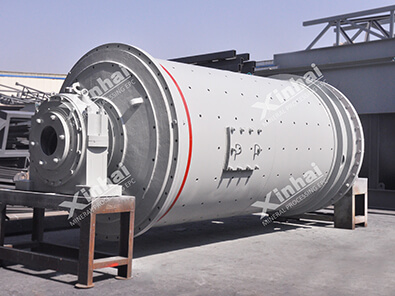
A ball mill or other suitable grinding equipment can be selected according to the required liberation size and processing capacity. The objective is to achieve sufficient liberation without excessive grinding.
2. Shaking Table
The shaking table is the core gravity separation equipment in this process.
It is particularly suitable when:
Sulfur-bearing minerals have a relatively high density.
Valuable minerals are fine or moderately fine.
The feed contains no significant amount of coarse particles.
A relatively precise gravity separation is required.
3. Flotation Machine
The flotation machine is used to recover fine sulfur-bearing minerals that remain after gravity separation. The number of flotation stages and cell configuration should be determined according to laboratory test results and the required concentrate grade and recovery.
4. Thickener and Filter
After flotation, the sulfur concentrate is typically thickened and filtered to reduce moisture before transportation or further utilization. This equipment configuration keeps the process compact while covering the major functions required for sulfur recovery.
04Key Points for Coal Gangue Beneficiation Process Design
BackAlthough the gravity–flotation route provides a clear process concept, the final plant design should not be standardized without testing.
Before selecting equipment or determining the final flowsheet, several factors should be investigated:
Sulfur Mineralogy: Determine whether sulfur occurs mainly as pyrite, marcasite, or other sulfur-bearing minerals.
Carbon Content: Analyze the quantity and flotation behavior of carbonaceous matter.
Liberation Size: Determine the grinding fineness required to liberate sulfur-bearing minerals from carbon and gangue.
Particle Size Distribution: Evaluate whether the material is suitable for shaking table separation and determine the appropriate flotation feed size.
Gravity Separation Performance: Conduct shaking table tests to determine how much sulfur can be recovered and how effectively carbon can be rejected.
Flotation Performance: Test reagent combinations, pH, pulp density, flotation time, and cleaning conditions.
Final Concentrate Quality: Evaluate both sulfur recovery and concentrate grade rather than optimizing either indicator independently.
A practical flowsheet should ultimately be selected based on metallurgical performance and economic feasibility, not simply on the theoretical advantages of individual equipment.
05Conclusion
BackFor coal gangue containing carbonaceous matter and sulfur-bearing minerals, direct flotation may suffer from carbon interference and poor separation selectivity. A more targeted approach is to place gravity separation before flotation.
The resulting flowsheet—grinding → shaking table gravity separation → flotation → concentrate dewatering—combines early pre-concentration, carbon interference reduction, and secondary fine-particle recovery in a relatively compact process.
For coal gangue sulfur recovery projects, the key is not simply choosing more equipment or adding more separation stages. The real objective is to match the separation method to the mineralogical characteristics of the feed and remove the major interference factors as early as possible. Laboratory mineralogical analysis, gravity separation tests, and flotation tests should therefore be conducted before finalizing the plant design and equipment selection.


RELATED PRODUCTS
-
Rod Mill
-
Surface Dumper Equipment
-
Jig