+8618335758886
 laura@xinhaimining.com



Full Analysis of Mica Ore Beneficiation Processes
 zeki
zeki
 Jun 30, 2026
 469
469
If you want to know more details about equipment, solutions, etc, please click the button below for free consultation, or leave your requirements!
 Message
 Chat Now
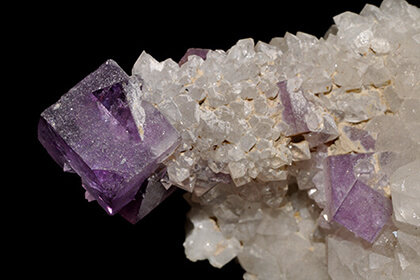
Mica refers to a group of hydrous layered aluminosilicate rock-forming minerals. The major industrial varieties include muscovite, phlogopite, lepidolite, biotite and sericite, which predominantly occur in pegmatite, schist and granite-type deposits. Pure natural mica ore bodies are extremely rare; most mica deposits contain abundant gangue impurities. Common associated minerals include quartz, feldspar, chlorite, calcite, magnetite, hematite, tremolite and limonite. Iron-bearing impurities directly degrade the whiteness and insulating performance of mica, making them the primary targets for impurity removal in beneficiation.
01Core Physical and Chemical Properties of Mica
Back1. Outstanding Insulation and Dielectric Properties
Mica features a stable crystal lattice and intrinsic non-conductivity. When free from conductive impurities such as iron and magnetite, it achieves ultra-high insulation grades, serving as a core raw material for high-voltage insulating materials. Under high-temperature conditions, mica porcelain exhibits far lower dielectric loss than ordinary electric porcelain. Its insulation performance attenuates slowly with rising temperature and delivers stable breakdown voltage, rendering it suitable for long-term service as insulating substrates in cables and electronic components.
2. High Temperature Resistance and Thermal Stability
Muscovite withstands temperatures ranging from 800 to 1100 °C, while phlogopite can endure up to 1200 °C. After high-temperature calcination, its mechanical strength and hardness increase markedly, accompanied by extremely low thermal shrinkage and thermal expansion coefficients. It resists cracking and deformation under alternating hot and cold conditions, making it a dedicated filler for refractory and fire-retardant coatings.
3. Chemical Inertness
Within the temperature range from ambient temperature to 450 °C, mica is chemically inert against strong acids and strong alkalis, featuring excellent resistance to acid, alkali and salt spray corrosion. When compounded with resins and coating systems, it avoids delamination and discoloration failure, fitting applications in anti-corrosion and chemical fillers.
02Main Purification and Separation Processes for Mica Beneficiation
Back1. Flotation Purification Process
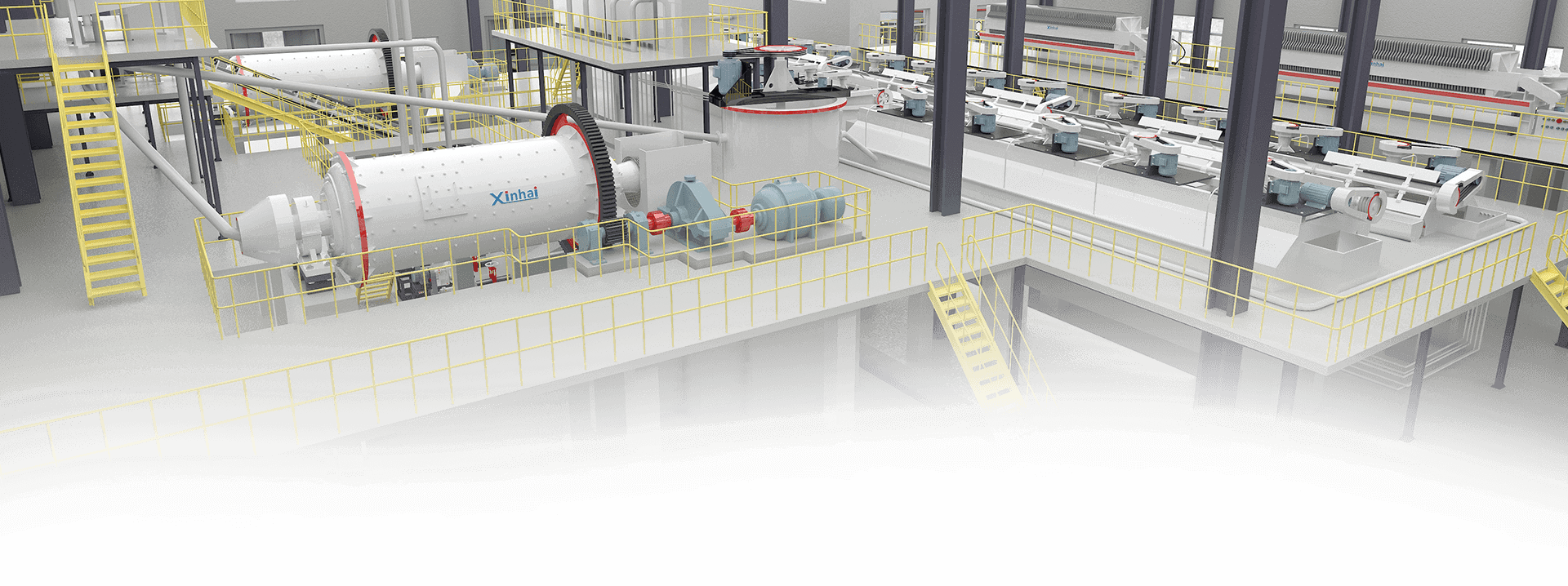
The dominant purification technology for fine crushed mica (-14 mesh), applicable to low-grade granite and schist-type mica ores. It enables simultaneous recovery of associated rare scattered metals lithium and rubidium, delivering high comprehensive economic benefits.(1) Complete Process Flow: Primary crushing and secondary crushing of run-of-mine ore → closed-circuit screening → rod mill/ball mill grinding and desliming → multi-stage flotation → concentration, filter pressing and drying of concentrates to produce finished mica powder.(2) Key Process Parameters: Pulp pH maintained between 4 and 6 (weakly acidic to neutral environment). Cationic collectors such as dodecylamine are adopted to selectively adsorb onto mica surfaces, while water glass depresses quartz and feldspar gangue minerals. A closed-circuit flow consisting of three roughing stages, three cleaning stages and two scavenging stages is conventionally deployed, upgrading mica grade from approximately 30% in run-of-mine ore to over 98% in concentrates. Lepidolite flotation concentrates simultaneously enrich lithium oxide, forming a core auxiliary process for lithium ore beneficiation.
2.Magnetic Separation for Impurity Removal
A dedicated purification procedure targeting iron-bearing color-causing impurities, divided into low-intensity magnetic separation and high-gradient high-intensity magnetic separation. Magnetite, hematite and limonite in ores are strongly magnetic impurities; biotite is weakly magnetic, whereas muscovite is non-magnetic. After wet high-gradient magnetic separation, iron content in mica concentrates can be reduced from 3%–6% to below 0.8%, substantially improving powder whiteness. This procedure is mandatory for cosmetic-grade and high-end insulating mica, and is commonly combined with flotation.
3.Selective Crushing and Screening Process
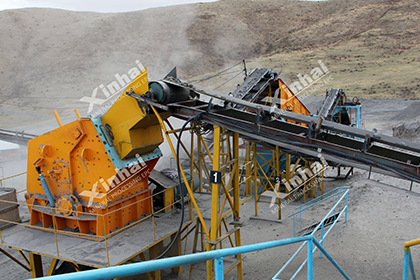
Separation based on the disparity in compressive and impact strength between mica and gangue. Impact crushers are used for mineral dissociation, paired with alternating rectangular and square-hole screens for closed-circuit screening. Mica is soft and retains flaky morphology after crushing, while high-hardness quartz and calcite break into angular granular particles. Over 70% of quartz impurities and half of carbonate gangue can be removed during screening. This process acts as a front-end pre-desliming step to reduce the load of subsequent separation operations.
03Core Supporting Equipment for Mica Beneficiation
Back1.Crushing Equipment
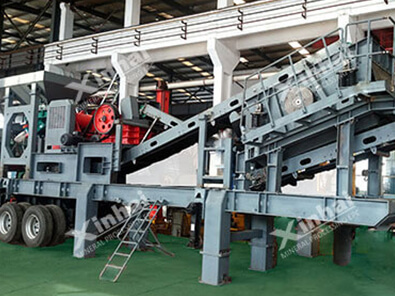
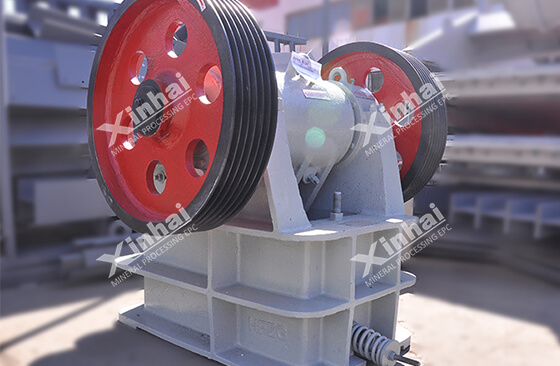
Jaw CrusherDeep-chamber jaw crushers are prioritized for primary crushing in mica beneficiation to minimize ore blockage. Impact crushers and double-roll crushers are deployed for secondary and fine crushing to avoid excessive fragmentation of mica’s flaky structure.
2.Circular Vibrating Screen
Universal grading equipment throughout the entire process, used for particle size classification, desliming and dewatering of crushed ore.
3.Wet Overflow Rod Mill
Specialized grinding equipment for mica. Compared with ball mills, it generates far less over-grinding and maximizes preservation of intact flaky mica crystals.
4.Spiral ClassifierOperates
in closed-circuit grinding with rod mills. It separates coarse gangue (returned for regrinding) and fine mica pulp (transferred to flotation) based on differences in settling velocity of solid particles in pulp.
5.SF Self-Aerated Flotation Machine
Specialized flotation equipment for mica. Rearward inclined vanes on both sides of the impeller achieve dual circulation of pulp, facilitating flotation and upward floating of mica froth; applicable to all roughing, cleaning and scavenging stages.
6.High-Gradient Magnetic Separator
Core equipment for iron removal and purification, operated under wet conditions with adjustable magnetic field intensity.
7. High-Efficiency Thickener
Front-end dewatering equipment for flotation mica concentrates. It concentrates low-concentration froth pulp into high-density underflow, lowering the operational load of filter presses and dryers.
04Conclusion
BackAs a high-value layered non-metallic mineral, mica exhibits distinct beneficiation routes for large sheet mica and fine crushed mica. Process design must prioritize protecting the integrity of natural flaky crystals. For coarse-grained pegmatite ore, hand sorting, friction separation and photoelectric pre-concentration are the primary technologies. Low-grade fine-grained granite and lepidolite ores adopt a combined wet process: crushing → rod mill desliming → flotation → high-intensity magnetic iron removal. Dry air separation processes are configured for water-scarce mining areas.