+8618335758886
 laura@xinhaimining.com



Manganese Beneficiation and Extraction Plant Solutions for Higher Recovery
 Sheena
 Nov 13, 2026
 24
If you want to know more details about equipment, solutions, etc, please click the button below for free consultation, or leave your requirements!
 Message
 Chat Now
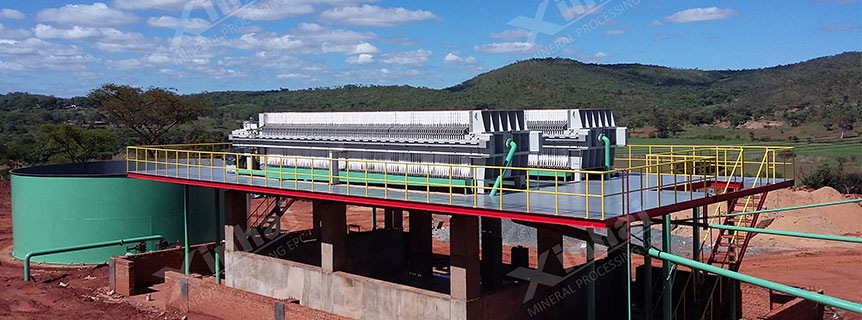
700tpd-manganese-processing-plant
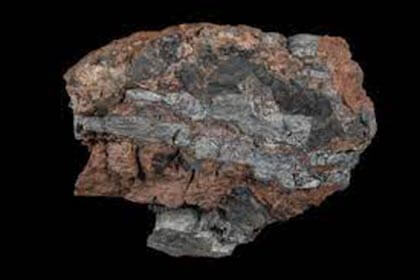
Many manganese deposits contain impurities such as silica, iron, phosphorus, and clay, which reduce manganese grade and affect product quality. For these ores, an effective manganese beneficiation process is essential to improve concentrate quality and maximize resource utilization.
Selecting the right manganese beneficiation and extraction plant solution requires a thorough understanding of ore mineralogy, liberation characteristics, particle size distribution, and the required concentrate specifications. Depending on the deposit, processing may involve crushing, screening, washing, gravity separation, magnetic separation, and flotation.
This guide explains the main manganese beneficiation methods, equipment selection principles, and plant design considerations that help mining companies improve recovery while controlling investment and operating costs.
01Common Manganese Beneficiation Methods
BackThere is no universal manganese beneficiation process. The appropriate method depends on the physical and chemical properties of the ore, particularly the density, magnetic properties, particle size, and mineral associations.
1.1 Gravity Separation for Oxide Manganese Ore
Gravity separation is widely used for manganese oxide ores because many manganese minerals have a higher specific gravity than common gangue minerals.
The method separates particles according to differences in density and settling behavior. It is particularly suitable when manganese minerals are sufficiently liberated from lighter gangue materials.
Common gravity separation equipment includes:
Jig machines: Suitable for separating coarse and medium-sized manganese particles.
Spiral concentrators: Used for continuous separation of suitable fine-to-medium-sized particles.
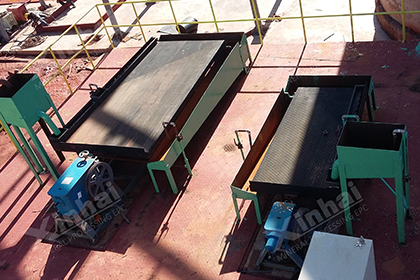
Shaking tables: Effective for recovering fine heavy mineral particles with relatively precise separation.
For ores containing coarse manganese minerals and lighter silicate gangue, gravity separation can provide a relatively simple and economical beneficiation solution.
However, its performance depends on the density difference between manganese minerals and gangue, as well as particle size and liberation. Fine, poorly liberated particles may require additional processing.
1.2 Magnetic Separation for Manganese Ore Upgrading
Magnetic separation is another important method used in manganese beneficiation. Some manganese minerals exhibit weak magnetic properties, while associated iron minerals may respond differently to magnetic fields.
High-intensity magnetic separators can be used to recover suitable weakly magnetic manganese-bearing minerals or separate certain magnetic impurities, depending on the ore composition.
Typical applications include:
Recovering weakly magnetic manganese minerals.
Separating iron-bearing minerals from suitable manganese ores.
Improving concentrate grade after gravity separation.
Processing fine particles that are difficult to upgrade through conventional gravity methods.
The magnetic separation intensity and equipment configuration must be determined through mineralogical analysis and laboratory tests. Magnetic separation does not automatically remove all iron impurities because the magnetic properties of iron-bearing minerals vary.
1.3 Flotation for Fine-Grained and Complex Manganese Ores
When manganese minerals are finely disseminated or closely associated with gangue minerals, gravity separation may not achieve the required recovery and concentrate grade. Flotation can be considered for certain complex manganese ores, particularly when valuable minerals are too fine for effective gravity separation.
The process generally involves:
Grinding the ore to achieve sufficient mineral liberation.
Conditioning the pulp with suitable flotation reagents.
Introducing air bubbles into the flotation cells.
Separating manganese-bearing minerals from gangue according to their surface properties.
Collecting and dewatering the resulting concentrate.
Flotation reagent selection is highly dependent on mineral composition and water chemistry. Laboratory flotation tests are necessary to establish reagent types, dosages, pH conditions, and separation performance.
Although flotation can treat certain fine and complex ores, reagent consumption and process complexity may increase operating costs.
1.4 Washing and Screening for Clay-Rich Manganese Ore
Some manganese deposits contain considerable amounts of clay, mud, and other loosely attached impurities. These materials can interfere with downstream beneficiation by coating mineral surfaces and affecting separation efficiency. Washing and screening are often used as pretreatment stages.
Typical equipment includes:
Trommel screens.
Log washers.
Vibrating screens.
Hydrocyclones for suitable classification and desliming applications.
Removing clay and fine slimes before gravity separation can improve equipment performance and reduce the amount of unnecessary material entering the beneficiation circuit.
For suitable manganese ores, washing alone may produce a marketable product. However, ores with significant intergrown gangue minerals usually require further beneficiation.
02How to Design a Manganese Beneficiation Process Flow?
BackA manganese processing plant should be designed around the characteristics of the actual ore rather than a standard equipment list.
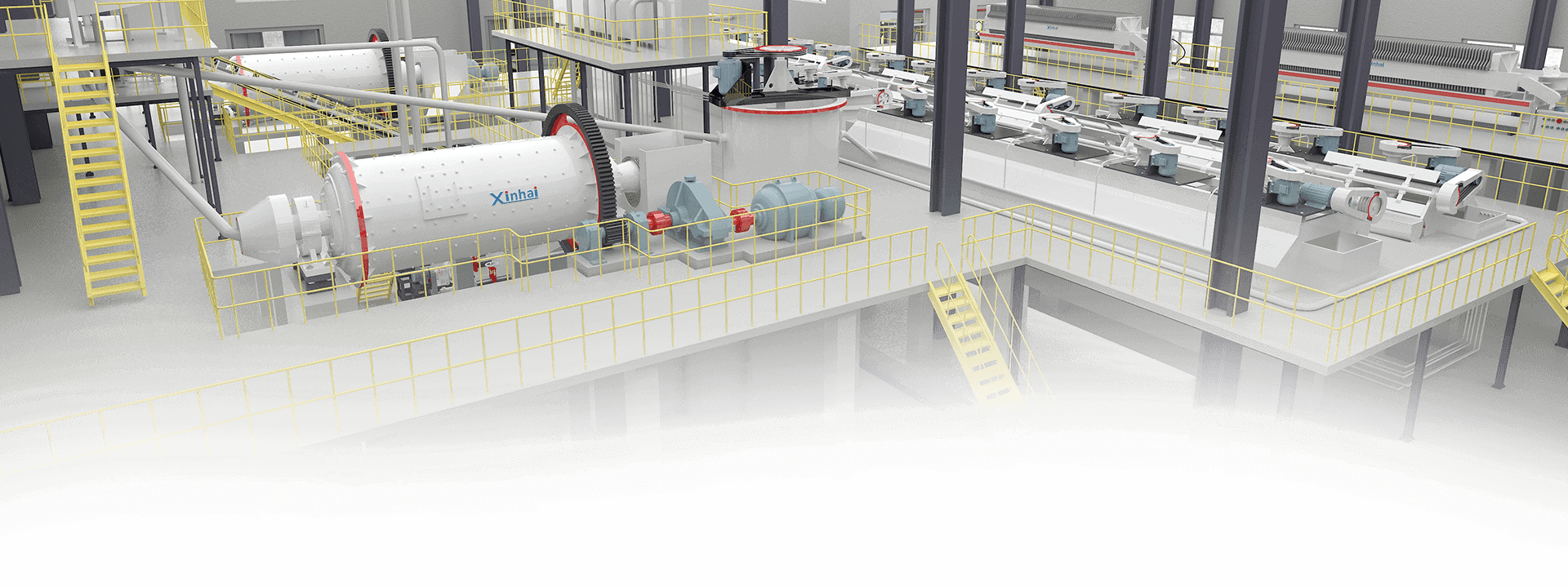
A typical manganese beneficiation flowsheet may include the following stages:
Step 1: Crushing and Screening
Run-of-mine ore is first reduced to a suitable particle size using crushing and screening equipment. Jaw crushers are commonly used for primary crushing, while cone crushers may be selected for secondary crushing. Vibrating screens classify the crushed material into different size fractions. Separating material by size allows different particle fractions to receive appropriate treatment and prevents unnecessary over-crushing.
Step 2: Washing and Desliming
If the ore contains clay or fine impurities, washing is introduced to remove these materials before separation. Log washers and trommel screens can help break down clay agglomerates and separate unwanted fine material. The washing stage should be designed according to the ore's clay content and the amount of water available at the mine site.
Step 3: Grinding and Classification
Grinding is required when manganese minerals are locked within gangue and cannot be effectively separated at the crushing size. Ball mills may be used to reduce particle size, while classification equipment controls the grinding product size.
However, grinding should not be applied automatically to every manganese ore. For ores with sufficient liberation at relatively coarse sizes, unnecessary grinding increases power consumption and may generate excessive slimes.
Step 4: Beneficiation and Concentration
The appropriate separation method is selected according to ore characteristics. A gravity separation circuit may be sufficient for suitable oxide ores. Other deposits may require a combination of gravity and magnetic separation, while finely disseminated or complex ores may need flotation or other specialized treatment.
Step 5: Concentrate Dewatering
After separation, the manganese concentrate is sent to a dewatering circuit. Thickeners are used to increase pulp density, while filter presses or vacuum filters reduce the moisture content of the final concentrate.
Process water can be recovered and recycled where appropriate, helping reduce fresh water consumption.
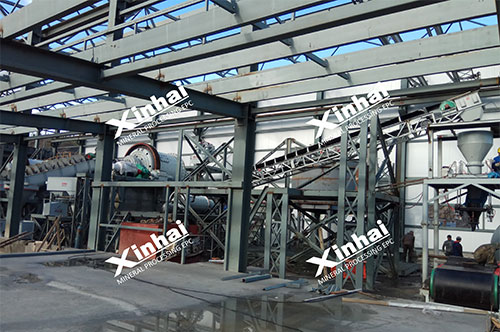
03How to Improve Manganese Recovery in a Processing Plant?
BackImproving manganese recovery is not simply a matter of increasing equipment capacity. It requires identifying where valuable manganese is lost and optimizing each processing stage.
Several practical measures can help improve plant performance.
3.1 Optimize Grinding and Mineral Liberation
Insufficient grinding may leave manganese minerals locked in gangue, reducing separation efficiency. On the other hand, excessive grinding can generate fine slimes that are difficult to recover. Conducting grinding tests and mineral liberation analysis helps establish an appropriate grinding size.
3.2 Introduce Size Classification
Different particle sizes often respond differently to gravity separation. Classifying ore before beneficiation allows coarse and fine fractions to be treated using more suitable equipment. This can improve separation efficiency and reduce the loss of valuable minerals.
3.3 Optimize Gravity Separation Parameters
The performance of jig machines, spiral concentrators, and shaking tables depends on particle size, feed concentration, water flow, and equipment operating conditions. Regularly monitoring these parameters helps maintain stable separation and minimize manganese losses in tailings.
3.4 Recover Valuable Minerals from Tailings
Tailings may still contain recoverable manganese, particularly when the original process has limitations in fine-particle recovery. Tailings sampling, mineralogical analysis, and laboratory separation tests can determine whether additional gravity or magnetic separation stages are economically justified.
Reprocessing suitable tailings can increase total resource utilization without requiring additional mining.
3.5 Establish Continuous Process Monitoring
Monitoring feed grade, concentrate grade, tailings grade, water consumption, and equipment operating conditions helps operators identify changes in plant performance. Regular sampling and metallurgical accounting are particularly important for evaluating actual manganese recovery rather than relying solely on equipment specifications.
04What Determines the Cost of a Manganese Beneficiation Plant?
BackThe investment required for a manganese processing plant varies significantly from one project to another. Plant capacity is important, but ore characteristics and process complexity can have an equally significant impact on total project costs.
The main cost factors include:
4.1 Ore characteristics
Low-grade ores, complex mineral associations, and fine dissemination may require additional grinding and separation stages, increasing equipment and operating costs.
4.2 Processing capacity
A plant designed for 50 TPH will have different equipment requirements from a 500 TPH operation. Larger plants generally require higher initial investment but may benefit from economies of scale.
4.3 Equipment configuration
A simple crushing and gravity separation circuit generally requires less investment than a flowsheet involving multiple grinding, magnetic separation, and flotation stages.
4.4 Infrastructure and construction
Civil works, foundations, electrical systems, water supply, tailings facilities, and site preparation must be included in the project budget.
4.5 Operating expenses
Electricity, water, labor, maintenance, grinding media, and flotation reagents (where applicable) influence the long-term operating cost.
A reliable investment assessment should consider both capital expenditure (CAPEX) and operating expenditure (OPEX), together with expected concentrate quality, recovery, and market requirements.
05Customized Manganese Beneficiation Solutions for Different Ore Types
BackDifferent manganese deposits require different processing strategies.
Coarse-grained oxide ore: Crushing, screening, and jig separation may provide an effective solution.
Clay-rich manganese ore: Washing and desliming should be considered before the main beneficiation stage.
Fine-grained manganese ore: Fine-particle gravity separation or magnetic separation may be evaluated through testing.
Complex manganese ore: A combined beneficiation flowsheet may be necessary to achieve the required concentrate specifications.
For this reason, a manganese processing plant should be developed through a project-specific approach rather than relying on standard equipment combinations.
06Conclusion
BackManganese beneficiation is a process of upgrading manganese-bearing ore through suitable physical or metallurgical methods. Gravity separation, magnetic separation, flotation, washing, and dewatering each have specific applications depending on ore characteristics.
For mining companies planning a new manganese processing plant or upgrading an existing operation, the key to higher recovery lies in accurate ore testing, appropriate process selection, and efficient equipment configuration. A well-designed beneficiation solution can improve concentrate quality, reduce valuable mineral losses, and support the long-term economic performance of the project.


RELATED PRODUCTS
-
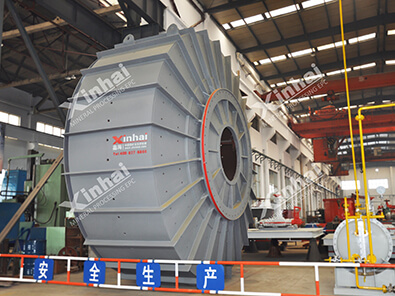
Autogenous Mill
-
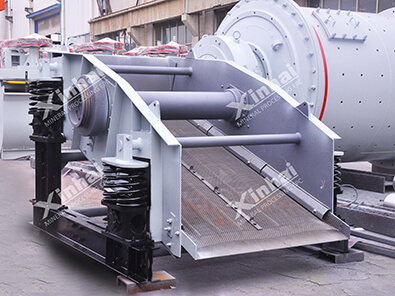
Auto Centering Vibrating Screen
-
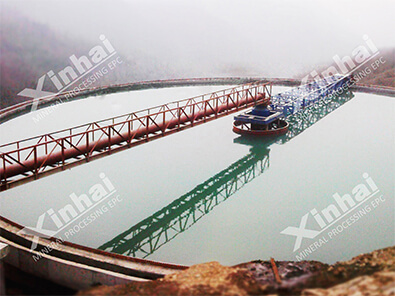
Peripheral Transmission Thickener