+8618234403483
 yanzhang19990421@gmail.com



How to Choose the Right Grinding Equipment for a Mineral Processing Plant: Ball Mill vs Rod Mill
 Sheena
 Dec 27, 2025
 1054
1054
If you want to know more details about equipment, solutions, etc, please click the button below for free consultation, or leave your requirements!
 Message
 Chat Now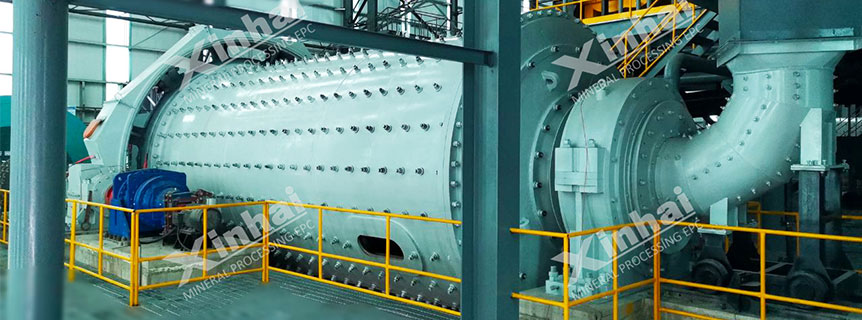
how-to-choose-grinding-mill
Grinding is one of the most critical stages in mineral processing, directly influencing liberation efficiency, downstream recovery, operating costs, and overall plant profitability. Among conventional grinding equipment, ball mills and rod mills remain the most widely used in hard-rock and metal ore beneficiation plants.
This article provides a technical and commercial comparison of ball mill vs rod mill, explains their working principles, advantages, limitations, and typical applications, and offers practical selection guidance for mineral processing plants.
01Overview of Grinding in Mineral Processing
BackIn a typical mineral processing plant, grinding is performed after crushing to:
Reduce particle size to the liberation range
Increase mineral exposure for flotation, leaching, or gravity separation
Ensure consistent feed size for downstream equipment
Grinding usually accounts for:
40–60% of total plant energy consumption
A significant share of CAPEX and OPEX
Therefore, choosing the correct grinding mill is a strategic decision, not merely an equipment choice.
02What Is a Ball Mill?
Back2.1 Ball Mill Working Principle
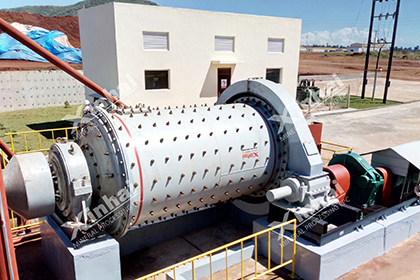
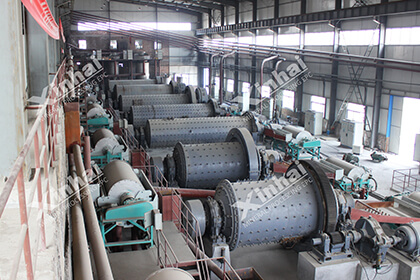
A ball mill is a cylindrical rotating mill filled with steel balls (or ceramic balls). As the shell rotates, grinding media are lifted and then cascade or cataract, generating impact and abrasion forces that reduce ore size.
Grinding mechanisms:
Impact crushing
Abrasive grinding
Attrition
2.2 Typical Ball Mill Features
Grinding media: steel balls (20–150 mm)
Rotation speed: 60–80% of critical speed
Discharge types:
Overflow ball mill
Grate discharge ball mill
2.3 Common Ball Mill Applications
Ball mills are widely used for:
Gold ore grinding
Copper, lead, zinc flotation circuits
Iron ore beneficiation
Regrinding and fine grinding stages
03What Is a Rod Mill?
Back3.1 Rod Mill Working Principle
A rod mill uses long steel rods as grinding media. These rods tumble and roll inside the mill, grinding ore primarily through line contact, rather than point contact as in ball mills.
This grinding action produces a more uniform particle size and reduces over-grinding.
3.2 Typical Rod Mill Features
Grinding media: steel rods (50–100 mm diameter)
Length-to-diameter ratio: typically 1.4–1.6
Usually operated as:
Open-circuit grinding
3.3 Common Rod Mill Applications
Rod mills are typically used for:
Coarse grinding stages
Preparation of feed for ball mills
Gravity separation circuits
Tin, tungsten, and rare metal ores
04Ball Mill vs Rod Mill: Key Differences
Back4.1 Grinding Media and Mechanism
| Item | Ball Mill | Rod Mill |
|---|---|---|
| Grinding media | Steel balls | Steel rods |
| Contact type | Point contact | Line contact |
| Grinding action | Impact + abrasion | Rolling + abrasion |
| Over-grinding risk | Higher | Lower |
4.2 Product Size Distribution
Ball mill
Produces finer particles
Wider particle size distribution
Higher proportion of slimes
Rod mill
More uniform product size
Less fine material generation
Better control of top size
Key takeaway:
If downstream processes are sensitive to fines (e.g., gravity separation), rod mills offer advantages.
4.3 Grinding Efficiency and Energy Consumption
Ball mills:
Higher energy consumption per ton
Better suited for fine grinding
Rod mills:
More efficient for coarse grinding
Lower over-grinding losses
4.4 Capacity and Throughput
Ball mills typically:
Handle higher throughput in fine grinding
Operate efficiently in closed-circuit systems
Rod mills:
Are limited in size and capacity
Are more commonly used for primary or secondary grinding
05Ball Mill vs Rod Mill: Advantages and Disadvantages
Back5.1 Ball Mill Advantages
Capable of very fine grinding
Flexible for different ores
Compatible with flotation, leaching, and regrinding
Mature technology with wide supplier support
5.2 Ball Mill Limitations
Higher over-grinding tendency
Increased slime generation
Higher liner and media wear
Higher power consumption
5.3 Rod Mill Advantages
Produces uniform particle size
Lower over-grinding
Ideal for gravity separation feed
Better liberation of brittle minerals
5.4 Rod Mill Limitations
Limited fine grinding capability
Higher media handling complexity
Less flexible for multi-stage grinding circuits
06How to Choose Between a Ball Mill and a Rod Mill
Back6.1 Ore Characteristics
| Ore Property | Recommended Mill |
|---|---|
| Hard, abrasive ore | Ball mill |
| Brittle ore | Rod mill |
| High clay content | Rod mill (less slime) |
| Fine mineral dissemination | Ball mill |
6.2 Required Product Size
< 0.074 mm → Ball mill
0.5–2 mm controlled product → Rod mill
If the target grind is fine enough for flotation or leaching, a ball mill is usually necessary.
6.3 Downstream Processing Method
| Downstream Process | Preferred Mill |
|---|---|
| Flotation | Ball mill |
| Cyanide leaching | Ball mill |
| Gravity separation | Rod mill |
| Magnetic separation (coarse) | Rod mill |
6.4 Plant Configuration and Circuit Design
Rod mill + ball mill combination:
Rod mill for primary grinding
Ball mill for secondary fine grinding
Common in:
Gold plants
Tin and tungsten circuits
Complex polymetallic ores
6.5 CAPEX and OPEX Considerations
Ball mills:
Higher energy and media costs
Lower process risk for fine grinding
Rod mills:
Lower operating cost for coarse grinding
Less maintenance on downstream equipment due to fewer slimes
07Typical Application Scenarios
Back7.1 Gold Processing Plant
Primary crushing → Rod mill (optional)
Secondary grinding → Ball mill
Flotation or leaching → Ball mill essential
7.2 Tin and Tungsten Processing Plant
Rod mill favored to:
Preserve coarse liberated particles
Maximize gravity recovery
7.3 Iron Ore Beneficiation Plant
Rod mill for coarse grinding before magnetic separation
Ball mill for fine grinding and pellet feed preparation
08Summary: Ball Mill vs Rod Mill Selection Guide
Back| Decision Factor | Choose Ball Mill | Choose Rod Mill |
|---|---|---|
| Fine grinding required | ✓ | |
| Uniform coarse product | ✓ | |
| Flotation / leaching | ✓ | |
| Gravity separation | ✓ | |
| Risk of over-grinding | ✓ | |
| High throughput fine grinding | ✓ |
09Conclusion
BackThe choice between a ball mill and a rod mill is not a question of which is better, but which is more suitable for your ore, process, and economic objectives.
In modern mineral processing plants:
Ball mills dominate fine grinding and flotation-based flowsheets
Rod mills remain valuable for coarse grinding and gravity-focused circuits
A well-designed grinding circuit often combines both, ensuring optimal liberation, recovery, and operating efficiency.


RELATED PRODUCTS
-
Efficient Thickener
-
Efficient Deep Cone Thickener
-
Carbon Screen