+8618335758886
 laura@xinhaimining.com



How Much Does a Lithium Processing Plant Cost?
 zeki
zeki
 Nov 30, 2025
 2186
2186
If you want to know more details about equipment, solutions, etc, please click the button below for free consultation, or leave your requirements!
 Message
 Chat Now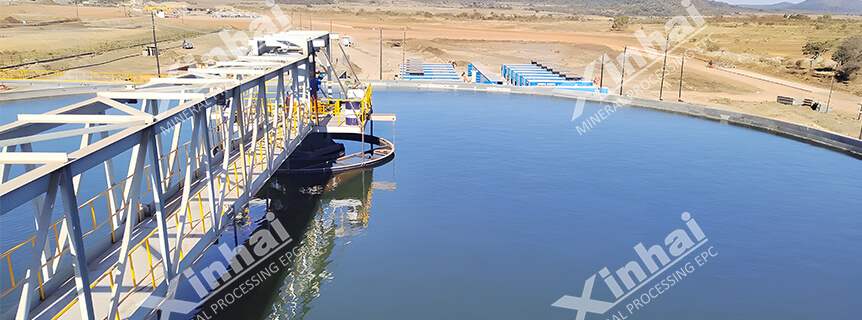
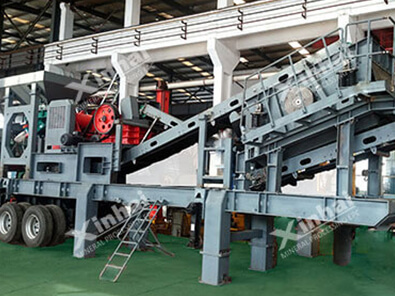
6000tpd Lithium processing plant in Zimbabwe
This article outlines lithium ore processing, focusing on the flotation method and key cost drivers like resource quality and operational factors. It provides typical cost ranges and emphasizes that innovation and sustainable practices are crucial for future competitiveness in the industry.
01Lithium Ore Beneficiation Process
Back1.Core Process Flow: Flotation
This is currently the most mainstream and effective method for treating spodumene.
(1) Crushing and Grinding
Run-of-mine ore undergoes primary, secondary, and tertiary crushing to reduce particle size. It is then ground using ball mills or rod mills to fully liberate (separate) the lithium minerals from the gangue minerals, creating conditions for subsequent separation.
(2) Pre-concentration Preparation
Washing and Desliming: Removes fine slimes from the pulp, as slimes can interfere with the flotation process. High-Intensity Magnetic
Separation: Used as a pre-concentration step to remove magnetic impurities like iron-bearing minerals.
(3) Flotation Separation
Conditioning
Reagent Addition:
Depressants
Activators
Collectors
Flotation Operation
Typically involves a multi-stage circuit of roughing, scavenging, and cleaning to improve lithium recovery rate and concentrate grade.
(4) Concentrate Dewatering
The lithium concentrate pulp from flotation has a very low solids concentration and requires dewatering operations like thickening and filtering to produce a final lithium concentrate product with low moisture content, facilitating transport and sale.
2.Other Auxiliary or Specific Processes
(1) Dense Medium Separation (DMS)
Utilizes the density difference between spodumene and gangue minerals for separation in a dense medium suspension.
Often used as a pre-concentration step to discard a large amount of low-grade waste rock before grinding, thereby increasing the feed grade and reducing subsequent grinding and flotation costs. This method works well for ores with coarse crystal size and simple dissemination.
(2) Hand Sorting
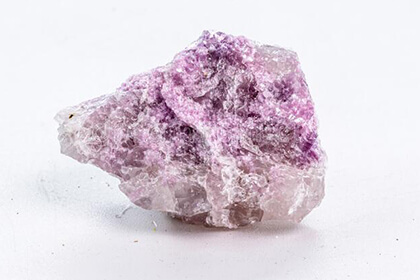
At the mine site, high-grade spodumene lump ore exhibiting grey-white, light green, or pale purple colors and coarse crystals is manually picked. This is a very primitive but effective pre-concentration method.
(3) Chemical Processing
For lithium ores with complex structure, fine disseminated grain size, or those difficult to effectively concentrate by conventional methods (like lepidolite), chemical methods are considered.
Methods: Include the sulfuric acid method, sulfate method, limestone roasting method, etc. The basic principle involves roasting the ore with chemical reagents to convert insoluble lithium silicates into soluble lithium salts, followed by steps like leaching, purification, and precipitation to extract lithium products (e.g., lithium carbonate).
Characteristics: Long process flow, high energy consumption, high cost, but capable of treating low-grade complex ores.
02Factors Affecting the Cost of a Lithium Processing Plant
Back1.Resource Endowment
(1) Ore Type and Grade
Ore Type
Head Grade
(2) Mineral Dissemination Characteristics
Crystal/Grain Size
(3) Associated Minerals and Impurity Composition
Beneficially Associated Elements
Harmful Impurities
2.Process and Operations
(1) Beneficiation Process Flow
Flow Complexity
Grinding Fineness
Recovery Rate
(2) Energy and Consumables Cost
Electricity Cost
Steel Consumption (Grinding Media, Liners)
Reagent Cost
(3) Labor and Maintenance Costs
Labor Costs
Equipment Maintenance and Spare Parts
(4) Economies of Scale
Plant Throughput Capacity
(5) Tailings and Environmental Management
Tailings Storage Facility (TSF) Construction and Maintenance
Water Management and Recycling
Environmental Compliance Costs
3.External Environment
(1) Geographical Location and Infrastructure
Geographical Location
Infrastructure
(2) Logistics and Transportation Costs
(3) Taxes and Government Policies
Mineral Resource Tax/Royalties
Corporate Income Tax
Policy Stability
(4) Macroeconomic and Market Conditions
Inflation
Exchange Rate Fluctuations
Market Supply/Demand and Lithium Price
03Lithium Processing Plant Cost Estimation
BackBeneficiation cost is typically measured in RMB/tonne of run-of-mine ore or USD/tonne of lithium concentrate. Its core components and approximate ranges are as follows:
1.Main Cost Components
(1) Resource Acquisition and Mining
Content: Mining rights, ore mining, transport to the plant.
Characteristics: A front-end cost; this cost is significantly higher for hard rock mines (e.g., spodumene) compared to brine extraction.
(2) Processing Cost (Core Operating Cost)
This is the direct operating expense of the processing plant itself, primarily including:
Electricity Cost: The largest consumable cost, especially for crushing and grinding.
Steel Consumption: Wear parts (steel balls, liners) in crushers and mills.
Reagent Cost: Various chemicals used in the flotation process.
Labor, maintenance, water costs, etc.
(3) Depreciation and Amortization
Content: Allocating the construction investment of the processing plant, tailings storage facility, and other infrastructure over their useful life into an annual cost.
Characteristics: This is a major fixed cost that determines the project's breakeven point.
(4) Management, Finance, and Taxes
Content: Administrative expenses, loan interest, resource taxes, etc.
2.Cost Estimation Range (Using mainstream hard rock spodumene as an example)
(1) Processing Cost (Operating cost only)
Approximately 200 - 400 RMB/tonne ore (approx. 28 - 55 USD/tonne ore).
This is a key indicator for measuring the plant's own operational efficiency.
(2) Delivered Full Cost (Mine to Concentrate)
The cost allocated to each tonne of lithium concentrate, including all costs (mining, processing, management, taxes, depreciation, logistics, etc.).
The range is wide, approximately 400 - 800 USD/tonne of lithium concentrate.
(3) Top-tier Resources (High grade, easy to process): Can be below 400 USD/tonne.
(4) Average Resources: Generally 500 - 700 USD/tonne.
(5) Low-grade or difficult-to-process resources: May exceed 800 USD/tonne.
3.Most Critical Influencing Factors
(1) Head Grade
The most critical factor. Higher grade leads to lower costs.
(2) Ore Processability
How easily the minerals liberate and separate directly impacts power and reagent consumption.
(3) Energy Prices
Electricity price is the largest variable operating cost.
(4) Economies of Scale
Large-scale plants can effectively dilute fixed costs.
04Conclusion
BackBefore constructing a lithium processing plant, it is essential to conduct detailed exploration of the resource endowment, prioritizing deposits with high grade and easy processability, and strictly control investment and operating costs through optimized process design and economies of scale. In the future, as high-quality resources become increasingly scarce, the key to development for processing plants lies in continuously reducing costs and improving efficiency through technological innovation (e.g., sensor-based sorting, efficient reagent recovery). Simultaneously, green and low-carbon practices (e.g., energy consumption and tailings management) and comprehensive resource recovery capabilities will become the core competitiveness of the industry.