+8618234403483
 yanzhang19990421@gmail.com



Manganese Mining Guide
 zeki
zeki
 Dec 30, 2025
 1255
1255
If you want to know more details about equipment, solutions, etc, please click the button below for free consultation, or leave your requirements!
 Message
 Chat Now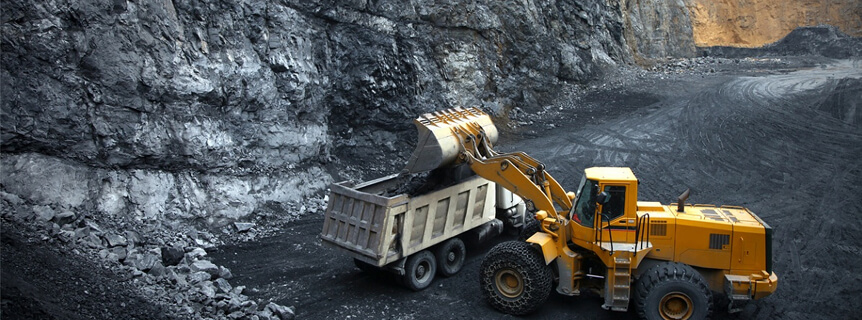
open-pit manganese mining
Welcome to this article. As a critical raw material in modern industry, particularly in the fields of new energy batteries and steel metallurgy, the mining method of manganese directly impacts resource utilization efficiency, production costs, and environmental effects. This article systematically analyzes the two mainstream mining models for manganese ore – underground mining and open-pit mining – providing a comparative explanation of their process flows and core equipment, while also looking ahead to future trends in intelligence and sustainability. Through this article, you will gain a rapid understanding of the technical logic and development direction of manganese ore mining.
01Open-Pit Mining Process for Manganese Ore
Back1. Pre-Mining Preparation
(1) Stripping Work
First, the overburden (topsoil, rock, etc.) above the ore body is removed to expose it.This is the initial step for all open-pit mining.
(2) Development System
Establish working benches (steps) leading to the pit and transport passages (such as ramps and access roads) to form a complete system for transporting ore and waste rock.
2. Core Mining Process Flow
The core of open-pit mining can be summarized as four continuous steps: "Drilling – Blasting – Loading – Hauling."
(1) Drilling and Blasting
Purpose: To fragment hard ore and rock, making it loose and suitable for loading.
Main Processes:
Down-The-Hole (DTH) Drill Rigs: Suitable for medium-hard to hard ore/rock (e.g., most carbonate manganese ores), this is the mainstream drilling method.
Rotary Drill Rigs (with Tricone Bits): Used in large-scale mines for very hard rock.
No Blasting Required: For soft oxide manganese ores or weathered ore layers, direct excavation by excavators is possible without the drilling and blasting stage.
(2) Loading Work
Purpose: To load the fragmented ore or directly stripped material into haulage equipment.
Main Equipment:
Hydraulic Excavators / Mechanical Power Shovels
The most commonly used loading equipment, offering flexibility and high efficiency.
Front-End Loaders and Wheel Loaders
Suitable for situations with wider working faces and shorter haul distances within the pit.
(3) Hauling Work
Purpose: To transport ore to the processing plant or stockpile, and waste rock to the dump site.
Main Methods:
Truck Haulage (Off-Highway Dump Trucks)
Rail Transport
Conveyor Belt Transport
Combined Transport Systems
3. Waste Dumping
Purpose: To systematically deposit stripped waste rock in designated dump areas.
Equipment:
Off-Highway Dump Trucks
Bulldozers
02Underground Mining Process for Manganese Ore
BackCore Flow: Development → Preparation → Extraction → Backfilling/Stope Treatment
1. Development
(1) Purpose
To establish permanent access from the surface to the ore body, forming a complete system for transport, ventilation, drainage, and movement of personnel and materials.
(2) Main Works
Excavation of shafts, declines/ramps, adits, along with shaft stations, main crosscuts, and level haulage drifts.
2. Preparation
(1) Purpose
Within a developed mining level, to prepare for extraction by driving a series of openings that divide the ore body into individual, extractable "stopes" or "panels."
(2) Main Works
Driving level haulage drifts, raises, ore passes, drill drifts, etc.
3. Extraction
Purpose: To break and extract ore in large quantities from the prepared stopes. This is the core production phase. The specific method is chosen based on the stability of the ore body and surrounding rock. Common methods for manganese ore include:
(1) Room and Pillar Mining
(2) Shrinkage Stoping
(3) Sublevel / Block Caving
(4) Cut and Fill Stoping
4. Backfilling and Stope Treatment
(1) Backfilling
(2) Stope Treatment
For voids created by methods like Room and Pillar or Shrinkage Stoping, treatment—based on back stability—may involve forced caving of the hanging wall, leaving permanent support pillars, or planned backfilling. This is to prevent large-scale ground pressure activity and ensure safe production.
5. Auxiliary Systems
(1) Mine Ventilation
Provides fresh air flow and exhausts toxic gases and dust.
(2) Mine Drainage
Removes underground water inflow.
(3) Mine Hoisting and Transport
Moves ore to the surface and transports personnel, materials, and equipment to work sites.
(4) Power Supply
Provides electricity, compressed air, etc.
(5) Safety Monitoring
Real-time monitoring of ground pressure, gases, hydrology, etc.
03Introduction to Major Mining Equipment
Back1. Main Equipment for Manganese Underground Mining
(1) Drilling & Rock Drilling Equipment
Drill Jumbos
Leg-Air Feed Rock Drills
(2) Ore Mucking and Loading Equipment
LHDs (Load-Haul-Dump vehicles)
Vibrating Ore Feeders
(3) Horizontal Haulage Equipment
Mine Trucks
Locomotives and Mine Car Trains
(4) Vertical Hoisting Equipment
Mine Hoists
Hoisting Skips/Cages
Conveyor Belts (for inclined/vertical transport)
(5) Ground Support & Safety Equipment
Bolting Jumbos
Concrete Shotcreting Machines
(6) Auxiliary Support Equipment
Main & Auxiliary Ventilation Fans
Mine Dewatering Pumps
2. Main Equipment for Manganese Open-Pit Mining
(1) Drilling & Blasting Equipment
Rotary Drill Rigs
DTH Drill Rigs
(2) Loading Equipment
Hydraulic Excavators
Mechanical Power Shovels
Wheel Loaders
(3) Haulage Equipment
Off-Highway Dump Trucks
Semi-Continuous Mining Systems (e.g., crusher-conveyor systems)
(4) Auxiliary & Maintenance Equipment
Bulldozers
Motor Graders
Water Trucks
Large Crawler Cranes
04Conclusion
BackManganese ore mining is divided into two primary models: underground and open-pit. Underground mining relies on compact equipment like drill jumbos and LHDs operating within tunnels, whereas open-pit mining utilizes large-scale equipment such as rotary drills, massive power shovels, and haul trucks for bulk operations.
Looking ahead, manganese ore mining is poised to develop towards greater intelligence and environmental sustainability. The adoption of technologies like remote control, autonomous operation, and data analytics will enhance safety and efficiency. Concurrently, increased emphasis will be placed on ecological protection and resource recycling throughout the mining lifecycle.


RELATED PRODUCTS
-
Jig
-
Pregnant Solution Purification Tank
-
Hydraulic Cone Crusher