+8618234403483
 yanzhang19990421@gmail.com



Fluorite Acid Leaching Purification Process Explained
 zeki
zeki
 Sep 23, 2026
 23
23
If you want to know more details about equipment, solutions, etc, please click the button below for free consultation, or leave your requirements!
 Message
 Chat Now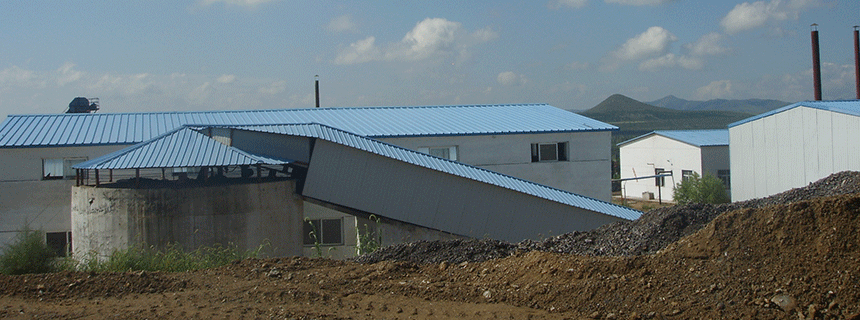
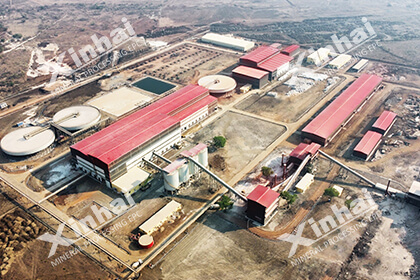
Mongolian-Fluorite-Ore-Processing-Plant
01Principle of Fluorite Acid Leaching Purification
BackFluorite is mainly composed of calcium fluoride, which features stable chemical properties and is barely soluble in weak acid systems such as dilute hydrochloric acid and dilute nitric acid. Its associated carbonate gangue, iron-aluminum oxides and other impurities readily react with dilute acid and dissolve into the acid liquor. Taking advantage of this physical and chemical property difference, acid leaching removes impurities on the surface and inside fractures of fluorite particles to realize mineral purification.
02Process Flow of Fluorite Acid Leaching
BackThe overall production flow: crushing & grinding – flotation – dewatering – acid leaching – water washing – neutralization – dewatering – drying. The operating procedures of core acid leaching section are as follows:
1.Preheating leaching
Prepare dilute hydrochloric acid of specified concentration, add fluorite concentrate after heating. The acid dosage accounts for 8%–12% of the material mass, followed by insulated reaction for 2–2.5 h to fully dissolve carbonate impurities.
2.Compound reagent impurity removal
After solid-liquid separation, adopt mixed solution of hydrochloric acid and oxalic acid for agitated leaching at ambient temperature for 1–1.5 h to selectively eliminate iron oxide contamination on particle surfaces, then filter and discharge waste acid.
3.Water washing and neutralization
Carry out repeated agitated water washing to remove residual acid trapped in particles. Add lime slurry to adjust pulp pH to 7.0–8.0 and stop continuous corrosion of equipment and materials by acidic media.
4.Advanced treatment (optional)
For high-silica fluorite, low-concentration hydrofluoric acid can be used for short-time treatment before neutralization to dissolve fine quartz inclusions. Concentration and retention time must be strictly controlled to prevent fluorite loss.
5.Final product preparation
The treated material is filter-pressed for dewatering and dried to obtain high-purity fluorite fine powder.
03Main Influencing Factors of Fluorite Acid Leaching
Back1.Acidity condition
Acid leaching is essentially the chemical reaction between impurities and acid. Within a reasonable range, properly increasing acid concentration raises the quantity of reactive molecules and accelerates impurity dissolution to improve purification performance.
2.Leaching temperature
Temperature is a decisive factor for acid leaching performance. Carbonate impurities can react with acid at room temperature but at a low rate; temperature rise can markedly boost reaction efficiency.
3.Leaching time
With stable acid concentration and temperature, leaching duration determines the completeness of impurity removal.
4.Liquid-solid ratio
The liquid-solid ratio directly affects pulp fluidity and reagent-mineral contact efficiency.
04Formation Mechanism of White Film on Fluorite Finished Products
BackThere are three primary causes: first, incomplete reagent removal and dewatering after flotation. Residual flotation reagents precipitate under acidic conditions and adsorb onto mineral particles; second, insufficient water washing after acid leaching. Residual acid trapped in particle pores generates calcium salt precipitates during neutralization and adheres to particle surfaces; third, materials contact ferrous equipment during transportation. Hydrolysis of iron ions produces hydroxide precipitates, which combine with salts to form the white film.
05Preventive Measures for White Film on Products
Back1.Optimize transportation equipment
Plastic and fiberglass pipelines and equipment are preferred for conveying wet materials after acid leaching. Ordinary ferrous equipment shall not directly contact wet pulp to avoid iron ion contamination at the source.
2.Strengthen pre-treatment procedures
Pressure filtration shall be applied to flotation rough concentrate before acid leaching for thorough reagent removal and dewatering. Flotation reagents are prohibited from entering the acid leaching tank to prevent film formation caused by reagent precipitation.
3.Standardize acid leaching equipment and parameters
Acid leaching reactors and tanks shall be lined with acid-resistant anti-corrosion materials, and anti-corrosion layers need regular inspection and maintenance. Acidity, liquid-solid ratio and reaction duration shall be strictly controlled according to mineral processing test results, and arbitrary adjustment of process parameters is forbidden.
4.Fine water washing and neutralization
Adopt agitated washing equipment with bottom water feeding and top overflow to guarantee full rinsing of particles. Lime milk shall be dosed uniformly with continuous stirring during neutralization to avoid sharp local pH fluctuation and massive precipitate generation. Secondary water washing is performed after neutralization for impurity removal.
5.Timely dewatering and drying
Materials after water washing and neutralization shall be immediately filter-pressed and dried. Long-term stacking of wet materials should be avoided to prevent secondary salt precipitation and film formation on particle surfaces.
06Conclusion
BackThe purification performance of fluorite acid leaching depends on process parameters and control precision of each procedure. In practical production, mineral processing tests shall be conducted according to the mineral composition of run-of-mine ore to formulate customized process schemes. Core parameters including acidity, temperature and retention time should be strictly controlled, and full procedures from pre-treatment, acid leaching, water washing to drying must be standardized. Stable production of high-quality fluorite concentrate can be achieved to meet the demands of high-end industrial applications.


RELATED PRODUCTS
-
Hydrocyclone Unit
-
Mobile Crushing and Screening Equipment
-
Surface Loading Equipment