+8618234403483
 yanzhang19990421@gmail.com



How to Build a Gold CIL Processing Plant?
 Sheena
 May 18, 2026
 607
607
If you want to know more details about equipment, solutions, etc, please click the button below for free consultation, or leave your requirements!
 Message
 Chat Now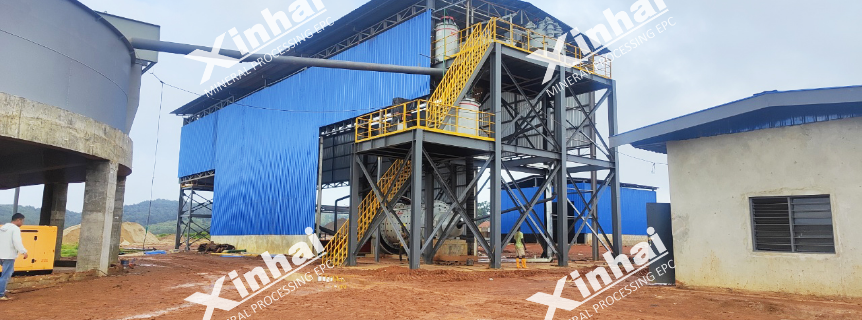
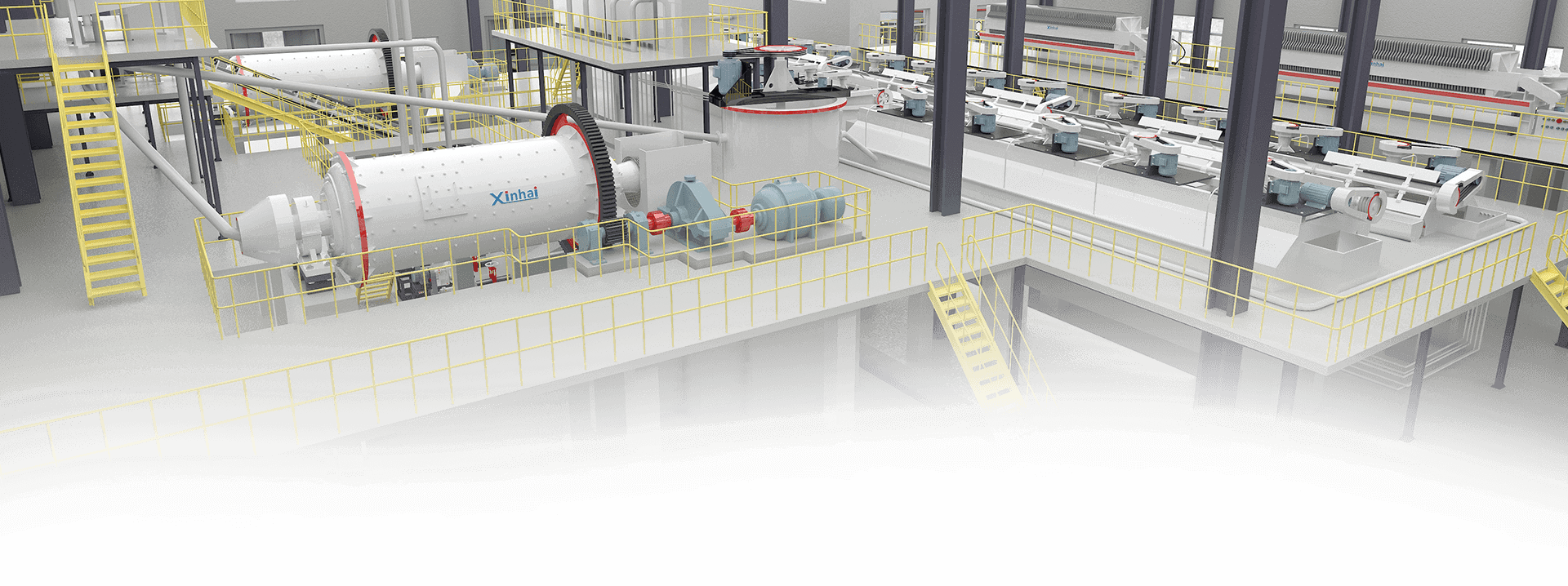
500TPD Gold CIL Plant in Ghana
Building a gold CIL (Carbon-in-Leach) processing plant involves much more than installing cyanide tanks and adsorption equipment. The efficiency of a CIL plant depends largely on how well the process is matched to the characteristics of the ore, because gold recovery is controlled by mineralogy, grind size, slurry chemistry, and adsorption performance throughout the circuit.
The CIL process combines cyanide leaching and activated carbon adsorption into a single stage, allowing dissolved gold to be adsorbed directly onto carbon while leaching is still occurring. Compared with traditional CIP systems, this arrangement often improves adsorption efficiency and reduces the overall footprint of the plant.
01Why Ore Characteristics Matter in CIL Plant Design
BackThe design of a CIL plant should always begin with understanding the ore itself. Gold may occur as free particles, be associated with sulfide minerals, or exist within more complex refractory ores, and each condition influences how the ore responds to cyanidation. Factors such as cyanide consumption, oxygen demand, preg-robbing behavior, and liberation size all affect recovery and operating cost.
For this reason, metallurgical testing is usually the foundation of process design. Laboratory testing helps determine grind size requirements, expected recovery, leaching kinetics, and adsorption behavior before the plant layout is finalized. In practice, many operational problems can be traced back to insufficient ore characterization during the early stages of the project.
02Crushing and Grinding Circuit Design
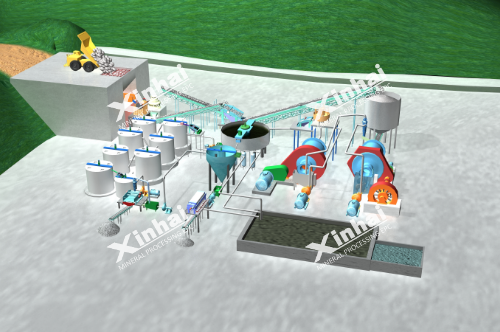
BackThe first major section of a CIL plant is the crushing and grinding circuit, where ore is prepared for cyanide leaching. Crushing is typically carried out using jaw crushers and cone crushers to reduce large run-of-mine ore into smaller particles suitable for milling. The grinding stage then uses ball mills operating in closed circuit with hydrocyclones to achieve the required liberation size.
In many gold CIL operations, the target grind may range between 70–90% passing 75 microns, although the optimal size depends entirely on the ore. If grinding is too coarse, gold-bearing minerals may remain locked and unrecoverable, while excessive grinding can create slimes that negatively affect downstream adsorption and slurry handling. The purpose of grinding is therefore not simply size reduction, but achieving the balance between liberation and process efficiency.
03The Leaching and Adsorption Circuit
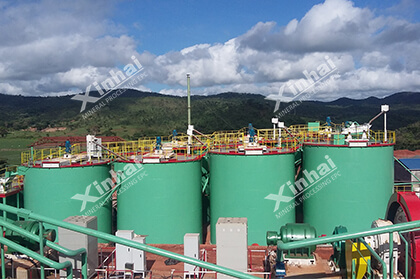
BackThe leaching and adsorption section forms the core of the CIL process. After grinding, the slurry enters a series of large agitated tanks where cyanide solution dissolves gold into a soluble complex. Activated carbon is added directly into these tanks so that dissolved gold can be adsorbed immediately as leaching continues.
This simultaneous leaching and adsorption process helps maintain low dissolved gold concentrations in the slurry, which can improve overall leaching efficiency. Most CIL circuits consist of multiple tanks arranged in series to provide sufficient residence time for both gold dissolution and carbon adsorption. The number and size of these tanks are determined by ore characteristics, plant capacity, and required recovery.
04Why Tank Design Is Critical
BackTank performance has a major influence on gold recovery because poor mixing or oxygen transfer can reduce cyanidation efficiency. Agitators are used to keep solids suspended and maintain uniform slurry conditions throughout the tank. In many plants, air injection or oxygen addition systems are also installed to support the cyanidation reaction.
Tank design must also consider slurry density, retention time, and carbon concentration. If agitation is insufficient, solids may settle and reduce effective leaching volume, while poor oxygen distribution can slow gold dissolution. These factors explain why tank design is often one of the most carefully optimized parts of a CIL plant.
05Activated Carbon Handling and Gold Recovery
BackActivated carbon management is another key part of the process because adsorption efficiency depends heavily on carbon activity and movement through the circuit. Carbon is usually transferred counter-currently between tanks so that the highest-grade carbon contacts the richest dissolved gold solution. Interstage screens are installed to retain carbon while allowing slurry to flow through the circuit.
Once the carbon becomes loaded with gold, it is removed from the system and sent to the elution stage. During elution, gold is stripped from the carbon using hot caustic cyanide solution, producing a concentrated gold-bearing solution. This solution then passes through electrowinning cells where gold is deposited onto cathodes before being smelted into doré bars.
06Tailings Treatment and Environmental Considerations
BackModern CIL plant construction must also consider environmental management and cyanide control. Residual cyanide in tailings often requires detoxification before discharge, while water recovery systems are commonly installed to reduce both operating cost and environmental impact. In many regions, environmental compliance plays an equally important role in plant design as metallurgical performance.
Tailings handling systems must therefore be integrated into the overall flow sheet rather than treated as separate infrastructure. Poor tailings management can increase operating risk and significantly affect long-term project sustainability.
07Equipment Selection for a Gold CIL Plant
BackEquipment selection should always be based on process requirements rather than capacity alone. Crushers, mills, pumps, agitators, screens, and adsorption tanks must operate together as a balanced system because bottlenecks in one section can reduce the efficiency of the entire plant. Reliable operation depends not only on individual equipment quality, but also on how well all stages of the process are integrated.
In many successful projects, the best performance comes from optimizing the relationship between equipment, ore characteristics, and operating conditions rather than simply selecting larger machines. This is one reason customized plant design often performs better than standard flow sheet templates.
08Conclusion
BackBuilding a gold CIL processing plant requires balancing metallurgical performance, equipment selection, operating cost, and environmental management within a single integrated process. From crushing and grinding to leaching, adsorption, and gold recovery, every stage of the flow sheet influences overall plant efficiency. When the process is designed around ore characteristics and supported by proper testing, a CIL plant can achieve stable operation and high long-term gold recovery.


RELATED PRODUCTS
-
Tilted Plate Thickener
-
Centrifugal Separator
-
Round Vibrating Screen