+8618335758886
 laura@xinhaimining.com



How is Graphite Mined?
 Sheena
 Oct 13, 2026
 31
31
If you want to know more details about equipment, solutions, etc, please click the button below for free consultation, or leave your requirements!
 Message
 Chat Now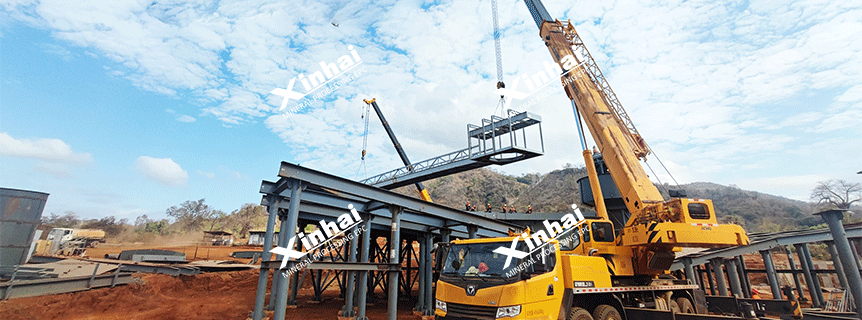
Open-Pit-Graphite-Mining
Natural graphite deposits are found in different geological settings, and their mineral composition, graphite content, and crystal characteristics determine how the ore is mined and processed. Unlike some metallic ores, graphite ore presents a particular processing challenge: the objective is not only to increase carbon content but also to preserve the properties of the graphite flakes where flake graphite is being produced. This article explains the main graphite mining methods, processing stages, equipment requirements, and key factors that influence project design.
01What is Graphite Mining?
BackGraphite mining is the extraction of natural graphite-bearing ore from the ground, followed by processing to separate graphite from surrounding rock and unwanted minerals. The aim is to produce a graphite concentrate that meets the grade, particle-size, and quality requirements of its intended market.
Natural graphite is commonly classified into three main types: flake graphite, amorphous graphite, and vein or lump graphite. These types differ in crystal characteristics and geological occurrence, so they do not necessarily require the same mining and processing methods. The U.S. Geological Survey describes natural graphite deposits and discusses how their geological settings relate to these different forms of graphite.
Flake graphite is commonly found disseminated in metamorphic rocks and is often upgraded through flotation. Amorphous graphite is typically microcrystalline, while vein graphite occurs in distinct veins and may have a different mining and preparation route. Understanding which type occurs in a deposit is the first step in developing an appropriate mining plan.
Before production begins, geological investigation and sampling are used to evaluate the deposit's grade, distribution, thickness, and mineralogical characteristics. These results help determine the mining method and establish whether the ore can be economically upgraded to the required product quality.
02What Are the Main Graphite Mining Methods?
BackThe two principal mining methods for natural graphite deposits are open-pit mining and underground mining. The choice depends on orebody depth, geometry, overburden thickness, ground conditions, production scale, and project economics.
2.1 Open-Pit Graphite Mining
Open-pit mining is generally considered when a graphite deposit occurs relatively close to the surface and the overburden can be removed economically. The operation exposes the orebody so that graphite-bearing rock can be excavated and transported to the processing plant.
A typical operation involves drilling, blasting where necessary, loading, and hauling. Waste rock is separated from the ore, while the graphite-bearing material is delivered to the crushing plant.
Open-pit mining can provide efficient access to large deposits and allows the use of conventional loading and hauling equipment. However, the stripping ratio, pit design, haulage distance, and dilution of ore with waste rock can all affect operating costs.
2.2 Underground Graphite Mining
Underground mining may be suitable when the graphite deposit lies too deep for economical open-pit extraction or when its geometry favors underground development.
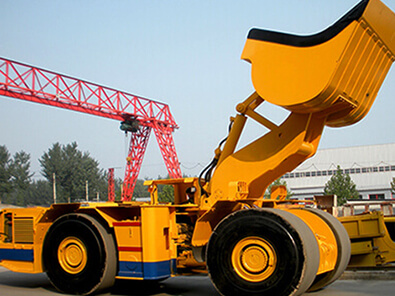
The operation requires access tunnels or shafts, underground ore production, ventilation, ground support, and an ore-handling system. These requirements generally make mine planning more complex than in a comparable shallow deposit.
The final choice between open-pit and underground mining should be based on geological and engineering studies rather than graphite grade alone. A high-grade deposit may still be uneconomic if access and extraction costs are excessive.
03How Is Graphite Ore Processed?
BackAfter extraction, graphite-bearing ore is transported to the processing plant, where the main objective is to separate graphite from gangue minerals while achieving the required concentrate quality.
A typical flake graphite beneficiation process can be summarized as:
Mining → Crushing → Grinding → Flotation → Concentrate Cleaning → Dewatering → Graphite Concentrate
Depending on the ore, the plant may also require classification, staged regrinding, additional flotation stages, drying, or further purification. Not every operation is necessary for every deposit.
The most important processing consideration is the relationship between graphite liberation and flake size. Grinding must expose graphite particles sufficiently for separation, but excessive size reduction can damage valuable flakes. Consequently, the flowsheet should be designed around the ore's mineralogical characteristics and the required final product.
3.1 Crushing: Preparing Graphite Ore for Processing
Run-of-mine graphite ore commonly contains large rocks that cannot be fed directly into grinding or flotation equipment. Crushing reduces the material to a suitable size for subsequent processing.
A jaw crusher is often used for primary crushing, while a cone crusher or another suitable secondary crusher may be included when additional size reduction is required. Vibrating screens can control the product size and return oversized material for further crushing.
The crushing circuit should achieve two objectives: provide a consistent feed for downstream processing and avoid unnecessary production of fines. This is particularly important for flake graphite, where preserving the original flake structure can be economically significant.
The appropriate crushing stages depend on ore hardness, feed size, plant capacity, and the liberation characteristics of the graphite-bearing rock. A more complicated crushing circuit is not automatically better if a simpler arrangement can achieve the required feed size.
3.2 Grinding and Classification: Liberating Graphite
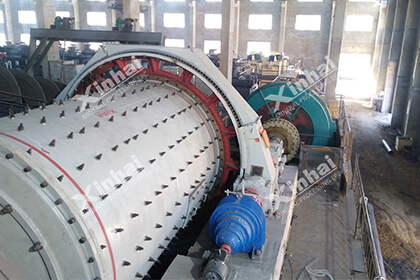
Grinding releases graphite flakes from the surrounding minerals so that they can be separated during flotation. However, graphite is relatively soft and has a layered crystal structure, making particle-size control especially important in flake graphite processing.
If grinding is insufficient, graphite remains locked with gangue and may report to the wrong product during flotation. If grinding is too intensive, larger flakes may break into smaller particles, potentially reducing the yield of valuable coarse-flake products.
For this reason, grinding conditions should be determined through mineralogical examination and beneficiation tests. Classification may also be used to separate particles according to size and direct them to appropriate downstream stages.
A carefully designed circuit may use staged grinding and flotation rather than grinding the entire feed to a uniformly fine size at the beginning. This approach allows the plant to recover liberated graphite earlier while limiting unnecessary size reduction of the remaining material.
3.3 Flotation: Separating Graphite from Gangue
Flotation is one of the most widely used methods for upgrading natural graphite ore. Graphite is naturally hydrophobic, meaning that its surface has an affinity for air bubbles under suitable conditions. This property allows graphite particles to attach to bubbles and rise into the froth, while much of the hydrophilic gangue remains in the slurry.
In a typical flotation circuit, the prepared ore is mixed with water and appropriate reagents before entering flotation cells. Air bubbles carry graphite particles into the froth layer, which is collected as a graphite-rich product.
The flotation circuit may include rougher flotation to recover graphite, followed by additional cleaning stages to improve concentrate quality. Regrinding may be introduced between stages when graphite remains locked with gangue minerals.
The purpose of each stage is different: rougher flotation emphasizes recovery, while cleaning stages focus on removing remaining impurities. Their configuration depends on feed grade, gangue composition, liberation size, and the required concentrate specification.
3.4 Concentrate Cleaning and Grade Improvement
The initial graphite concentrate may still contain silicate minerals and other impurities. Additional flotation cleaning and selective regrinding can improve the carbon grade by liberating graphite from the remaining gangue and separating the newly exposed particles.
However, upgrading graphite is not simply a matter of repeating grinding and flotation as many times as possible. Each additional stage adds equipment, energy requirements, and operating costs, while excessive grinding can reduce valuable flake sizes.
The goal is to balance concentrate grade, recovery, particle-size distribution, and product value. For flake graphite, the distribution of flakes across different size fractions can be an important part of product evaluation, so the circuit should be designed with both purity and flake preservation in mind.
If the intended application requires a higher purity than physical beneficiation can achieve, a separate purification stage may be necessary. Chemical or thermal purification can be considered depending on product specifications, impurity characteristics, and environmental requirements. These processes are downstream treatment options rather than mandatory stages in every graphite mine.
3.5 Dewatering and Final Product Preparation
After flotation and concentrate cleaning, graphite concentrate contains water and must be dewatered before storage, transportation, or further processing.
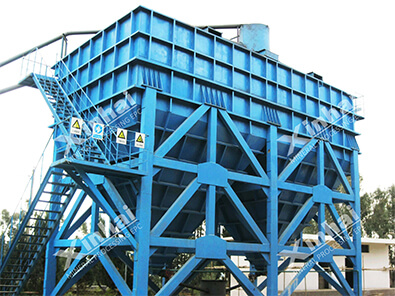
A thickener can increase the solids concentration and recover process water for reuse. Filtration then removes additional water to produce a more manageable concentrate. Depending on product requirements, drying and particle-size classification may follow.
A typical route is: Graphite Concentrate → Thickening → Filtration → Drying if Required → Product Classification
The final preparation steps depend on the customer's specifications. Industrial graphite products may have different requirements for carbon content, moisture, particle size, and flake-size distribution. Water recovery is also important for plant economics. Recycling clarified process water can reduce fresh-water demand, although the water quality must remain suitable for the flotation circuit.
04What Factors Affect Graphite Mining and Processing?
BackThe performance and economics of a graphite project depend on both mining conditions and beneficiation characteristics. Several factors should be evaluated before finalizing the plant design.
4.1 Graphite Grade and Mineralogy
The head grade indicates the amount of graphite-bearing material in the ore, but it does not determine the complete processing strategy. Mineralogy is needed to establish how graphite occurs and which gangue minerals must be removed.
4.2 Flake Size and Liberation
For flake graphite, preserving larger flakes may improve product value. The grinding circuit should therefore achieve sufficient liberation without unnecessary flake breakage.
4.3 Gangue Composition
Quartz, silicate minerals, and other impurities affect flotation performance and concentrate quality. The appropriate cleaning strategy depends on the types of minerals present and how closely they are associated with graphite.
4.4 Mining Conditions
Orebody depth, thickness, stripping ratio, ground conditions, and haulage distance influence the choice between open-pit and underground mining and affect the overall cost of supplying the processing plant.
4.5 Final Product Specifications
Different markets require different combinations of carbon grade, flake-size distribution, moisture, and impurity levels. The intended application should be considered from the beginning because it influences the target concentrate and the amount of further processing required.
05Conclusion
BackGraphite is mined using open-pit or underground methods according to the depth and geometry of the deposit. The extracted ore is then processed through crushing, controlled grinding, flotation, concentrate cleaning, and dewatering to produce a graphite concentrate. Additional purification may be required for certain high-purity applications.
For flake graphite, the key processing challenge is to achieve adequate liberation while preserving valuable flake sizes. This makes grinding strategy, flotation performance, and concentrate cleaning particularly important in the design of the beneficiation plant.
A successful graphite project begins with understanding the deposit and its intended product requirements. Mineralogical analysis, representative sampling, and beneficiation testing should guide the selection of the mining method, process flowsheet, and equipment so that recovery, product quality, and project economics can be balanced.


RELATED PRODUCTS
-
Tilted Plate Thickener
-
Centrifugal Separator
-
Underground Loading Equipment