+8618335758886
 laura@xinhaimining.com



Tin Ore Processing Flow: A Comprehensive Guide
 zeki
zeki
 Oct 31, 2025
 3337
3337
If you want to know more details about equipment, solutions, etc, please click the button below for free consultation, or leave your requirements!
 Message
 Chat Now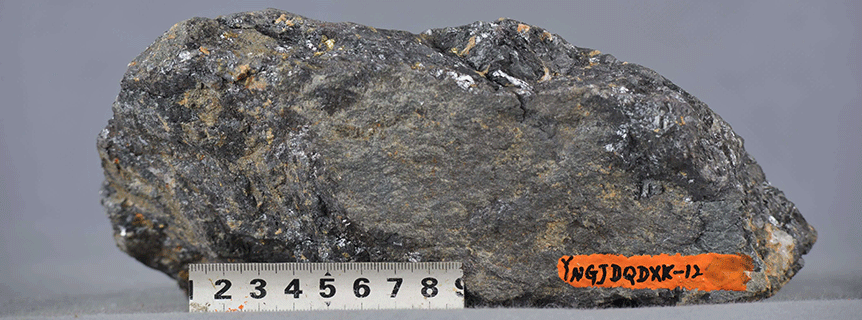
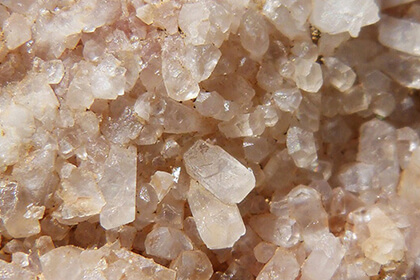
Tin ore
The tin ore processing flow is a series of continuous processes aimed at enriching raw ore and refining it into high-grade tin concentrate. Its core mainly includes crushing and screening, grinding and classification, gravity pre-concentration, and complex cleaning and dewatering operations, to efficiently recover valuable cassiterite.
01 Tin Ore Extraction and Preliminary Processing
BackThe extraction and preliminary processing of tin ore primarily rely on physical beneficiation methods because the physical properties (especially density) of cassiterite (SnO₂) and gangue minerals differ significantly. The entire process aims to gradually enrich the cassiterite and remove impurities.
Step 1: Pre-treatment — Crushing and Grinding
(1) Primary Crushing
(2) Secondary/Tertiary Crushing
(3) Grinding
Step 2: Pre-concentration — Waste Removal and Classification
(1) Screening/Classification
(2) Waste Removal (Optional but Important)
Step 3: Core Separation — Gravity Concentration
This is the most critical step, utilizing the high density of cassiterite (6.4-7.1 g/cm³) for separation.
(1) Roughing: Jigs are widely used to treat coarser sand-sized particles, quickly obtaining some qualified concentrate and discarding a large amount of tailings.
(2) Scavenging and Cleaning: For finer-grained materials, shaking tables are primarily used. Shaking tables can precisely separate minerals into concentrate (high-grade cassiterite), middlings (require re-processing), and tailings (waste) based on differences in density and particle size.
Step 4: Cleaning and Dewatering
(1) Cleaning:
The rough concentrate obtained from gravity separation may contain other heavy metal minerals (such as iron, tungsten, sulfur, etc.). Depending on their different properties, the following methods are used:
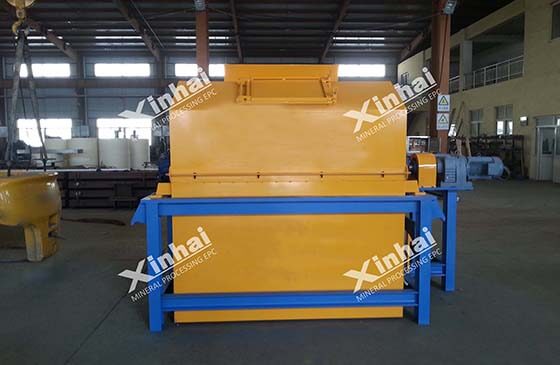
Magnetic Separation: To remove magnetic minerals like wolframite, pyrrhotite.
Flotation: To remove sulfide minerals like pyrite, arsenopyrite.
Electrostatic Separation (Less commonly used): Utilizes differences in conductivity for separation.
(2) Dewatering:
Thickening: The concentrate slurry is sent to a thickener to initially remove most of the water through gravity settling.
Filtration: Equipment like vacuum filters are used to form the thickened concentrate into filter cake with low moisture content, facilitating transport, sale, or subsequent smelting.
02 Tin Ore Processing Equipment
Back(1) Crushing — Jaw Crusher, Cone Crusher
(2) Grinding and Classification — Ball Mill, Spiral Classifier, Hydrocyclone
(3) Gravity Separation — Jig, Shaking Table, Spiral Chute, Centrifugal Concentrator
(4) Cleaning — Magnetic Separator, Flotation Machine
(5) Dewatering — Thickener, Vacuum Filter
(6) Auxiliary/Pre-sorting — Log Washer/Scrubber, Sensor-based Sorter (e.g., XRT)
03 Advanced Tin Ore Processing Technologies for Various Applications
Back(1) Innovations in Pre-treatment and Pre-sorting
Sensor-based Sorting Technology (e.g., XRT)
(2) Deepening and Precision of Core Separation Technologies
High-efficiency Ultra-fine Grinding Technology (e.g., Vertical Stirred Mill)
Advanced Gravity Concentration Equipment (e.g., Enhanced Gravity Concentrators)
Major Breakthroughs in Flotation Technology (e.g., New Reagents, Carrier Flotation)
(3) Intelligence and Process Control
Full-process Automation and Expert Systems
Mineral Liberation Analysis (MLA / TIMA) Systems
04 How to Achieve Sustainability in Tin Ore Processing
Back(1) Efficient Beneficiation and Recovery:
Adopt more advanced gravity, flotation, and magnetic separation technologies to improve tin recovery rates and reduce tailings generation from the source.
(2) Green Smelting Technology:
Use electric furnaces to replace traditional coal-fired reverberatory furnaces, significantly reducing carbon emissions.
Explore alternative processes like hydrometallurgy, which operate at lower temperatures with lower emissions.
(3) Resource Utilization of Tailings and Waste:
Tailings Reprocessing: Use new technologies to recover residual tin and other valuable metals from old tailings, turning waste into wealth.
Comprehensive Tailings Utilization: Use tailings for building materials (e.g., bricks, cement) or for backfilling mined-out areas.
Closed-loop Water Resource Management: Build advanced wastewater treatment plants to achieve internal recycling of process water and "near-zero discharge".
05 Conclusion
BackThe modern tin ore processing flow is a precision system centered on gravity concentration. It starts by liberating cassiterite particles through crushing and grinding. Then, equipment like jigs and shaking tables are used to concentrate and separate the cassiterite based on its high density. Subsequently, processes like magnetic and flotation separation are combined to remove impurities. Finally, dewatering yields qualified tin concentrate. The entire process is interlinked, designed to efficiently and economically extract valuable tin resources from the raw ore.


RELATED PRODUCTS
-
JJF Flotation Cell
-
Desorption Electrolysis System
-
Efficient Improved Thickener