+8618335758886
 laura@xinhaimining.com



7 Key Steps in the Antimony Beneficiation Process
 Laura
Laura
 Dec 29, 2025
 1053
1053
If you want to know more details about equipment, solutions, etc, please click the button below for free consultation, or leave your requirements!
 Message
 Chat Now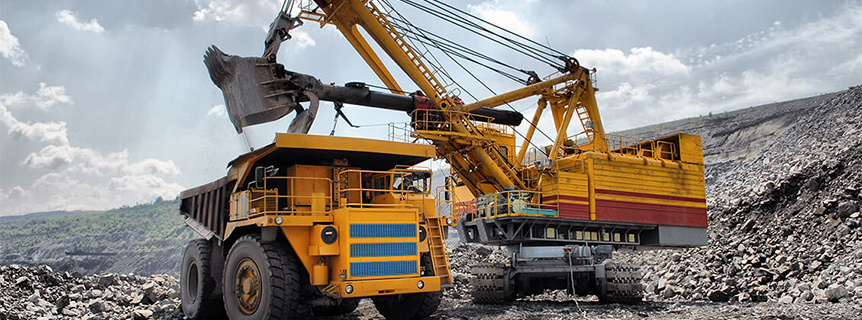
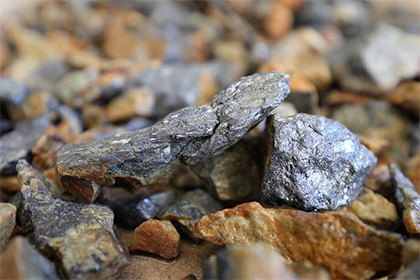
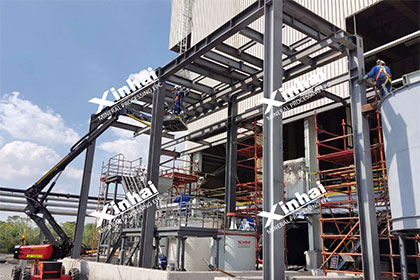
antimony mine pic
Antimony is a critical metalloid widely used in flame retardants, alloys, batteries, semiconductors, and chemical applications. With increasing global demand and declining high-grade ore reserves, efficient antimony beneficiation processes are essential to maximize recovery and improve concentrate quality.
This article outlines the 7 key steps in the antimony beneficiation process, explaining how raw antimony ore is transformed into a high-grade concentrate suitable for smelting and downstream applications.
Summary of the 7 Key Steps:
1. Ore crushing
2. Grinding and classification
3. Washing and desliming
4. Gravity separation
5. Flotation beneficiation
6. Concentrate dewatering and drying
7. Tailings treatment and environmental management
01 Antimony Ore Crushing
BackThe first step in the antimony beneficiation process is crushing, which reduces large ore blocks into smaller, manageable sizes.
Purpose of Crushing:
Liberate antimony minerals from gangue
Prepare ore for grinding and classification
Improve processing efficiency
Common Equipment:
Jaw crushers
Cone crushers
Impact crushers
Crushing is usually performed in multiple stages (primary and secondary) to achieve optimal particle size reduction without excessive fines.
02 Grinding and Classification
BackAfter crushing, the ore undergoes grinding to further liberate antimony-bearing minerals such as stibnite (Sb₂S₃).
Key Objectives:
Achieve sufficient mineral liberation
Control particle size for downstream separation
Prevent over-grinding, which can reduce recovery
Typical Equipment:
Ball mills
Rod mills
Hydrocyclones or spiral classifiers
Proper grinding fineness is critical, as antimony minerals are often fine-grained and closely associated with quartz, calcite, or sulfide minerals.
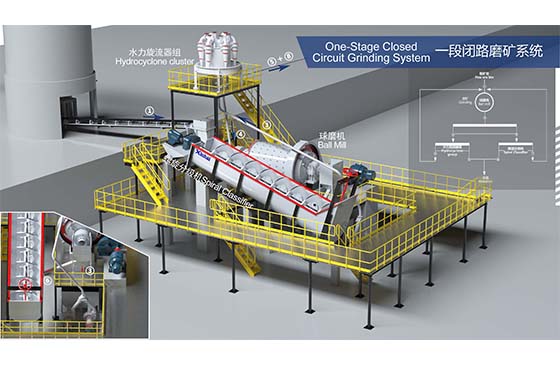
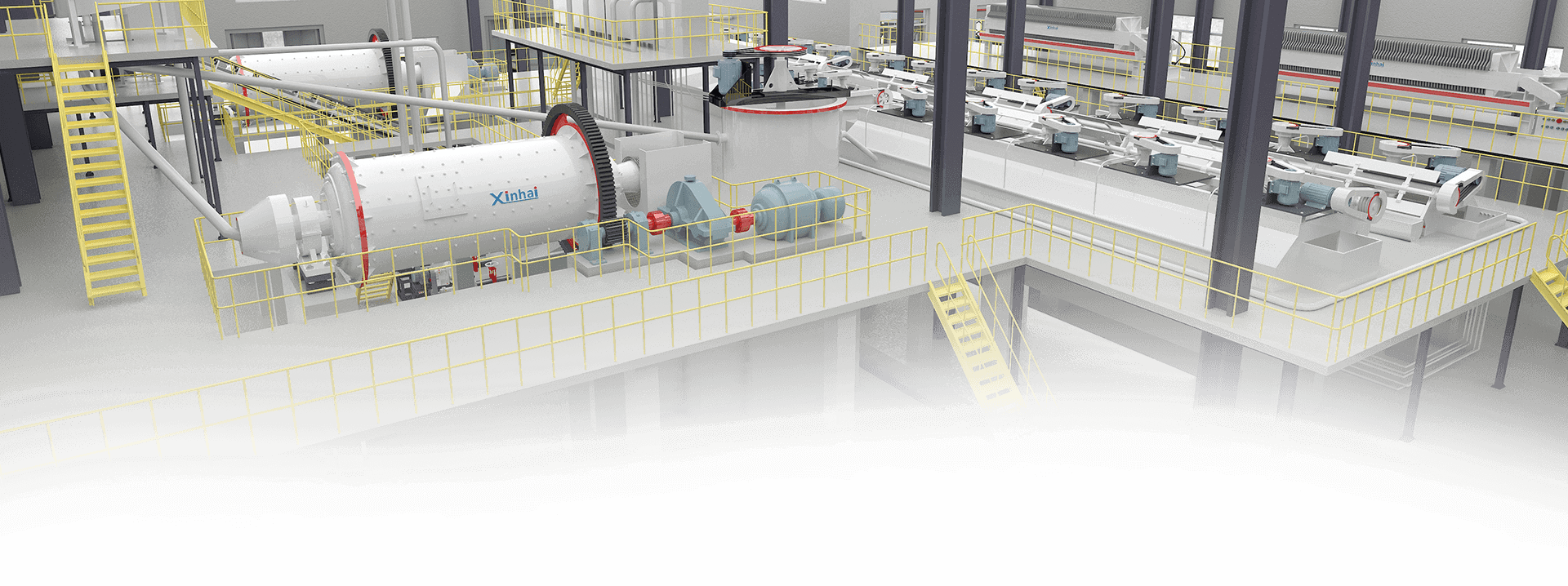
One-Stage Closed Circuit Grinding System
03 Antimony Ore Washing and Desliming
BackIn many antimony deposits, clay, slime, and fine impurities interfere with separation efficiency. Ore washing and desliming help remove these unwanted materials.
Benefits:
Improves flotation or gravity separation performance
Reduces reagent consumption
Enhances concentrate grade
This step is particularly important for oxidized or weathered antimony ores.
04 Gravity Separation
BackGravity separation is one of the most commonly used techniques in antimony beneficiation due to the relatively high density of antimony minerals.
Suitable Methods:
Jigging
Shaking tables
Spiral concentrators
Advantages:
Low operating cost
Environmentally friendly
Effective for coarse-grained antimony ores
Gravity separation is often used as a pre-concentration step to discard waste rock before flotation.
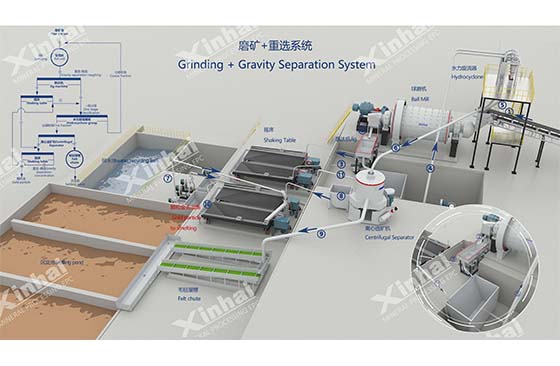
Grinding + Gravity Separation System
05 Antimony Flotation Process
BackFor fine-grained or complex antimony ores, froth flotation is the most effective beneficiation method.
Flotation Process Overview:
Collectors selectively attach to antimony minerals
Frothers stabilize air bubbles
Depressants suppress unwanted minerals
Common Reagents:
Xanthates or dithiophosphates (collectors)
Pine oil or MIBC (frothers)
Lime or sodium silicate (modifiers)
Flotation can produce high-grade antimony concentrates, especially for sulfide ores such as stibnite.
06 Concentrate Dewatering and Drying
BackOnce beneficiation is complete, the antimony concentrate must be dewatered and dried to prepare it for smelting or sale.
Dewatering Equipment:
Thickeners
Vacuum filters
Filter presses
Drying Methods:
Rotary dryers
Fluidized bed dryers
Effective dewatering reduces transportation costs and improves smelting efficiency.
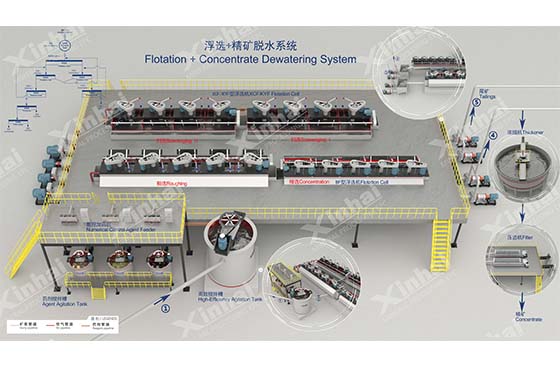
Flotation + Concentrate Dewatering System
07 Tailings Treatment and Environmental Management
BackThe final step in the antimony beneficiation process is tailings management and environmental protection.
Key Considerations:
Safe disposal of tailings
Recovery of residual antimony
Water recycling
Compliance with environmental regulations
Modern antimony beneficiation plants increasingly adopt closed-loop water systems and tailings reprocessing to reduce environmental impact.
08Conclusion
BackThe antimony beneficiation process involves a carefully controlled sequence of operations designed to maximize recovery and product quality. From crushing and grinding to flotation and tailings management, each step plays a vital role in producing market-ready antimony concentrate.
By optimizing each stage, mining operations can significantly improve antimony recovery rates, reduce costs, and meet growing global demand.


RELATED PRODUCTS
-
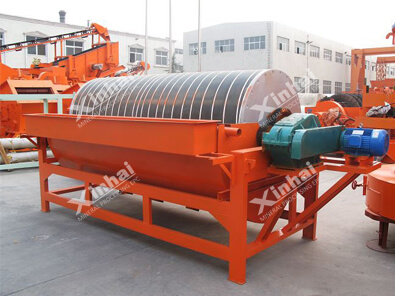
Magnetic Separator
-
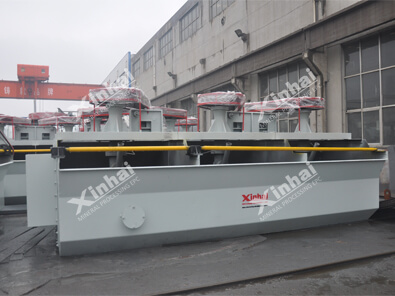
SF Flotation Cell
-
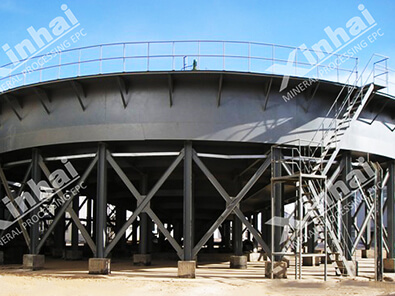
Efficient Improved Thickener