+8618335758886
 laura@xinhaimining.com



Copper-Gold Ore Crushing, Grinding, and Flotation Guide
 Laura
Laura
 Jan 30, 2026
 927
927
If you want to know more details about equipment, solutions, etc, please click the button below for free consultation, or leave your requirements!
 Message
 Chat Now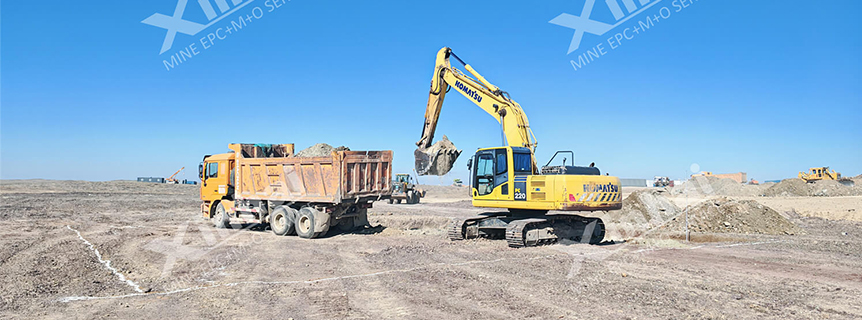
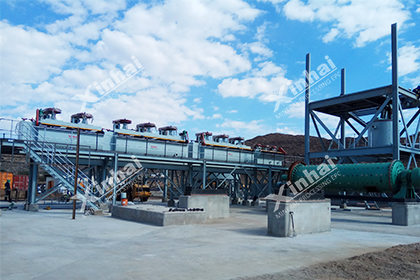
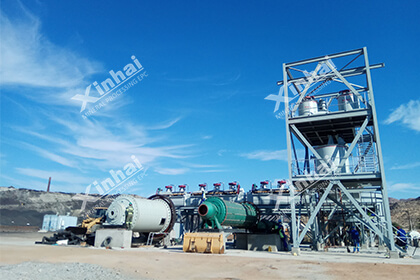
construction pictures of the copper ore mining plant
Copper-gold ore processing is a critical step in extracting valuable metals for industrial, electrical, and investment use. Among the most effective beneficiation methods, crushing, grinding, and flotation form the core workflow for separating copper and gold minerals from waste rock. This guide provides a clear, practical overview of each stage, helping mining operators optimize recovery rates and improve overall processing efficiency.
01Overview of Copper-Gold Ore Processing
BackCopper-gold ores are typically found in porphyry deposits and often occur together with sulfide minerals such as chalcopyrite, bornite, and pyrite. Because copper and gold are finely disseminated in the ore, physical separation alone is insufficient, making flotation the preferred beneficiation method.
The standard process includes:
Crushing
Grinding
Flotation separation
Concentrate dewatering (optional downstream step)
Each stage plays a vital role in maximizing metal recovery and reducing operating costs.
02Stage 1: Copper-Gold Ore Crushing
Back1. Purpose of Crushing
The crushing stage reduces large ore blocks into smaller, manageable sizes suitable for grinding. Proper crushing ensures:
Improved grinding efficiency
Reduced energy consumption
Uniform feed size for downstream processing
2. Common Crushing Equipment
Jaw Crusher: Primary crushing, handles large and hard ore
Cone Crusher: Secondary and tertiary crushing, produces uniform particle size
Impact Crusher: Used when ore is softer and requires shaping
3. Crushing Process Flow
Raw copper-gold ore is transported from the mine
Primary crushing reduces ore to 100–150 mm
Secondary and tertiary crushing reduce size to below 20–25 mm
Crushed ore is conveyed to the grinding circuit
Optimization Tip: Closed-circuit crushing with vibrating screens improves size control and reduces over-crushing.
03Stage 2: Copper-Gold Ore Grinding
Back1. Purpose of Grinding
Grinding liberates copper and gold minerals from gangue material by reducing particle size to the micron level. Liberation is essential for effective flotation.
2. Grinding Equipment
Ball Mill: Most widely used for copper-gold ore
Rod Mill: Preferred when over-grinding must be avoided
SAG Mill (Semi-Autogenous Grinding): Used for large-scale operations
3. Grinding Fineness
Typical grind size: 65–75% passing 200 mesh (74 μm)
Optimal fineness depends on ore hardness and mineral liberation characteristics
Key Consideration: Over-grinding can reduce gold recovery by producing ultra-fine particles that are difficult to float.
04Stage 3: Copper-Gold Flotation Process
Back1. Why Flotation Is Used
Flotation selectively separates valuable copper and gold sulfide minerals from waste using chemical reagents and air bubbles.
2. Flotation Workflow
Ground slurry enters flotation cells
Collectors make copper and gold minerals hydrophobic
Air bubbles attach to mineral particles
Froth containing copper-gold concentrate is skimmed off
3. Key Flotation Reagents
Collectors: Xanthates, dithiophosphates
Frothers: Pine oil, MIBC
Depressants: Lime, sodium cyanide (to suppress pyrite)
Activators: Copper sulfate (if required)
4. Flotation Circuit Types
Bulk Flotation: Copper and gold recovered together
Selective Flotation: Copper floated first, gold recovered later
Bulk flotation is commonly used due to similar floatability of copper and gold sulfides.
05Improving Copper-Gold Recovery Rates
BackTo maximize efficiency and profitability:
Conduct mineralogical analysis before process design
Optimize crushing size to reduce grinding energy
Control grinding fineness for proper liberation
Adjust reagent dosage based on ore variability
Monitor flotation pH and pulp density regularly
Modern plants often integrate automated control systems and real-time monitoring to stabilize recovery performance.
06Environmental and Economic Considerations
BackEfficient flotation reduces tailings volume
Water recycling systems lower operational costs
Proper reagent selection minimizes environmental impact
High recovery rates improve project ROI
Sustainable copper-gold processing is increasingly important for regulatory compliance and long-term mine viability.
07Conclusion
BackThe success of copper-gold ore beneficiation depends on the careful coordination of crushing, grinding, and flotation processes. By selecting the right equipment, controlling particle size, and optimizing flotation conditions, mining operations can significantly enhance copper and gold recovery while reducing costs and environmental impact.
Whether for small-scale mines or large industrial operations, understanding each stage of copper-gold ore processing is essential for achieving consistent and profitable results.


RELATED PRODUCTS
-
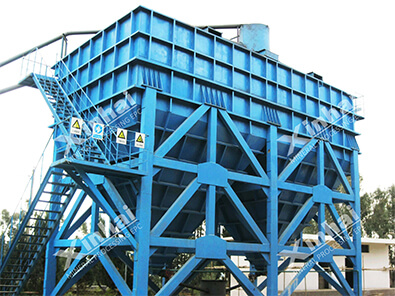
Tilted Plate Thickener
-
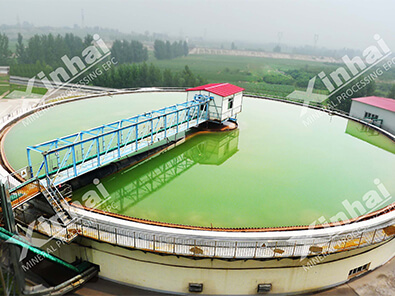
Efficient Thickener
-
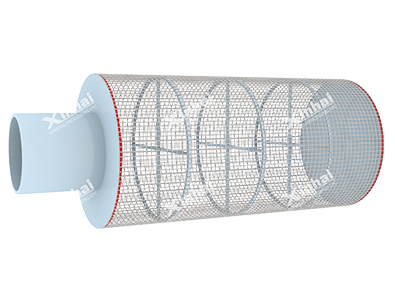
Carbon Screen