+8618234403483
 yanzhang19990421@gmail.com



Gold Flotation Process Explained
 Sheena
 Mar 09, 2026
 712
712
If you want to know more details about equipment, solutions, etc, please click the button below for free consultation, or leave your requirements!
 Message
 Chat Now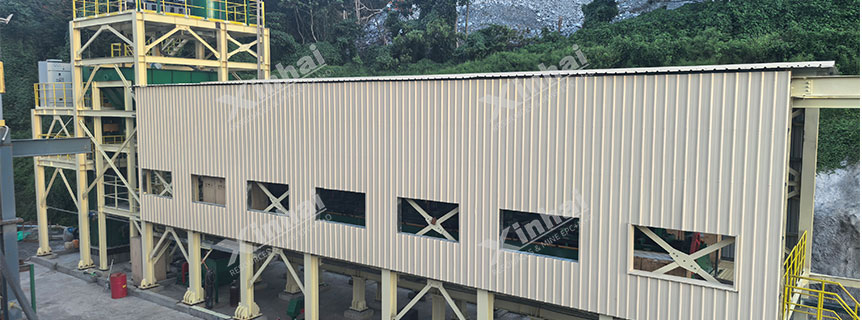
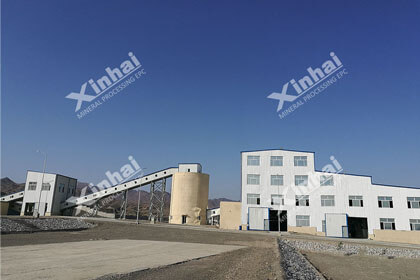
Gold-ore-flotation-workshop
The gold flotation process is one of the most widely used methods for recovering fine gold associated with sulfide minerals. In modern mineral processing plants, flotation is commonly applied to ores where gold occurs in sulfide minerals such as pyrite, arsenopyrite, chalcopyrite, or pyrrhotite. Compared with gravity separation alone, flotation significantly improves the recovery of fine-grained and complex gold ores.
In many gold processing operations, flotation is used either as a primary concentration method or as a pre-concentration step before cyanidation or roasting. This approach allows operators to produce high-grade concentrates while reducing processing costs and improving overall gold recovery.
This article explains the gold flotation principle, process flow, key equipment, influencing factors, and advantages, providing a practical reference for mining investors and plant designers.
01What Is the Gold Flotation Process?
BackThe gold flotation process is a mineral separation technique that uses the difference in surface hydrophobicity between minerals to separate valuable minerals from gangue.
During flotation, finely ground ore is mixed with water to form slurry. Chemical reagents are added to modify the surface properties of minerals. Air bubbles are then introduced into the flotation cell. Hydrophobic particles attach to the bubbles and rise to the surface, forming a froth layer containing gold-bearing minerals, while hydrophilic waste minerals remain in the pulp.
The froth is collected as gold concentrate, which can then be further treated using processes such as:
Cyanide leaching
Roasting
Pressure oxidation
Smelting
Flotation is particularly effective when gold occurs as:
Fine particles embedded in sulfides
Microscopic or submicron gold
Gold associated with copper or polymetallic ores
02Typical Gold Flotation Process Flow
BackA typical gold flotation plant includes several processing stages designed to maximize recovery and concentrate grade.
1. Crushing Stage
Gold ore extracted from the mine is first reduced in size using crushing equipment such as:
Jaw crushers
Cone crushers
Impact crushers
The purpose is to reduce the ore to 10–20 mm, preparing it for grinding.
2. Grinding and Classification
The crushed ore is ground into fine particles using:
Ball mills
Rod mills
A hydrocyclone or spiral classifier controls the particle size distribution. Proper grinding is critical because gold liberation determines flotation efficiency.
Typical flotation feed size:
75% passing 200 mesh (≈74 μm).
3. Flotation Separation
The slurry enters flotation machines where reagents are added. The flotation circuit usually includes:
Rougher flotation
Scavenger flotation
Cleaner flotation
This multi-stage configuration improves both recovery and concentrate grade.
4. Concentrate Thickening and Dewatering
The flotation concentrate is then processed through:
Thickener
Filter press or vacuum filter
The final product is a gold-rich sulfide concentrate.
5. Tailings Disposal
Remaining tailings are pumped to a tailings storage facility after thickening.
03Common Equipment Used in a Gold Flotation Plant
BackA complete gold flotation system involves several types of mineral processing equipment.
Crushing Equipment
Jaw crusher
Cone crusher
Hammer crusher
These machines reduce ore size before grinding.
Grinding Equipment
Ball mill
Rod mill
SAG mill
Grinding ensures sufficient mineral liberation, which is essential for successful flotation.
Classification Equipment
Hydrocyclone
Spiral classifier
These units maintain optimal grinding particle size.
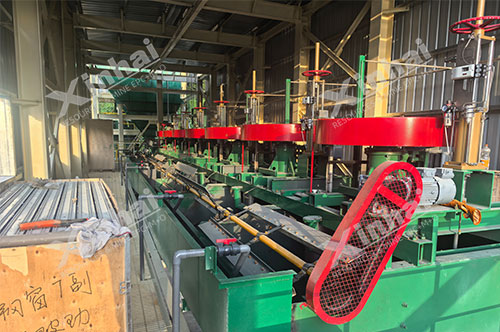
Flotation Equipment
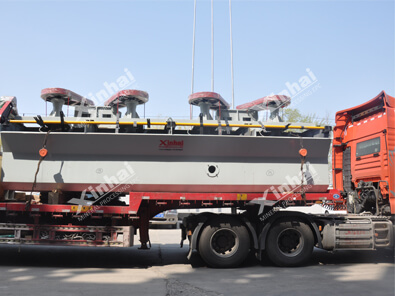
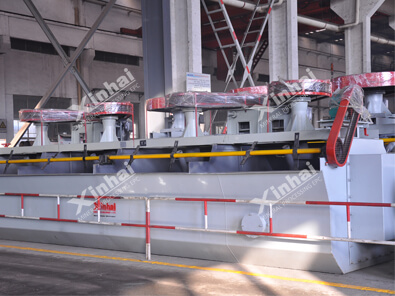
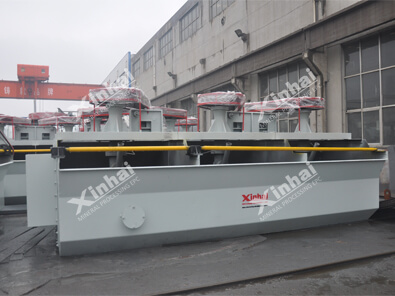
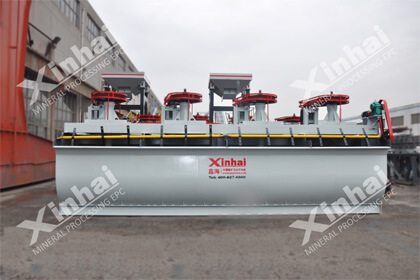
Mechanical agitation flotation cells
Forced-air flotation machines
Modern flotation machines provide:
Efficient aeration
Stable froth layers
High recovery rates
Concentrate Dewatering Equipment
Thickener
Filter press
Vacuum filter
These units remove water from the flotation concentrate.
04Flotation Reagents Used in Gold Processing
BackFlotation reagents play a critical role in separating gold-bearing minerals from gangue.
Collectors
Collectors increase the hydrophobicity of valuable minerals.
Common collectors include:
Xanthates
Dithiophosphates
Aerofloat reagents
Frothers
Frothers stabilize the froth layer.
Typical frothers include:
MIBC (Methyl Isobutyl Carbinol)
Pine oil
Activators
Activators enhance flotation performance of certain minerals.
Examples:
Copper sulfate
Lead nitrate
Depressants
Depressants prevent unwanted minerals from floating.
Examples:
Lime
Sodium cyanide
Zinc sulfate
Correct reagent selection and dosage are essential to achieving high gold recovery and concentrate quality.
05Factors Affecting Gold Flotation Efficiency
BackSeveral operational parameters influence the success of the gold flotation process.
Ore Characteristics
Mineral composition
Gold particle size
Degree of oxidation
Sulfide content
Grinding Fineness
Insufficient grinding results in poor mineral liberation, while over-grinding may create slimes that reduce flotation performance.
Pulp Density
Typical flotation pulp density ranges from 25% to 40% solids.
pH Value
Most gold flotation circuits operate in alkaline conditions (pH 8–11) to stabilize sulfide flotation and prevent unwanted reactions.
Reagent Dosage
Incorrect reagent dosage may cause:
Poor recovery
Low concentrate grade
Excess reagent consumption
Process optimization through laboratory flotation tests is usually required before plant design.
06Advantages of the Gold Flotation Process
BackThe gold flotation method offers several advantages compared with other gold extraction techniques.
High Recovery of Fine Gold
Flotation effectively recovers fine and microscopic gold particles that gravity methods cannot capture.
Suitable for Complex Ores
It is ideal for ores containing:
Sulfide minerals
Polymetallic components
Refractory gold
Pre-Concentration Capability
Flotation can produce high-grade concentrates, significantly reducing the amount of material processed in downstream extraction.
Lower Processing Costs
By concentrating the valuable minerals first, flotation reduces:
Cyanide consumption
Energy usage
Overall plant operating costs
07Gold Flotation vs Gravity Separation vs Cyanidation
Back| Method | Best for | Recovery Characteristics |
|---|---|---|
| Gravity Separation | Coarse free gold | Simple and low cost |
| Flotation | Fine sulfide-associated gold | High recovery for complex ores |
| Cyanidation | Dissolved gold extraction | Widely used for final recovery |
A combined process is often the most efficient solution for many gold deposits.
08Conclusion
BackThe gold flotation process is a critical technology in modern gold beneficiation, particularly for ores containing fine or sulfide-associated gold. By combining proper grinding, reagent selection, and optimized flotation circuits, operators can achieve high recovery rates and economically viable gold concentrate production.
With the right process design and equipment configuration, flotation can significantly enhance the profitability of a gold mining operation.


RELATED PRODUCTS
-
BF Flotation Cell
-
JJF Flotation Cell
-
SF Flotation Cell