+8618335758886
 laura@xinhaimining.com



 Sheena
 Jan 14, 2026
 1247
1247 Message
 Chat Now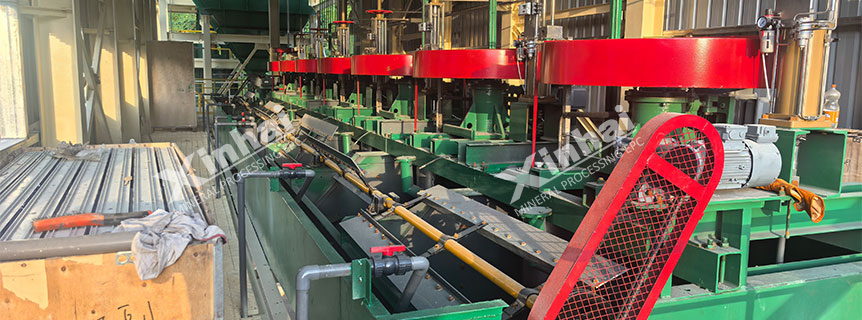
For mining companies and investors, the success of a copper project depends not only on ore grade but also on process design, equipment selection, and overall plant efficiency. This article provides a commercial and solution-oriented overview of the extraction of copper from copper pyrite, highlighting proven processing routes, key equipment, and how modern mineral processing solutions maximize copper recovery and return on investment.
01Copper Pyrite: The Primary Copper Ore
BackCopper pyrite is a copper-iron sulfide mineral widely distributed in porphyry copper deposits and massive sulfide ore bodies.
Key Features of Chalcopyrite Ores
Copper grade typically ranges from 0.5% to 2.5% in run-of-mine ore
Sulfide-based mineralogy, ideal for flotation
Often associated with pyrite, quartz, and silicate gangue
Requires beneficiation + metallurgical processing
Due to its complex structure, chalcopyrite cannot be economically treated by simple physical separation alone. A complete copper processing plant is essential.
02Overview of Copper Extraction from Copper Pyrite
BackThe industrial extraction of copper from chalcopyrite follows a well-established process route:
Crushing and grinding
Froth flotation concentration
Smelting of copper concentrate
Converting to blister copper
Electrolytic refining
Each stage relies on specialized mineral processing and metallurgical equipment, and optimization across the entire flowsheet is critical for profitability.
03Stage 1: Crushing and Grinding – Preparing the Ore for Recovery
BackCrushing System
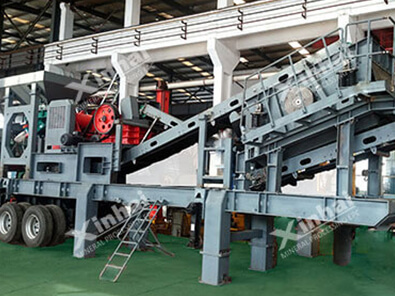
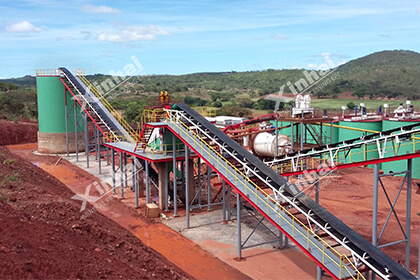
After mining, copper pyrite ore is delivered to the crushing plant, where it is reduced to suitable particle size.
Recommended equipment includes:
Jaw crushers for primary crushing
Cone crushers for secondary and tertiary crushing
Vibrating screens for size classification
A well-designed crushing circuit ensures:
Stable feed size to the grinding system
Reduced energy consumption
Lower liner and maintenance costs
Grinding Circuit
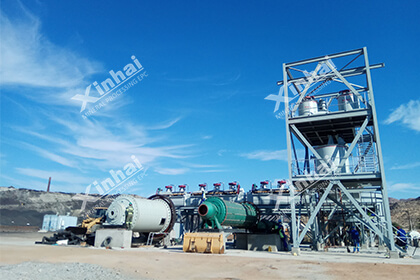
The crushed ore is ground to liberate chalcopyrite from gangue minerals.
Common grinding equipment:
Ball mills
SAG mills
Rod mills (in specific applications)
Grinding fineness directly affects flotation performance. Professional plant design balances liberation degree, throughput, and power consumption to achieve optimal economics.
04Stage 2: Froth Flotation – Core Technology for Copper Pyrite Beneficiation
BackWhy Flotation Is Essential
Since chalcopyrite is a sulfide mineral, froth flotation is the most efficient and widely used method for copper concentration.
Flotation Process Description
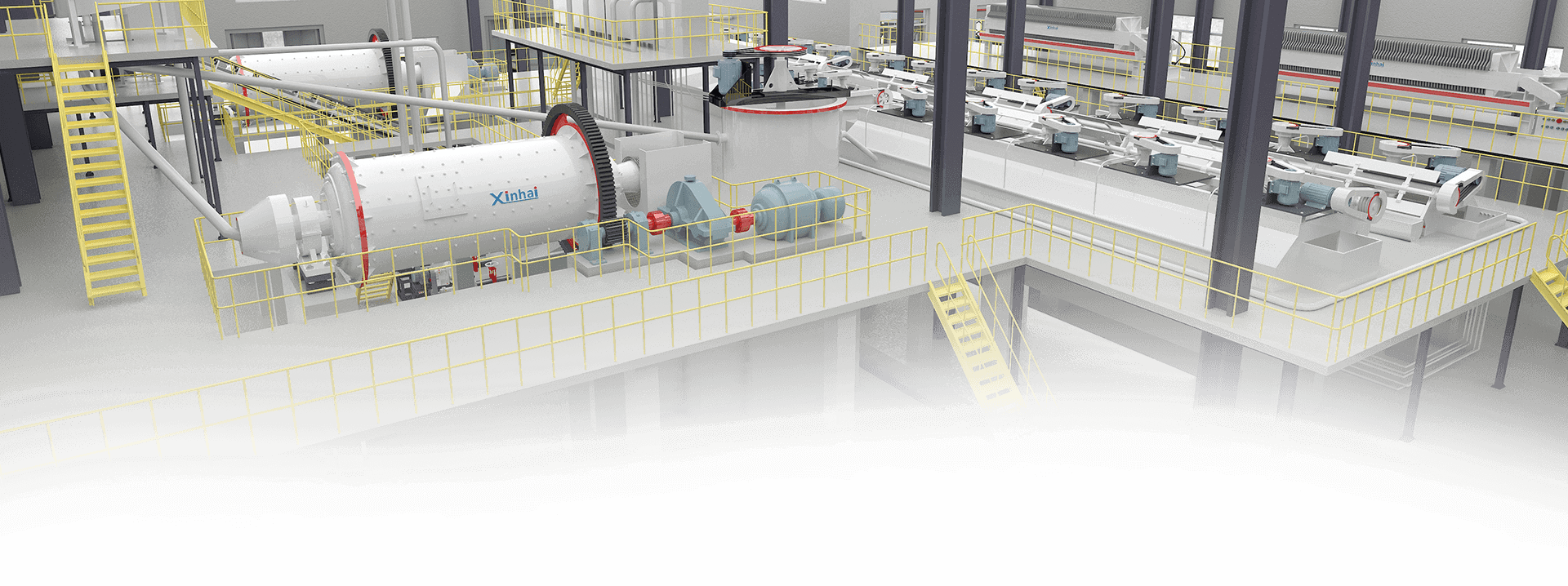
Ground slurry enters conditioning tanks
Reagents (collectors, frothers, modifiers) are added
Air is introduced into flotation cells
Chalcopyrite particles attach to bubbles and float
Tailings are discharged for disposal or further treatment
Key Flotation Equipment
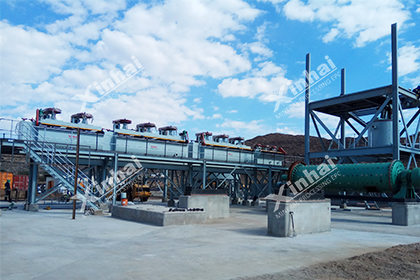
Mechanical flotation cells
Pneumatic flotation cells
High-efficiency flotation columns
Agitators and reagent dosing systems
Commercial Advantages
High copper recovery rate (85–95%)
Strong adaptability to variable ore types
Scalable from small to large processing plants
The output is a copper concentrate containing 20–30% Cu, significantly reducing downstream processing costs.
05Stage 3: Smelting – Converting Concentrate into Copper Matte
BackRole of Smelting in Copper Extraction
Smelting is a pyrometallurgical process that separates copper from iron and sulfur.
Smelting Equipment Options
Flash smelting furnace
Electric smelting furnace
Reverberatory furnace (less common in modern plants)
Flash smelting is preferred in modern projects due to:
High energy efficiency
Lower operating costs
Better environmental performance
Smelting Results
Sulfur is released as SO₂ (captured for acid production)
Iron is removed as slag
Copper is concentrated into molten matte
Copper matte grade: typically 45–70% Cu
06Stage 4: Electrolytic Refining – Producing 99.99% Copper
BackElectrorefining System Overview
Electrolytic refining transforms blister copper into LME-grade cathode copper.
Core equipment includes:
Electrolytic cells
Copper anodes and stainless-steel cathodes
Rectifiers and power supply systems
Electrolyte circulation and purification units
Commercial Value
Final copper purity: 99.99%
Recovery of gold, silver, and rare metals from anode slime
Stable, high-value product for global markets
07Environmental and Sustainability Considerations
BackModern copper plants must comply with strict environmental regulations.
Key Solutions
SO₂ capture and sulfuric acid production
Energy-efficient grinding and smelting
Water recycling systems
Dry tailings disposal options
Advanced equipment and smart plant design significantly reduce emissions, water consumption, and carbon footprint.
08Why Equipment Selection Determines Project Success
BackIn copper pyrite extraction projects, equipment quality directly impacts:
Copper recovery rate
Energy consumption
Plant availability
Operating and maintenance costs
Choosing an experienced equipment supplier with process know-how, engineering support, and global project experience ensures long-term operational success.
09Conclusion
BackThe extraction of copper from copper pyrite is a mature but highly technology-driven process, combining mineral processing and metallurgy. From crushing and flotation to smelting and electrorefining, every stage requires reliable, high-performance equipment.
For mining investors and operators, partnering with a professional copper processing solution provider enables:
Optimized plant design
Higher copper recovery
Lower lifecycle cost
Sustainable and compliant operation
As global copper demand continues to rise, efficient chalcopyrite processing plants remain one of the most valuable investments in the mining industry.