+8618234403483
 yanzhang19990421@gmail.com



Full Process Analysis of Iron Ore Beneficiation & Processing: From Run-of-Mine Ore to High-Grade Iron Concentrate
 zeki
zeki
 May 21, 2026
 449
449
If you want to know more details about equipment, solutions, etc, please click the button below for free consultation, or leave your requirements!
 Message
 Chat Now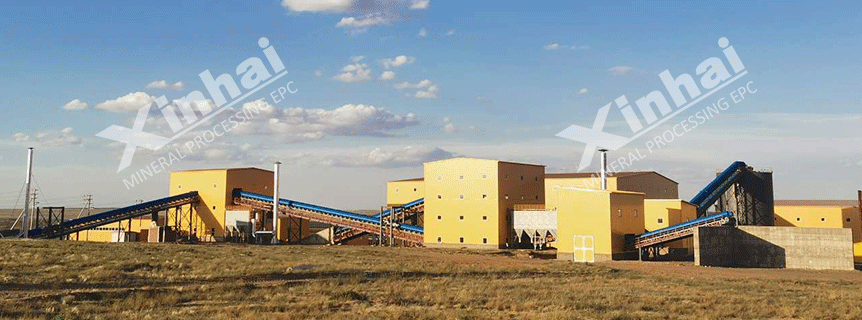
Design-of-a-3500-tpd-Iron-Ore-Mining-Beneficiation-and-Tailings-Project-in-Mongolia
Iron ore is the most fundamental raw material for the iron and steel industry, widely applied in construction engineering, machinery manufacturing, rail transit, shipbuilding, military industry, new energy equipment and numerous other fields. This paper elaborates on mineral characteristics, industrial classification, application quality specifications, complete beneficiation processes, advantages of core equipment and development trends of the iron ore beneficiation industry.
01Basic Overview of Iron Ore
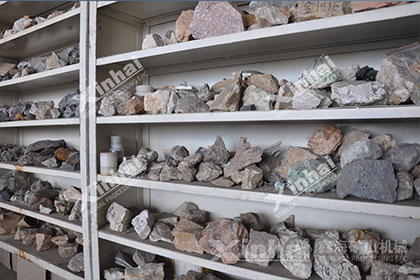
BackNatural iron ore is a complex symbiotic mineral system mainly composed of valuable iron minerals, gangue minerals and trace harmful impurities. Low-grade iron ores account for an extremely high proportion in China, with the total iron grade of most run-of-mine ore ranging only from 20% to 40%, featuring high impurity content and complex mineral dissemination structure.
02Industrial Classification and Beneficiation Characteristics of Iron Ore
BackIn industrial practice, iron ores are classified into four core categories according to mineral composition, magnetic strength, dissemination particle size and washability. Distinct physical and chemical properties among different ores directly determine the selection of beneficiation processes, equipment configuration and production indicators, constituting the core basis for beneficiation process design of mines.
1. Magnetite
Magnetite boasts the optimal washability and widest application among industrial iron ores with strong magnetism. Its beneficiation process is relatively simple. After conventional two-stage magnetic separation, the total iron grade of finished concentrate can steadily exceed 65%, and high-quality ore sources can reach over 67%, with metal recovery rate generally maintained at 90%-95%.
2. Hematite
As a typical weakly magnetic oxidized iron ore with no prominent strong magnetic response, hematite constitutes the major part of low-grade iron ore resources in China. Most natural hematite presents fine and micro-fine disseminated occurrence, hence single traditional magnetic separation fails to achieve efficient grade upgrading, resulting in far higher separation difficulty than magnetite.
3. Limonite
Limonite is a hydrous oxidized iron ore with loose structure and soft texture, whose raw ore iron grade is generally between 35% and 40%.Conventional gravity separation and magnetic separation deliver limited grade-upgrading effects, so gravity separation and high-intensity magnetic separation pre-treatment are mostly matched in industrial production.
4. Siderite
Siderite is a carbonate-type weakly magnetic iron ore often associated with magnesium and calcium carbonate impurities, featuring low raw ore iron grade and poor washability. Magnetizing roasting combined with magnetic separation has become the mainstream industrialized utilization technology for siderite.
03Core Beneficiation Processes of Iron Ore
BackThe core logic of iron ore beneficiation covers mineral dissociation, separation and purification, grade upgrading and dewatering, aiming to maximize iron grade and reduce harmful impurities. The complete production process is divided into five key links applicable to various types of iron ores.
1. Crushing and Screening: Preloading Reduction of Run-of-Mine Ore
(1)Core purposes
Gradually reduce ore particle size to realize preliminary dissociation between iron minerals and gangue minerals, remove bulk waste rock impurities in advance, and greatly lower subsequent grinding load and production costs.
(2)Adopted three-stage crushing process
Jaw crushers are used for primary crushing to crush bulk raw ore to 150-200 mm; cone crushers or high-pressure roller mills are applied for secondary and fine crushing to further reduce materials to 12-15 mm. Crushed materials are accurately classified via vibrating screens; qualified particles are delivered to the grinding process while coarse particles are sent back for cyclic re-crushing.
2. Grinding and Classification
(1)Realize monomer dissociation of minerals
Subject to ore dissemination fineness, the standard grinding fineness of common ores requires -200 mesh content accounting for 65%-70%, while hard-to-separate micro-fine ores need grinding fineness reaching -325 mesh content of 80%-85% to ensure full separation of valuable iron minerals from gangue impurities.
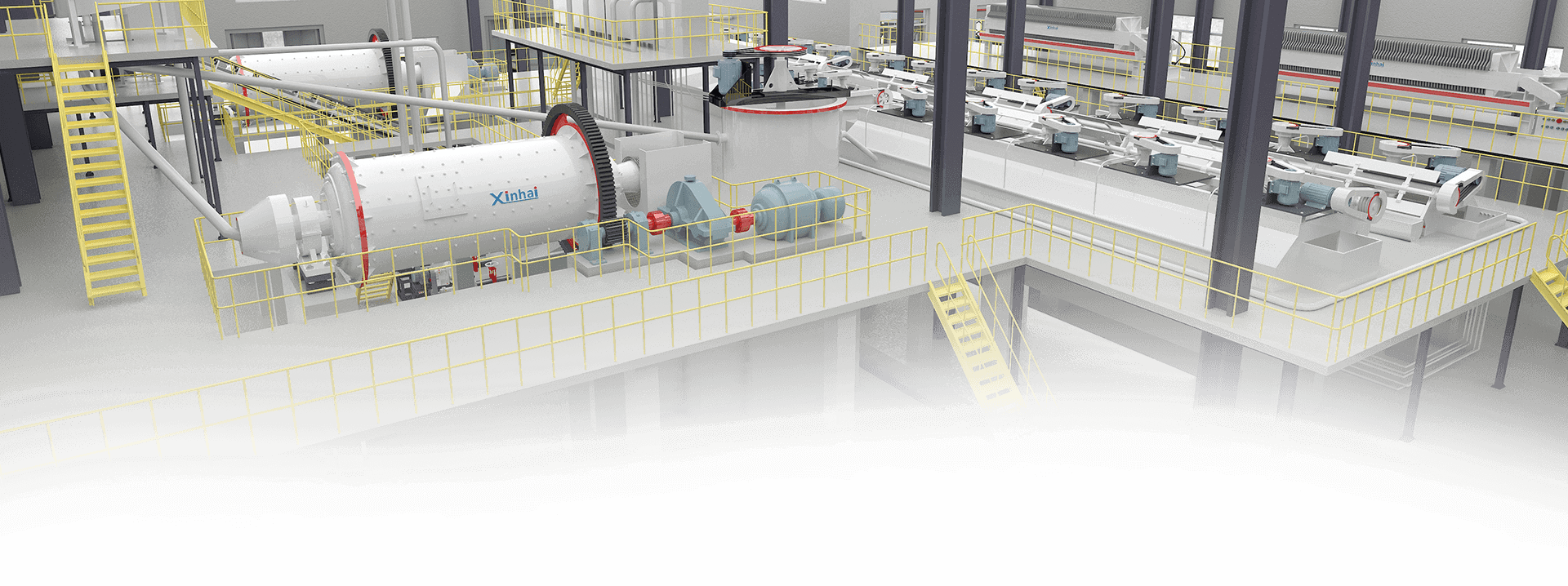
(2)Core grinding equipment includes lattice-type and overflow-type energy-saving ball mills, which refine ore materials through impact and grinding of steel balls and steel segments. Ground mixed ore pulp is delivered to classification facilities such as hydrocyclones and spiral classifiers for particle size classification.
3. Separation and Purification
This procedure determines the final quality of iron concentrate and metal recovery rate. Differentiated technologies including magnetic separation, flotation and roasting are selected according to mineral magnetism and impurity types, and combined processes are adopted to adapt to various complex ores.
(1)Low-intensity Magnetic Separation
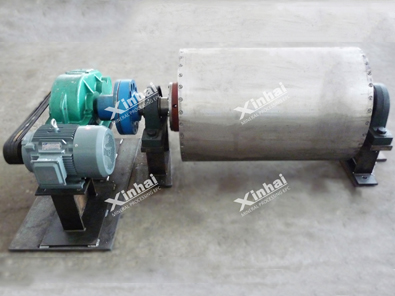
Primarily applied to magnetite. Permanent magnet cylindrical magnetic separators with magnetic field intensity of 0.18-0.3 T are utilized to rapidly separate iron minerals from gangue minerals by magnetic differenceserving as the fundamental core technology for magnetite beneficiation.
(2)High-intensity Magnetic Separation & High-gradient Magnetic Separation
Mainly used for weakly magnetic ores such as hematite and limonite. Vertical ring high-gradient magnetic separators with field intensity of 1.0-1.2 T can accurately recover micro-fine weakly magnetic iron minerals unrecyclable by conventional magnetic separation, effectively remove gangue impurities like silicon and aluminum, and markedly improve the resource recovery rate of hard-to-separate iron ores.
(3)Flotation Technology
Mostly applied to complex low-grade iron ores, high-silicon low-iron ores and deep grade upgrading of high-end concentrates. Anion reverse flotation is the mainstream industrial technology. Different from iron-forward flotation, it preferentially adsorbs and captures gangue minerals via selective special reagents while retaining iron minerals in ore pulp, so as to precisely remove refractory impurities such as silicon dioxide and aluminum oxide.
(4)Magnetizing Roasting-Magnetic Separation Process
Targeting hard-to-separate limonite and siderite, this technology converts weakly magnetic iron minerals into strongly magnetic magnetite through high-temperature roasting, followed by precise magnetic separation for enrichment, thoroughly solving the sliming problem of such ores.
4. Concentrate Dewatering and Tailings Disposal
(1) Iron Concentrate Dewatering
Iron concentrate obtained after separation is high-moisture ore pulp unfit for direct transportation, stockpiling and smelting, thus systematic dewatering treatment is indispensable. Drum drying equipment can be matched to further optimize moisture indicators for dry finished concentrate demands.
(2) Tailings Disposal
Tailings pulp generated from beneficiation is concentrated to realize recycled water reuse and sharply cut production water consumption. Tailings are stored in compliance with regulations via dry stacking or wet stockpiling. Part of low-grade tailings can be reprocessed to recover residual valuable iron minerals for maximum resource utilization efficiency.
5. Standard Beneficiation Flow for Typical Iron Ores
(1)Magnetite: Run-of-mine ore → Primary crushing → Dry magnetic pre-dressing → Secondary & fine crushing → Grinding and classification → Primary low-intensity magnetic separation → Secondary fine grinding → Secondary low-intensity magnetic cleaning → Concentration and dewatering → Finished iron concentrate
(2)Hematite: Raw ore crushing & grinding → Low-intensity magnetic tailings discarding and impurity removal → High-intensity magnetic preliminary enrichment → Deep grade upgrading via anion reverse flotation → Concentration, filtration and dewatering
(3)Limonite & Siderite: Raw ore crushing and classification → Fine grinding → Modification via magnetizing roasting → Precise low-intensity magnetic separation → Dewatering and shaping
04Core Beneficiation Equipment for Iron Ore
BackEquipment selection directly determines production efficiency, finished product indicators and operation costs.
(1)Crushing equipment: Jaw crusher, cone crusher, high-pressure roller mill
(2)Grinding and classification equipment: Energy-saving ball mill, hydrocyclone
(3)Separation equipment: Permanent magnet low-intensity magnetic separator, mechanically agitated flotation machine
(4)Dewatering equipment: High-efficiency thickener, ceramic filter, vacuum filter press
05Conclusion
BackThere is no universal optimal beneficiation process for all iron ores. All production flows must be determined through professional beneficiation tests in accordance with raw ore mineral properties, dissemination structures, impurity compositions and finished product quality requirements to confirm combined processes and equipment parameters. In the future, the iron ore beneficiation industry will keep evolving towards efficient mineral dissociation, precise separation, energy conservation & low carbon emission as well as intelligent stable operation, providing solid raw material support for stable supply and high-quality development of China’s iron and steel industry.


RELATED PRODUCTS
-
Dry Magnetic Separator
-
Surface Auxiliary Equipment
-
Magenetic Drum