+8618234403483
 yanzhang19990421@gmail.com



How to Improve Graphite Recovery in Mineral Processing
 Sheena
 May 20, 2026
 293
293
If you want to know more details about equipment, solutions, etc, please click the button below for free consultation, or leave your requirements!
 Message
 Chat Now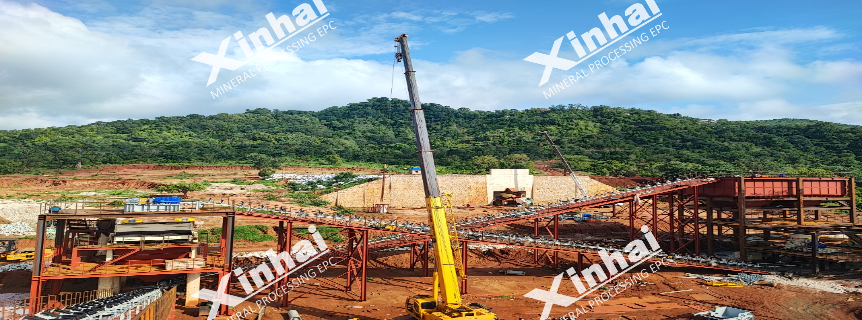
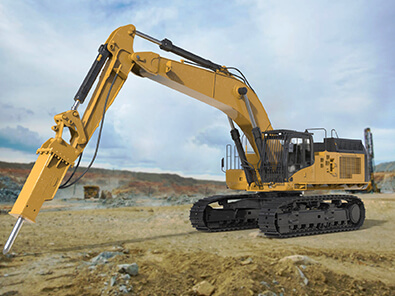
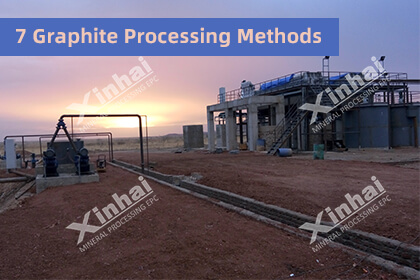
Construction Site of a Graphite Ore Beneficiation Plant
This article explains how to improve graphite recovery through optimized grinding, staged flotation, flake preservation, reagent adjustment, and process control in graphite beneficiation plants.
01Optimize Grinding to Balance Liberation and Flake Preservation
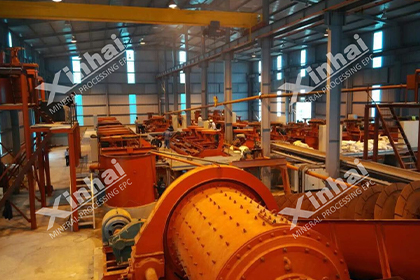
BackGrinding is one of the most important stages affecting graphite recovery because graphite flakes are easily damaged during size reduction. If grinding is too coarse, graphite may remain locked within gangue minerals and fail to float effectively, while excessive grinding can break large flakes into smaller particles and reduce product value. The objective is therefore not simply finer grinding, but achieving sufficient liberation while preserving flake size as much as possible.
Many graphite plants use staged grinding instead of aggressive one-stage milling. After partial liberation, recoverable graphite is floated and removed before additional grinding is applied to the remaining material. This process reduces unnecessary flake breakage and helps maintain both recovery and concentrate quality throughout the circuit.
02Use Multi-Stage Flotation to Improve Recovery Efficiency
BackA single flotation stage is rarely enough to achieve both high recovery and high concentrate grade in graphite processing. Most graphite plants therefore use a combination of rougher, scavenger, and cleaner flotation stages to progressively recover and upgrade graphite concentrate.
Rougher flotation is used to recover the majority of graphite quickly, while scavenger flotation helps capture fine graphite particles that remain in the tailings. Cleaner flotation stages are then applied to reduce gangue minerals and improve carbon purity. This staged flotation arrangement allows plants to improve recovery while maintaining more stable concentrate quality.
03Control Flake Damage During the Entire Process
BackFlake preservation is a critical part of graphite beneficiation because larger graphite flakes usually have much higher market value than fine graphite products. Mechanical damage can occur not only during grinding, but also during pumping, slurry transport, and agitation inside flotation tanks.
To reduce flake breakage, many plants optimize pump speed, reduce excessive slurry turbulence, and carefully control grinding intensity. In some operations, classification and screening systems are also introduced between flotation stages to separate liberated flakes before additional grinding occurs. These adjustments help improve both product value and overall process efficiency.
04Adjust Reagent Systems Based on Ore Characteristics
BackAlthough graphite has natural floatability, reagent selection still has a major influence on recovery and concentrate quality. Frothers are used to stabilize the froth layer, while modifiers help reduce gangue entrainment and improve flotation selectivity.
Different graphite ores may respond differently depending on gangue composition, weathering conditions, and particle size distribution. In some cases, excessive reagent dosage can increase gangue recovery and reduce concentrate quality, while insufficient dosage may lower graphite recovery.
05Improve Process Stability in the Flotation Circuit
BackStable operating conditions are essential for maintaining consistent graphite recovery. Variations in pulp density, air flow rate, slurry circulation, and flotation residence time can all affect bubble-particle attachment and froth stability during flotation.
Many graphite plants improve recovery by introducing tighter process control systems and more stable operating parameters. Consistent slurry conditions help maintain predictable flotation kinetics and reduce recovery fluctuations caused by unstable froth behavior or changing feed conditions.
06Reduce Graphite Losses in Tailings
BackTailings losses are often one of the main reasons for low graphite recovery. In many operations, graphite losses occur because valuable graphite remains insufficiently liberated or because ultrafine graphite particles are difficult to recover efficiently during flotation.
To reduce these losses, some plants introduce regrinding stages between flotation circuits to improve liberation of partially locked graphite. Others optimize scavenger flotation capacity to recover fine graphite particles before tailings disposal. Effective tailings control can significantly improve overall plant recovery without major changes to the entire process flow sheet.
07Optimize the Process Through Metallurgical Testing
BackMetallurgical testing is one of the most effective ways to improve graphite recovery because every graphite ore behaves differently during processing. Bench-scale flotation tests help determine the optimal grind size, flotation sequence, reagent dosage, and recovery target for a specific ore.
Pilot testing can then be used to evaluate process stability and scale-up performance under more realistic operating conditions. In practice, the most successful graphite processing plants are usually developed through repeated testing and process optimization rather than fixed standard flow sheets.
08Conclusion
BackImproving graphite recovery in mineral processing requires optimizing the entire beneficiation process rather than focusing on a single operating parameter. Grinding strategy, staged flotation, flake preservation, reagent control, and flotation stability all influence how effectively graphite can be recovered and upgraded. When these factors are adjusted according to ore characteristics and supported by metallurgical testing, graphite plants can achieve higher recovery, better concentrate quality, and improved economic performance.


RELATED PRODUCTS
-
Surface Auxiliary Equipment
-
Air Lifter
-
Autogenous Mill