+8618234403483
 yanzhang19990421@gmail.com



Guide to Kaolin Ore Dressing
 zeki
zeki
 Jan 30, 2026
 657
657
If you want to know more details about equipment, solutions, etc, please click the button below for free consultation, or leave your requirements!
 Message
 Chat Now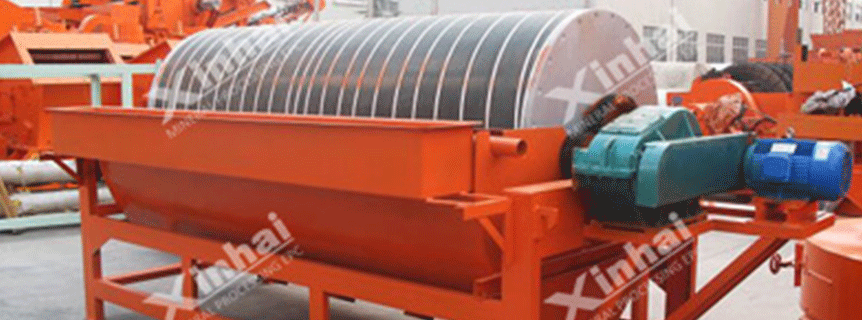
Magnetic-Separator
Kaolin serves as a core raw material for industries such as ceramics, papermaking and coatings, and its ore dressing process is the key to improving the purity, whiteness and performance of ore materials. Classified into dry, wet and deep processing technologies based on the characteristics of raw ore, the dressing process mainly removes impurities through classification, magnetic separation, flotation and other operations. Different processes are adapted to different quality requirements and application scenarios, which directly determine the added value and market adaptability of kaolin products.
01What is Kaolin Ore
BackKaolin ore is a non-metallic clay ore with kaolinite group minerals (kaolinite, dickite, etc.) as the core components, and it is a widely used basic raw material in industry.
Raw kaolin ore is mostly white, light gray, pale yellow or pale pink, with fine and loose texture, good plasticity and caking property, and high temperature resistance (the refractoriness can reach about 1700℃). It becomes dense in texture and bright white in color after sintering, and also has excellent insulation, adsorbability and chemical stability, being not prone to react with acids and alkalis.
The formation of kaolin ore is mostly related to the weathering and alteration of granite, feldspar and other rocks, and its deposit types are mainly divided into weathered type, sedimentary type and so on.
02Kaolin Ore Dressing Processes
Back1.Magnetic Separation
(1)Principle
Magnetic separation is a dressing method that separates useful minerals from gangue according to the difference in their magnetic permeability, and it is mostly used for the separation of magnetite.
Magnetic separation is carried out in the magnetic field of magnetic separation equipment. When the ore to be separated is fed into the separation space of the equipment, it is subjected to the action of magnetic force and mechanical force (including gravity, centrifugal force, water flow force, etc.). Ore particles with different magnetism are subjected to different magnetic forces and move along different paths.
Due to the different movement paths of ore particles, magnetic and non-magnetic products (or products with strong and weak magnetism) can be obtained by separate collection.
(2)Common Methods
Conventional magnetic separation, high-gradient magnetic separation
(3)Core Function
Targeted removal of magnetic impurities such as iron and titanium to improve the whiteness of kaolin.
2.Flotation
(1)Principle
Flotation, or froth flotation in the main, is a process of separating minerals from pulp by virtue of the buoyancy of air bubbles according to the differences in the physicochemical properties of mineral particle surfaces.
Before flotation, the ore must be ground to the particle size required for flotation, so that useful minerals are basically liberated into single particles for separation, and flotation reagents are added.
Direct Flotation
Generally, useful minerals are floated into the froth product while gangue minerals remain in the pulp, which is usually called direct flotation.
Reverse Flotation
Gangue minerals are floated into the froth product while useful minerals remain in the pulp, which is called reverse flotation.
(2)Core Method
Reverse flotation (kaolin as the floated ore to remove gangue such as feldspar and quartz)
(3)Core Function
Separation of non-magnetic silicate impurities to improve ore purity.
03Main Equipment for Kaolin Ore Dressing
Back1.Flotation Equipment
(1) Hydrocyclone/Centrifuge
Classification of ore materials before flotation and removal of sandy impurities.
(2) Agitation Tank
Slurry conditioning and dispersion, and mixing with flotation reagents.
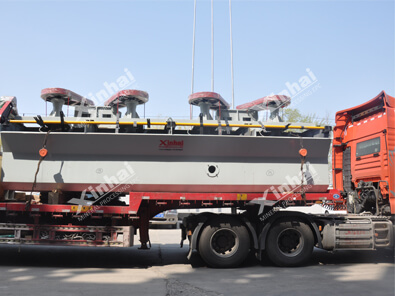
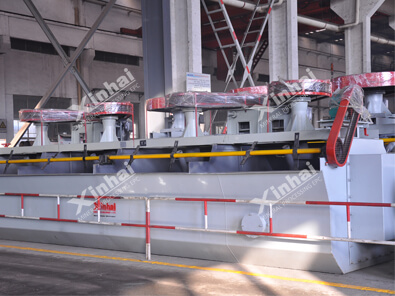
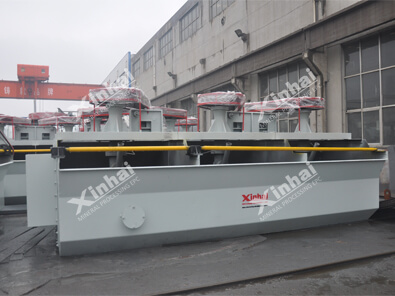
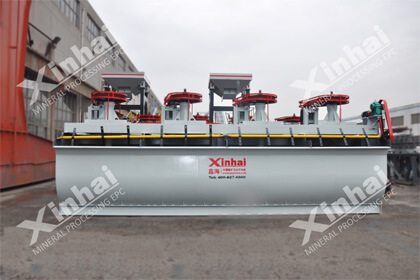
(3) Mechanical Agitation Flotation Machine
Conventional flotation purification of kaolin, the mainstream core equipment of the process.
(4) Flotation Column
Precise flotation and impurity removal of fine-grained kaolin.
(5) Thickener
Preliminary concentration and dewatering of pulp after flotation.
(6) Vacuum Filter/Filter Press
Deep dewatering and forming of flotation concentrate.
2.Dry Magnetic Separation Equipment
(1) Permanent Magnet Drum Dry Magnetic Separator
Removal of strong magnetic iron and titanium impurities from dry ore materials in dry dressing.
(2) Suspended Dry Magnetic Separator
Removal of iron impurities from dry ore materials in the belt conveying process.
(3) Roller Dry Magnetic Separator
Fine iron removal of ore materials after dry classification.
3.Wet Magnetic Separation Equipment
(1) High-gradient Magnetic Separator
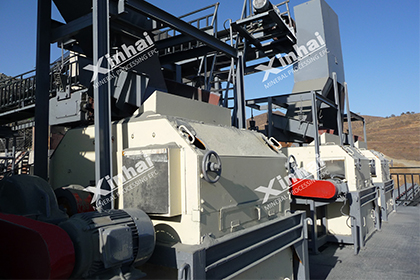
Removal of weak magnetic iron and titanium impurities from wet pulp, the core equipment of the process.
(2) Permanent Magnet Drum Wet Magnetic Separator
Rapid removal of strong magnetic impurities from wet pulp.
04Conclusion
BackThe selection of kaolin ore dressing processes must be closely based on the characteristics of raw ore and product application requirements: the dry process is efficient and low-cost, the wet process achieves fine purification, and the deep processing realizes functional upgrading. Core operations such as magnetic separation and flotation provide support for quality improvement. In the future, ore dressing processes will develop towards the direction of green efficiency, intellectualization and customization. Through process optimization and equipment upgrading, the efficient utilization and value maximization of kaolin resources will be further realized.


RELATED PRODUCTS
-
BF Flotation Cell
-
JJF Flotation Cell
-
SF Flotation Cell