+8618335758886
 laura@xinhaimining.com



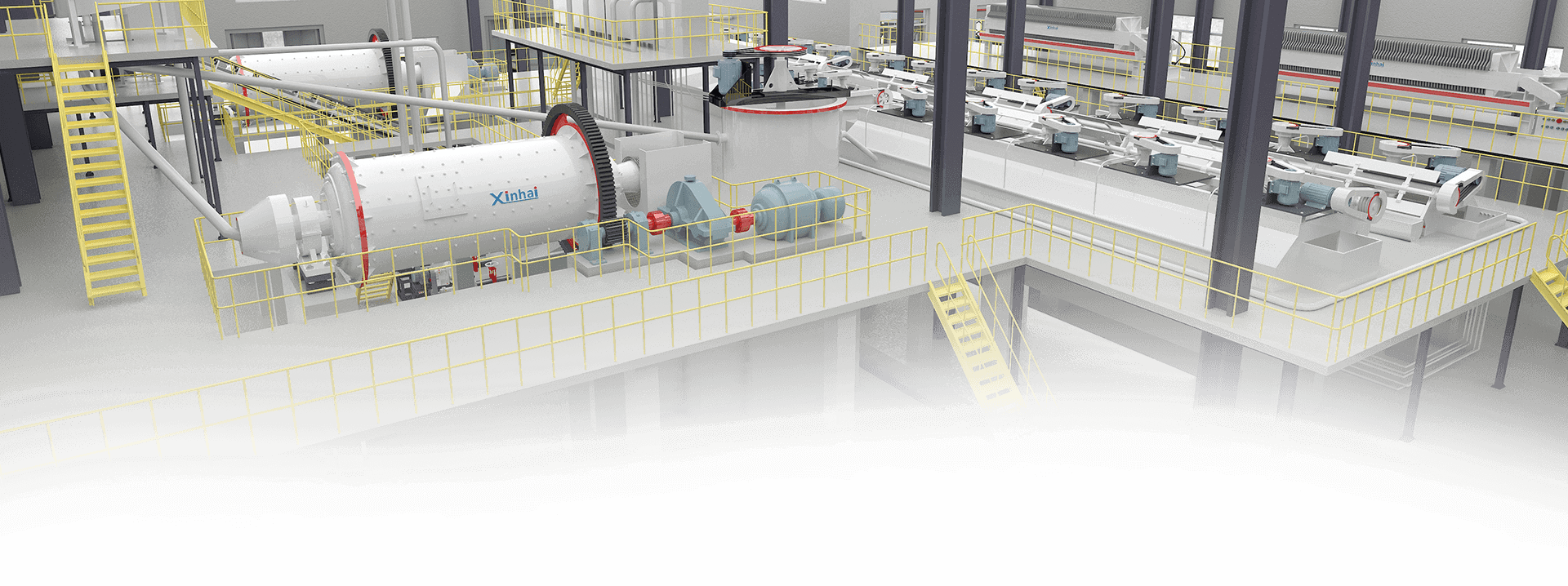
How to Build a Chromite Processing Plant: Process, Equipment, and Cost Guide
 Sheena
 Jul 09, 2026
 404
404
If you want to know more details about equipment, solutions, etc, please click the button below for free consultation, or leave your requirements!
 Message
 Chat Now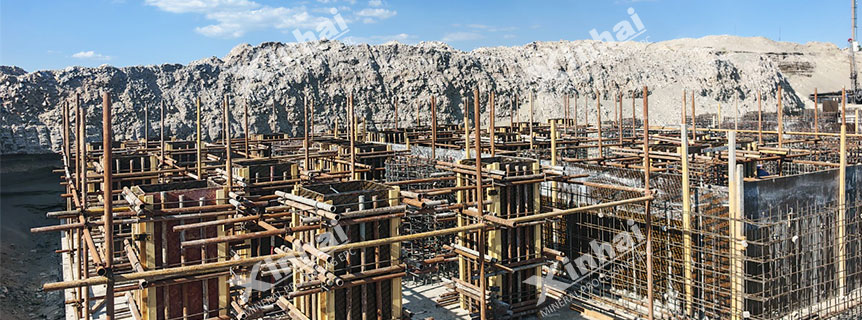
Chromite-processing-plant-under-civil-construction
Chromite is the primary source of chromium, an essential metal used in stainless steel production, ferrochrome manufacturing, refractory materials, and the chemical industry, building a profitable chromite processing plant involves more than simply purchasing equipment. Ore characteristics, process design, equipment selection, plant capacity, and capital investment all have a significant impact on chrome recovery and long-term project profitability.
This guide explains the key steps involved in building a chromite processing plant, including process selection, equipment configuration, investment considerations, and practical strategies for maximizing returns.
01Step 1. Understand Your Chromite Ore Characteristics
BackThe first step in designing a chromite processing plant is to understand the mineralogical characteristics of the ore. Chromite deposits vary greatly in grade, particle size, and gangue composition, making ore testing essential before selecting a beneficiation process.
Several factors should be evaluated during laboratory testing: Chromite grade and chromium-to-iron (Cr/Fe) ratio; Liberation size of chromite minerals ; Distribution of coarse and fine particles; Associated gangue minerals such as silica, serpentine, or olivine.
These test results determine the most suitable processing flowsheet and help avoid unnecessary investment in oversized or ineffective equipment.
02Step 2. Select the Appropriate Beneficiation Process
BackThe beneficiation process depends largely on ore characteristics and the desired concentrate quality. For most chromite ores, gravity separation remains the preferred beneficiation method because chromite has a much higher specific gravity than the surrounding gangue minerals. This process is simple, environmentally friendly, and offers relatively low operating costs.
A typical chromite processing plant may include: Crushing and screening--Grinding (when finer liberation is required)--Classification--Gravity separation--Magnetic separation (optional)--Dewatering and tailings disposal.
For low-grade or complex ores, gravity separation may be combined with magnetic separation or flotation to improve recovery and concentrate grade.
03Step 3. Choose the Right Processing Equipment
BackEquipment selection directly influences plant efficiency, operating costs, and chrome recovery. A typical chromite processing plant may include the following equipment:
3.1 Crushing and Screening Equipment
The crushing circuit reduces the ore to a suitable size for subsequent beneficiation. Depending on plant capacity, jaw crushers, cone crushers, and vibrating screens are commonly used.
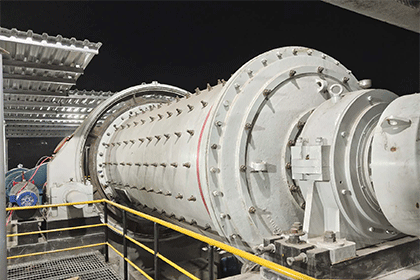
3.2 Grinding and Classification Equipment
When chromite minerals are finely disseminated, grinding is necessary to achieve adequate liberation. Ball mills, rod mills, hydrocyclones, and spiral classifiers help produce the desired particle size distribution while minimizing overgrinding.
3.3 Gravity Separation Equipment
Because of the density difference between chromite and gangue minerals, gravity separation is the core process in most chromite beneficiation plants.
Common gravity separation equipment includes: Spiral chutes; Jig machines; Shaking tables. These machines offer high recovery, relatively low operating costs, and minimal reagent consumption.
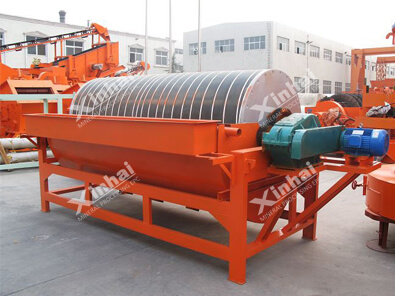
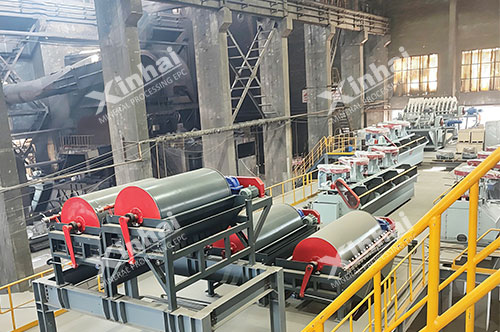
3.4 Magnetic Separation Equipment
Some chromite ores contain weakly magnetic impurities that can be removed using magnetic separators. This step helps improve concentrate grade and reduce unwanted minerals before final product handling.
3.5 Dewatering Equipment
After beneficiation, concentrate and tailings must be dewatered for transportation and storage. Thickeners, filter presses, and dewatering screens are commonly installed to recover water and reduce moisture content.
04Step 4. Determine Plant Capacity and Layout
BackPlant capacity should be determined based on ore reserves, mine production plans, and future expansion requirements. Small processing plants generally require lower capital investment and shorter construction periods, while larger facilities benefit from economies of scale and lower unit operating costs.
When designing the plant layout, engineers should consider: Material handling efficiency; Equipment accessibility for maintenance; Water recycling systems; Tailings management; Future production expansion. A well-planned layout improves operational efficiency and reduces long-term maintenance costs.
05Step 5. Estimate the Investment Cost
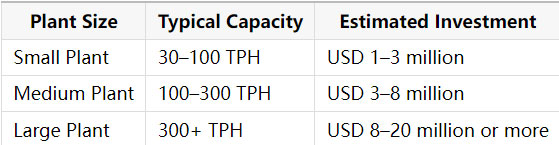
BackThe cost of building a chromite processing plant varies depending on plant capacity, ore characteristics, equipment configuration, and local construction conditions.
Major investment components typically include:
Land preparation and civil construction
Crushing and beneficiation equipment
Electrical and automation systems
Water supply and recycling facilities
Tailings storage and environmental protection
Installation, commissioning, and engineering services
Actual project costs depend on site conditions, local labor costs, infrastructure, and process complexity. Below is a general reference.
06Step 6. Optimize Plant Performance
BackBuilding the plant is only the beginning. Long-term profitability depends on continuous process optimization. Several measures can improve chromite processing efficiency: Conduct regular metallurgical testing; Optimize crushing and grinding size; Improve gravity separation efficiency; Recover fine chromite from tailings; Upgrade automation and process control; Improve water recycling and energy efficiency. Continuous optimization helps increase chrome recovery while reducing operating costs.
07How to Choose the Best Chromite Processing Solution
BackThere is no universal process suitable for every chromite deposit. The optimal solution depends on ore characteristics, production capacity, concentrate specifications, and project economics. For coarse, high-grade ores, a simple gravity separation circuit may provide excellent recovery with low investment. Complex or low-grade deposits may require additional grinding, magnetic separation, or multi-stage beneficiation to achieve the desired concentrate quality. A professional metallurgical test program and customized process design are the most reliable ways to maximize recovery while minimizing capital and operating costs.
08Conclusion
BackBuilding a successful chromite processing plant requires careful planning from ore testing to process selection, equipment configuration, plant layout, and investment analysis. By selecting the right beneficiation technology and continuously optimizing plant performance, mining companies can improve chrome recovery, lower operating costs, and maximize long-term profitability.


RELATED PRODUCTS
-
Magnetic Separator
-
Leaching Agitation Tank
-
Pregnant Solution Purification Tank