+8618234403483
 yanzhang19990421@gmail.com



A Detailed Introduction to the Iron Ore Beneficiation Process
 Sheena
 Apr 10, 2026
 954
954
If you want to know more details about equipment, solutions, etc, please click the button below for free consultation, or leave your requirements!
 Message
 Chat Now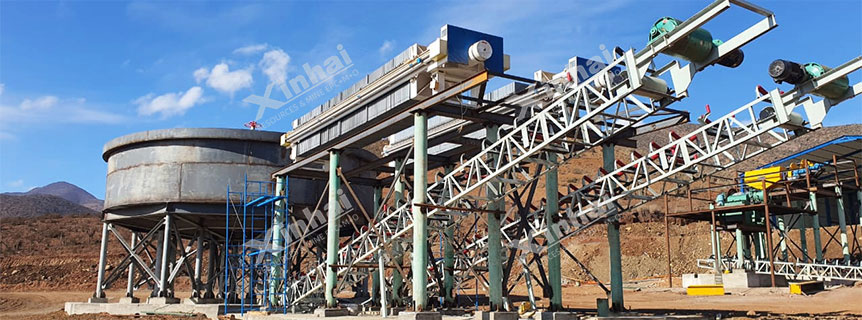
Iron-Ore-Beneficiation-Process
01What Are Iron Ore Processing Steps?
BackIron ore processing refers to the series of physical operations used to transform raw ore into a concentrated product with a higher iron (Fe) content. In its natural state, iron ore is not pure. It is typically mixed with unwanted materials such as silica, clay, and other gangue minerals. These impurities must be removed before the ore can be used in steelmaking. The purpose of processing is therefore straightforward: to separate valuable iron minerals from waste rock and improve the overall grade of the material.
This is achieved through a combination of size reduction, mineral liberation, and physical separation techniques.
02What Happens After Iron Ore Is Mined?
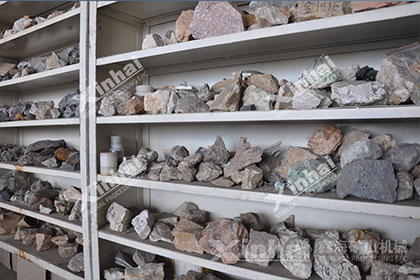
BackAfter extraction, iron ore is usually in the form of large rocks, sometimes exceeding several hundred millimeters in size. At this stage, iron minerals such as magnetite or hematite are tightly bound within the surrounding rock. Because of this, direct separation is impossible.
To make the ore usable, it must go through a sequence of steps that gradually:
Break the rock into smaller particles
Expose iron-bearing minerals
Separate them based on their physical properties
Each step plays a specific role, and skipping or poorly executing any stage can significantly reduce recovery.
03Step 1: Crushing — Breaking the Ore to Unlock Minerals
BackCrushing is the first step in iron ore processing. Large pieces of ore are fed into crushers and reduced to smaller sizes, typically down to 20–30 mm. However, the goal of crushing is not simply size reduction. Its primary function is to begin the process of mineral liberation by creating fractures along the boundaries between iron minerals and waste rock. As the ore is compressed and broken, internal cracks develop. These cracks weaken the structure and prepare the material for the next stage.
At the end of crushing, some iron minerals may already be partially exposed, but most are still locked within the rock matrix. This is why further grinding is necessary.
04Step 2: Grinding — Achieving Effective Mineral Liberation
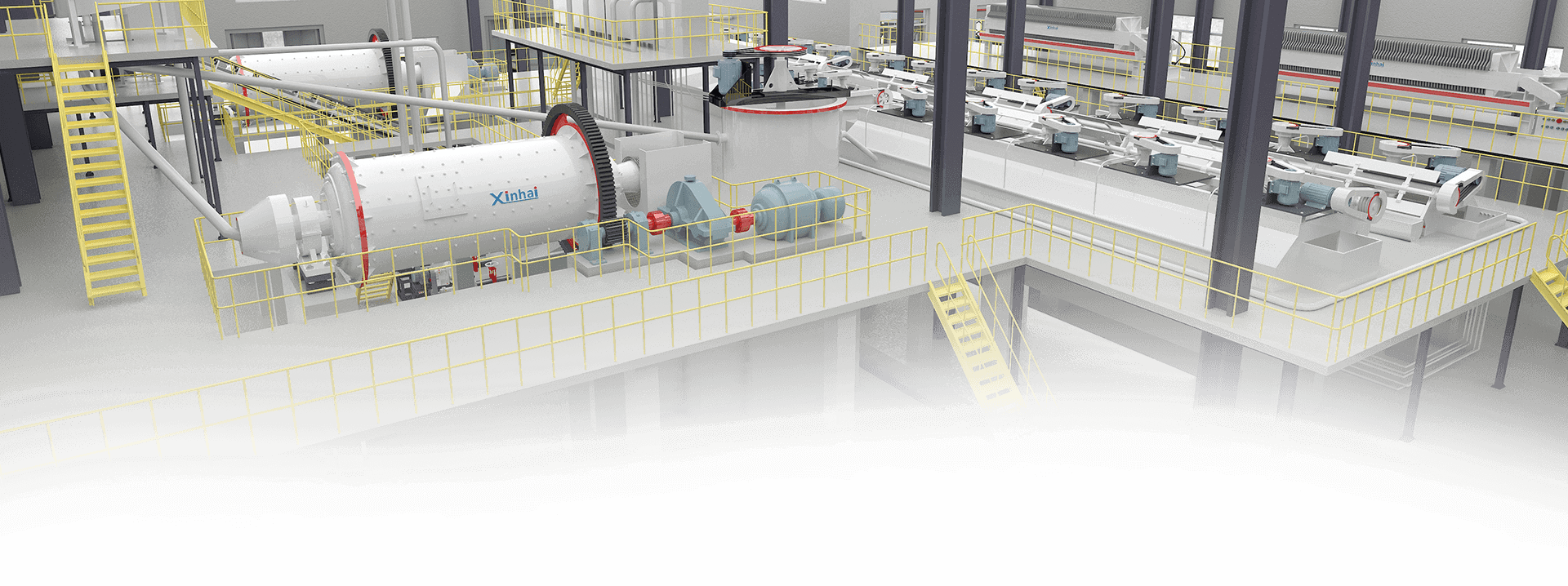
BackGrinding takes the crushed ore and reduces it to a much finer size, typically between 45 and 100 microns. This is usually done in a ball mill, where steel balls tumble and impact the ore, gradually breaking it down.
Why is such a fine size required? Because in many iron ores, especially magnetite, the valuable minerals are finely distributed within the host rock. Only when the particles are ground small enough can these minerals be fully separated from gangue. This stage is critical because it directly determines the efficiency of downstream separation.
There is also an important balance to maintain:
If particles are too coarse, iron minerals remain locked and cannot be recovered
If particles are too fine, they may be lost in tailings during separation
For this reason, grinding is often considered the most technically sensitive—and energy-intensive—stage in the process.
05Step 3: Classification — Controlling Particle Size for Efficiency
BackAfter grinding, the material is not uniform in size. Some particles are already fine enough for separation, while others are still too coarse.
Classification is used to separate these particles. In most plants, hydrocyclones are used to divide the slurry into:
Fine particles (which move forward to separation)
Coarse particles (which are returned to the mill for further grinding)
This creates a closed-loop system that ensures consistent particle size. The purpose of classification is not to improve grade directly, but to optimize the efficiency of both grinding and separation.
06Step 4: Separation — Extracting Iron from Waste
BackOnce the ore has reached the appropriate particle size, the next step is to separate iron minerals from gangue. This is the stage where the actual "beneficiation" happens, and the method used depends largely on the type of iron ore.
4.1 Magnetic Separation — The Main Method for Magnetite
Magnetite is strongly magnetic, which makes it relatively easy to separate. When the ore slurry passes through a magnetic separator, magnetite particles are attracted to the magnetic field and collected, while non-magnetic materials are washed away. This method is widely used because it is efficient, low-cost, and suitable for large-scale operations. As a result, it is the dominant process for magnetite ores worldwide.
4.2 Gravity Separation — Using Density Differences
For certain types of hematite ore, gravity separation can be effective. This method relies on the fact that iron minerals are denser than most gangue minerals. When the slurry flows through equipment such as spiral chutes, heavier particles settle faster and can be separated from lighter waste materials. Gravity separation is relatively simple and does not require chemicals, making it suitable for some low-cost operations.
4.3 Flotation — For Fine and Complex Ores
In cases where the ore is very fine or contains significant impurities, flotation may be used. This method works by adding chemical reagents that selectively attach to certain minerals. Air bubbles are then introduced, allowing targeted particles to float and be separated. Flotation is more complex and requires careful control, but it is essential when physical methods alone cannot achieve the desired grade.
07Step 5: Dewatering — Preparing the Final Product
BackAfter separation, the iron concentrate is still mixed with water and exists as a slurry. Dewatering removes this excess moisture using equipment such as thickeners and filters. The final product typically contains around 8–12% moisture, making it suitable for transport and further processing, such as pelletizing or direct use in steelmaking.
08Why Different Iron Ores Require Different Processing Methods
BackNot all iron ores respond to processing in the same way.
Magnetite ores are best suited to magnetic separation but require fine grinding
Hematite ores may be processed using gravity methods if coarse, or flotation if fine
Low-grade ores often require more complex flows to achieve acceptable concentrate quality
Because of these differences, there is no universal processing solution. The design of an iron ore processing plant must always be based on the specific mineral characteristics of the ore.
09Key Factors That Influence Processing Performance
BackSeveral factors can significantly affect the efficiency of iron ore processing:
Ore mineralogy: determines which separation method is suitable
Particle size: affects liberation and recovery
Impurity content: influences concentrate quality
Process design: impacts both cost and performance
Understanding these factors is essential for optimizing recovery and minimizing operating costs.
10Conclusion
BackIron ore processing is a carefully designed sequence of operations that transforms raw ore into a valuable industrial product. From crushing and grinding to separation and dewatering, each step plays a critical role in unlocking and recovering iron minerals. While the basic principles are widely applicable, the optimal process always depends on the characteristics of the ore. A well-designed processing flow not only improves recovery but also ensures long-term operational efficiency and economic viability.


RELATED PRODUCTS
-
High Frequency Dewatering Screen
-
JJF Flotation Cell
-
Leaching Agitation Tank